How to Make a Garden Room Feel Like a Natural Part of Your Garden
A garden room can add a useful, comfortable space at home, but its success depends on more than the building itself. When its position, materials and surroundings suit the garden, it feels like a considered part of the outdoor space rather than a separate structure at the end of it. For ideas on design and installation in the area, see designer garden rooms in Glasgow.
Start with the right location
Before choosing finishes or furniture, consider where the garden room will sit. Look at the light throughout the day, the views from inside and out, and how people will reach the entrance. A sunny spot can make the room feel bright, while some natural shade may help keep it comfortable in warmer weather. Think, too, about privacy and whether the building will overlook a neighbour’s garden.
The room’s purpose should guide its position. A home office may need a quieter corner and good natural light; a gym might benefit from easy access from the house. If it will be used for relaxing or entertaining, a position that looks onto a favourite part of the garden could make it feel more connected to the outdoors.
Allow enough space around the building for paths, planting and maintenance. In small spaces, careful layout matters even more: a clear route to the door and a few well-chosen plants can make a compact garden feel organised rather than crowded. Check planning permission and any other requirements before work begins, as these can depend on the building and its location.
Choose materials that suit the surroundings
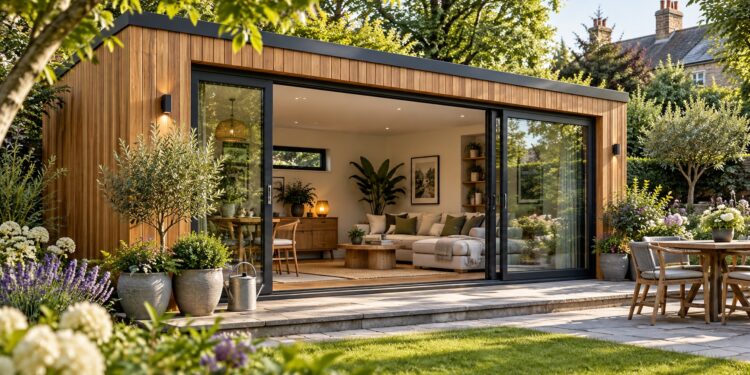
Materials can help a garden room echo the character of the house and garden. Natural materials such as wood and stone often sit comfortably in an outdoor setting, while a simple colour palette can help the building blend with existing fences, paving or planting. The aim is not necessarily to hide the structure, but to make its appearance feel intentional.
Timber cladding can work well alongside greenery and may weather gracefully over time. Whatever the finish, it needs to be suitable for the conditions it will face. Choose weather-resistant materials and finishes designed for outdoor use, and consider how they will look through the changing seasons.
Paths and patios can help link the room to the rest of the garden. A route made from materials that already appear elsewhere in the space creates a sense of continuity. A small patio or seating area outside the doors can also make the transition between indoor comfort and outdoor living feel natural.
Connect the inside with the garden
Windows and doors shape how the room feels from within. Large windows can maximise natural light, frame garden views and make the room feel airier. Sliding doors can open the space towards a patio or lawn, helping it feel like an extension of the garden on suitable days.
Think about the outlook before deciding where to place windows. A view of layered planting or a favourite tree may be more restful than a direct view of a fence or boundary. Where privacy is important, thoughtful positioning, screening or planting can help without blocking every view.
Inside, keep the décor in step with the surroundings. Wood, stone, natural fabrics and colours drawn from the garden can create a calm, cohesive feel. Indoor plants, potted plants or hanging planters bring greenery into the room, while a few well-chosen pieces of garden furniture can make the interior feel relaxed rather than overly formal.
Use planting to soften the edges
Planting is one of the simplest ways to help a building sit comfortably in its surroundings. Deep planting beds can soften straight architectural edges, while a mix of heights and textures adds depth around the structure. Low plants near the base, shrubs beyond them and a climber on a separate support can create a layered effect.
Climbing plants can add greenery to a wall or trellis, but choose their position and support carefully. Keep planting clear of areas that need ventilation or access for maintenance. In small gardens, pots and vertical planting can introduce greenery without using much floor space.
Aim for plants that suit the conditions around the room. One side may receive more sun, while another stays shaded or sheltered. Mixing evergreen structure with seasonal flowers can keep the area interesting throughout the year. The RHS has further advice on choosing plants for a wildlife-friendly garden, including options that provide food and shelter for wildlife.
Plan lighting and comfort for year-round use
Lighting can help the garden room feel welcoming after dark and make the route to it easier to use. Soft outdoor lighting along a path, around a seating area or among plants can create a gentle glow without making the garden feel overlit. Inside, layered lighting lets the room adapt to different activities, whether it is a home office, creative studio or peaceful retreat.
Comfort matters if you want to spend time in the room throughout the year. Proper insulation helps support indoor comfort and energy efficiency, while suitable heating, such as underfloor heating, may be worth considering depending on the design and intended use. Large windows bring in light and views, but glazing and insulation need to work together to limit heat loss.
Make the space useful, not just attractive
A well-designed garden room should work for the way you live. Decide on the garden room’s purpose early, then plan the layout around it. A home office needs a practical desk position and enough storage; a creative studio may need flexible floor space and good light. If the room has several uses, multifunctional furniture can help make the most of it.
In smaller rooms, built-in seating with storage, wall shelves and compact furniture can preserve floor space. Keep everyday items organised and avoid filling every corner. If the room is intended partly for gardening, a potting bench or storage for gardening tools can make it useful without allowing equipment to dominate the interior. A garden shed may still be better for bulky tools, leaving the garden room free to serve as living space.
Bring the whole garden together
A garden room feels most at home when it relates to the rest of the garden. Repeat a material or colour in the path, planters or outdoor furniture. Use planting to frame the building, and leave space for garden views rather than screening every wall. Even a small change, such as extending a patio to the doors or adding a bench beside a border, can make the room feel easier to access and more closely connected to its surroundings.
At Designer Garden Rooms, each project begins with how the space will be used and how it fits the property. Considering access, layout, materials and the surrounding garden from the outset helps create a room that is both practical and visually at ease in its setting.
The best result is a garden room that feels like it belongs: a useful place to work, exercise, welcome guests or rest, with the outdoor beauty of the garden still part of the experience.