Royal Philharmonic Orchestra – Review – Hull City Hall
By Karl Hornsey, October 2026
The Royal Philharmonic Orchestra continued its regional residency slot at Hull City Hall with another intoxicating concert, under the baton of conductor Ariane Matiakh, featuring pieces by Debussy, Elgar and Brahms. It’s easy to take for granted these semi-regular appearances by the RPO in Hull, along with those of the Hull Philharmonic and others, but these concerts really are a treat and a showcase for some of the finest musicians in the country.
The more I listen to Debussy, the more he becomes firmly fixed as one of my top three composers (I’m a list-maker) and his style is one of the most relaxed of all to listen to, making him easy on the ear, as well as one of the most deceptively talented of all composers. The choice of Prélude à l’Après-midi d’un faune as the opener for this concert is an inspired one, based on the poem of the same name by Stéphane Mallarmé and first performed in 1894, and here showcasing the talents of the RPO’s lead flautist Emer Mcdonough. It’s a sensual and even erotic poem, in which the faun wakes and talks about his encounters with several woodland nymphs. Debussy brought this to life in a subtle and seemingly simple way, but the feeling of the woodland awakening and of a dreamlike state come through wonderfully in this performance.
“Distinctive”
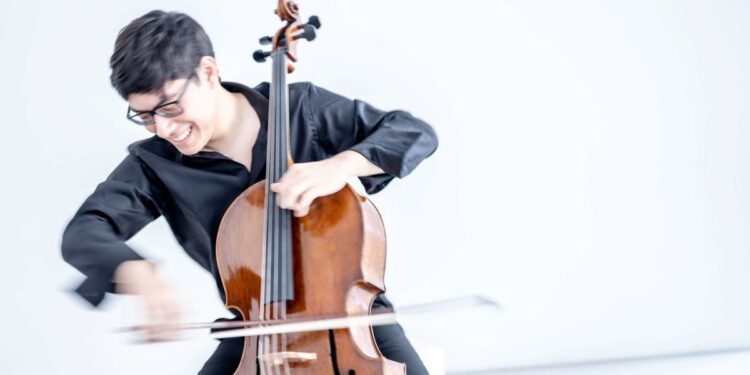
The centrepiece of the concert sees one of the world’s leading cellists take to the stage to perform Elgar’s Cello Concerto in E minor. Zlatomir Fung has fast become one of the most in-demand cellists around and, on this performance, it’s easy to see why. It’s always fascinating to learn that pieces which have become such a staple of the classical canon, failed to find success until so many years after they premiered, but that’s the case with this piece, released in 1919, but at a time when Elgar’s popularity was already on the wane. It wasn’t until the 1960s that it really started to gain wider acceptance as one of the most iconic of cello concertos and, thankfully, that remains the case to this day. The haunting opening is so distinctive, and the moment at which the whole orchestra joins in with the deep, rich overtones of the cello, is one that sends a shiver down the spine, with Fung demonstrating his complete mastery of the piece.
The second half consists entirely of Brahms’ Symphony No 1, which took the composer more than 20 years to finish, with work on it taking place between 1855 and 1876. Brahms suffered from comparison to Beethoven – who wouldn’t? – to the point that this symphony was even dubbed ‘Beethoven’s Tenth’, in reference to its similarities to Beethoven’s Ninth, but that shouldn’t detract from what it still a tremendous symphony in its own right. The first and fourth movements are lengthy and bring together the whole of the orchestra in creating a brooding atmosphere, while the second and third movements feel much lighter, shorter and almost as interludes ahead of the rousing finale. All of which combined to make this another triumphant evening at Hull City Hall.
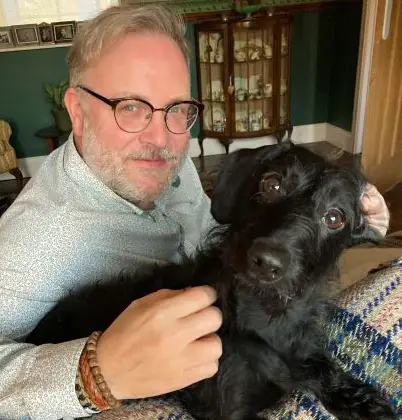
Karl’s love of writing was piqued at the age of eight, when he won a Blue Peter badge in an essay-writing competition. The location of said badge might be a mystery now, but the memory never fades. Hours spent writing about sport as a teenager, in pre-internet years when you had to make your entertainment, honed his skills, and Karl has worked in TV and radio listings at PA Media for 28 years, and the age of hybrid working means 50% of that can be at home listening to Classic FM and thinking about his next visit to his beloved Yorkshire Dales.
hornskar