What Every New Private Pilot Should Know About Looking After Their Aircraft’s Glass and Instruments
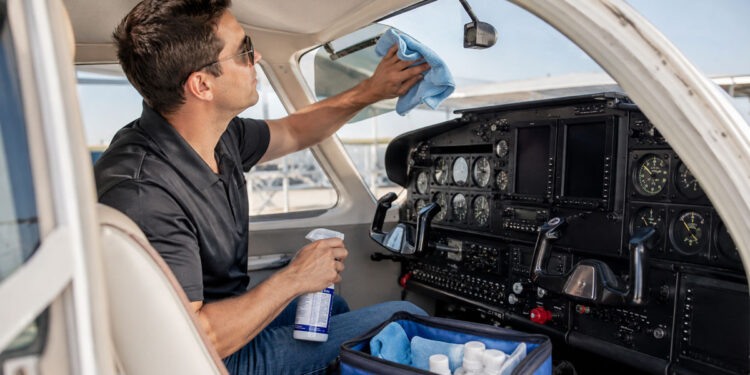
You passed your checkride. You have a logbook with hours in it and a certificate with your name on it. And now you are responsible for an aircraft that probably has more money wrapped up in its panel than in the airframe it sits in.
Glass cockpit avionics, acrylic windscreens, headsets, and analogue instruments all have different surface materials and different failure modes when cleaned with the wrong product. Most of this does not get covered in ground school. It gets learned the expensive way, usually by a pilot who grabbed the nearest bottle of window cleaner and found out three flights later that the windscreen now hazes in a low-sun approach.
This guide covers what you actually need to know: what each surface is made of, what to use on it, what to avoid, and why the distinction matters to both safety and your wallet.
Why Aircraft Surfaces Are Not Like Anything Else You Clean
A GA aircraft cockpit combines at least four distinct surface materials, each requiring different treatment. Acrylic and polycarbonate for windows and windscreens. Coated glass for instrument faces and EFIS displays. Painted and unpainted plastics for panels and bezels. Foam and elastomers for headset ear seals. Using a single product across all of these is how pilots damage things.
AOPA’s aircraft interior cleaning guide is direct on the starting principle: most instruments have glass faces that can be cleaned with aviation glass cleaner, but you should always apply the cleaner to a clean rag first, rather than spraying the entire panel or instruments. That instruction reflects two separate risks: chemical compatibility with the surface, and moisture ingress into the instruments.
Garmin, who makes the glass panel avionics in most modern trainers and new aircraft, is equally direct in their guidance: never use ammonia-based cleaners on any avionics surface. Ammonia damages the anti-reflective coating on glass displays. Once that coating is gone, display readability in bright conditions degrades permanently. The coating cannot be restored.
The Windscreen: Most Vulnerable, Most Expensive to Replace
The windscreen on a GA trainer is almost certainly acrylic. Not glass, not polycarbonate: acrylic, also called Plexiglas or Perspex. The AOPA training and safety tip on cockpit cleaning puts it plainly: unlike car windshields, which have tough glass exteriors, your trainer airplane’s windscreen is made of acrylic, which means that it is almost as easy to scratch the surface as it is to clean it.
What You Must Never Use
Ammonia is the biggest risk. It is the active ingredient in virtually all household glass cleaners and many multi-surface sprays. On acrylic, ammonia causes chemical stress crazing: thousands of microscopic cracks that scatter light and create a haze that is invisible under flat lighting but becomes a significant visibility problem when the sun is at a low angle. The crazing cannot be polished out. It requires windscreen replacement.
Pilot forums and aircraft maintenance references add several other chemicals to the prohibited list: acetone and ketone solvents, isopropyl alcohol, chlorinated hydrocarbons, lacquer thinners, and anything described as a glass cleaner without specific acrylic compatibility. Aviation Week’s windscreen distortion analysis quotes aircraft service manuals directly: do not use gasoline, alcohol, benzene, acetone, carbon tetrachloride, fire extinguisher or de-icing fluids, lacquer thinners, or window cleaning sprays because they will soften the plastic and cause crazing.
What Works
The correct product is one specifically formulated for acrylic and polycarbonate aviation substrates and tested to ASTM F484, the standard that determines how a cleaner behaves on stressed acrylic. These products are available from pilot shops and aviation supply companies. Novus, Plexus, and similar aviation acrylic cleaners are the standard recommendations in pilot communities and from aircraft manufacturers.
The correct technique matters as much as the product. Dampen the cloth first, never spray directly onto the windscreen. Work in small circular motions. Use a new, clean microfiber cloth. Never use paper towels: the wood fibres in paper are abrasive to acrylic and leave fine scratches. Keep cleaning pressure light. A soft cloth with the right product does the work; pressing harder just risks scratching.
Glass Panel Avionics: The Anti-Reflective Coating Problem
If your aircraft has a Garmin G1000, Garmin G3X, Dynon Skyview, or similar glass panel, the displays have an anti-reflective coating that makes them readable in direct sunlight. This coating is chemically sensitive in ways that the underlying glass is not.
Garmin’s published guidance is unambiguous: no ammonia, no bleach, no harsh chemicals. The PilotWorkshop cockpit disinfection guide adds that even alcohol can affect oleophobic coatings on glass displays, though it notes there is not much you can do about that in disinfection scenarios. The stronger advice is to avoid it where possible.
The practical guidance from AOPA’s avionics cleaning tips: use a lint-free cloth instead of paper products, which can mar display surfaces, and a cleaner specified as safe for anti-reflective coatings. Some panel-mounted touch-screen avionics have a screen-cleaning function that locks the unit during cleaning to prevent accidental input. Use it.
For day-to-day smudge removal, a dry or barely-damp microfiber cloth is often sufficient and carries no chemical risk at all. Many pilots keep a dedicated microfiber cloth in the aircraft for this purpose. The goal is to remove fingerprints without introducing anything that could degrade the coating over cumulative cleanings.
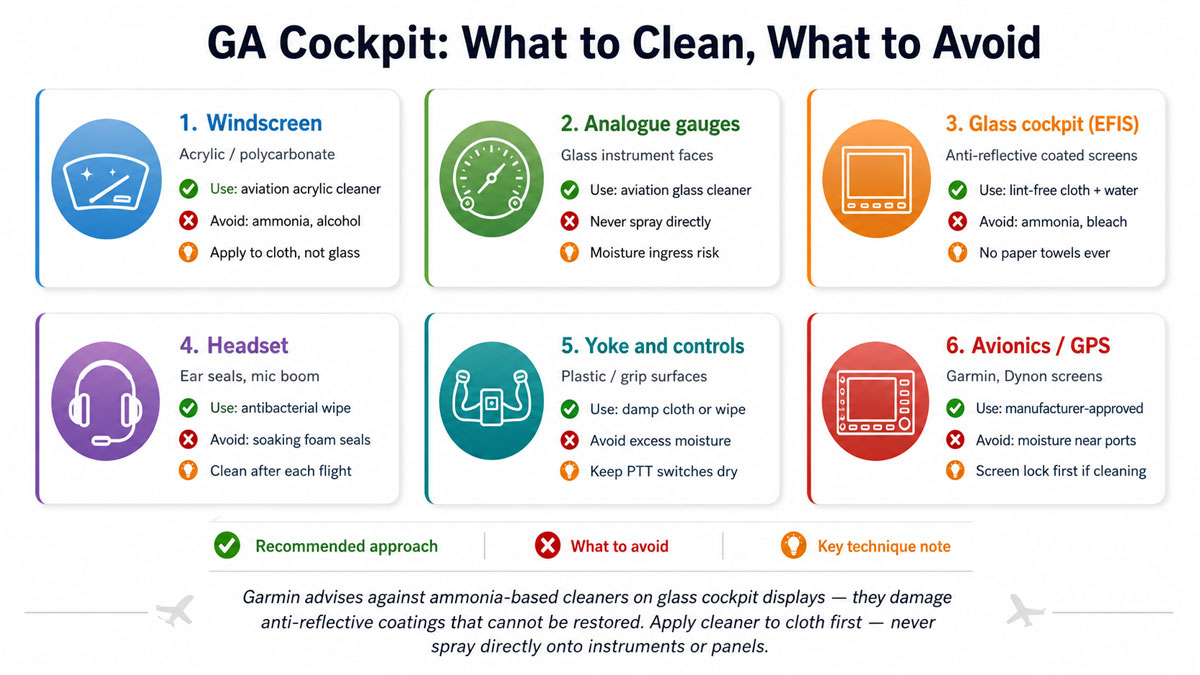
Six cockpit surface types, six different cleaning approaches. Getting it wrong on any one of them ranges from cosmetic damage to an expensive replacement.
Analogue Gauges: A Moisture Problem More Than a Chemistry Problem
Traditional analogue instruments, airspeed indicators, altimeters, attitude indicators, and directional gyros, have glass faces. The glass face itself can tolerate more chemical exposure than acrylic, but the risk here is not chemistry. It is moisture.
Instrument cases on GA aircraft are sealed to the pressure systems they measure. The altimeter and airspeed indicator are connected to the pitot-static system. The gyro instruments have their own pressure connections. If liquid gets past the glass face and into the case, it affects both the instrument reading and the mechanical components inside. Repair is possible at a specialist instrument shop, but at a cost that makes prevention straightforwardly worthwhile.
The guidance from AOPA is to apply the cleaner to a rag first rather than spraying the panel. For analogue instruments specifically, that instruction is less about the chemistry of the product and more about not introducing liquid near instrument connections and seals. A lightly dampened cloth, wiped carefully across the glass face and kept well away from any seal gaps around the instrument, is the right approach.
Headsets: The Hygiene Problem
Headsets accumulate biological contamination at a rate other cockpit surfaces do not. Ear seals absorb moisture and skin oils through a flight. Microphone booms contact the face. In a flying club or rental environment, the same headset may be used by multiple pilots across different bookings.
The cleaning requirement here is different from glass and instruments: it is about bacterial kill rather than optical clarity. A damp cloth removes visible contamination. A product that achieves actual disinfection addresses the biology.
Purpose-formulated antibacterial wipes for aviation equipment, such as those in the Alglas range, are independently tested for bacterial kill rate and verified safe for the plastic, foam, and metal components in aviation headsets. They address both the hygiene requirement and the material compatibility requirement simultaneously.
The practical routine: wipe ear seals and headband after every flight, including your own. Replace foam ear seal covers periodically. Keep a small pack of cleaning wipes in your flight bag.
Yoke, Rudder Pedals, and Controls
Control surfaces in the cockpit are high-contact items that accumulate finger oils, sweat, and general grime. They are typically hard plastic or composite materials that tolerate cleaning better than glass surfaces, but the same basic rules apply: moisture should not enter any electrical connection, and cleaning product should not contact the instrument panel or any labelled surface where it could attack the print.
Isopropyl alcohol at low concentration is generally acceptable for hard control surfaces if it is kept well away from avionics. A damp cloth with a mild general cleaner works for routine cleaning. The push-to-talk switch on the yoke is the specific area to keep dry: liquid entering PTT switches causes both corrosion and intermittent electrical faults that are expensive to diagnose.
Quick Reference: What to Use Where
- Windscreen (acrylic): aviation acrylic cleaner, ASTM F484 tested, applied to microfiber cloth. Never paper towels, never ammonia.
- Glass panel displays (Garmin, Dynon): lint-free cloth, manufacturer-approved screen cleaner only. Never ammonia or bleach. Anti-reflective coating cannot be restored once damaged.
- Analogue instrument faces: aviation glass cleaner applied to cloth. Keep liquid away from instrument seals.
- Headsets: antibacterial wipe rated safe for plastics and foam. Clean after every use.
- Yoke and controls: damp cloth or mild cleaner. Keep push-to-talk switches dry.
- Panel plastics and bezels: soft damp cloth. Avoid products with glossy finishes that cause cockpit glare.
Before you use any cleaning product in a cockpit, ask two questions. First: is it tested and cleared for the specific surface type it is going to contact? An aviation glass cleaner is not automatically safe on a polycarbonate display. A display cleaner is not automatically safe on acrylic. Specific approval for specific materials is what matters. Second: are you applying it in a way that prevents liquid from reaching anywhere other than the surface you are cleaning?
Those two rules, applied consistently, protect several thousand dollars worth of instruments and glass from the kind of damage that is entirely preventable but completely irreversible once done. The products that meet those criteria cost a few pounds or dollars from any pilot shop or aviation supply catalogue. The repair bill for ignoring them does not.
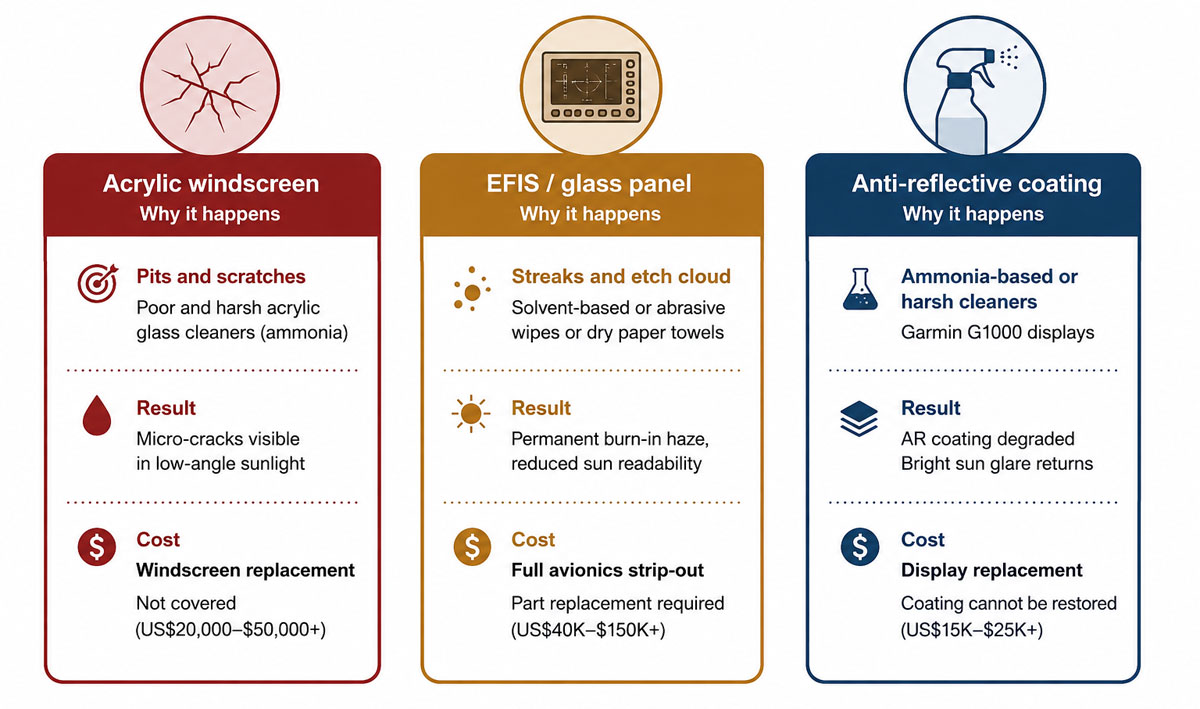
Three documented damage types from using the wrong cleaning products on cockpit surfaces. Each is irreversible. The cost of correct products is a small fraction of the cost of what they protect.
Frequently Asked Questions
Can I use automotive glass cleaner on my aircraft windscreen?
No. Virtually all automotive and household glass cleaners contain ammonia, which causes chemical stress crazing in acrylic. This manifests as thousands of microscopic cracks that create haze in low-angle sunlight. Once crazing is present, it cannot be polished out. The windscreen requires replacement. Use only aviation-specific acrylic cleaners.
What does Garmin recommend for cleaning G1000 and similar displays?
Garmin recommends against ammonia-based cleaners, bleach-based cleaners, and other harsh chemicals on any avionics surface. They advise a lint-free cloth and a cleaner specified as safe for anti-reflective coatings. Paper products that can mar display surfaces should not be used. Some Garmin units have a screen-cleaning mode that locks input during cleaning.
How often should I clean the cockpit glass?
The AOPA training guide suggests cleaning the exterior windscreen after every flight, while interior glass only needs cleaning as needed when fingerprints or haze accumulate. The more important principle is to clean when needed rather than leaving contamination to build up, but to use the correct product every time.
Where do I buy the right cleaning products?
Pilot shops and aviation supply companies carry aviation-specific acrylic cleaners, glass panel wipes, and antibacterial wipes formulated for aviation equipment. Aircraft Spruce, Sporty’s, and dedicated aviation suppliers all stock these. The products cost marginally more than household alternatives and are worth it many times over.
Is it safe to use hand sanitiser on cockpit surfaces in flight?
Generally no. Most hand sanitisers contain isopropyl alcohol at concentrations that can damage anti-reflective coatings on glass displays and attack painted bezels. A Florida flight school documented a case where a renter used a distillery-produced sanitiser on yokes and inadvertently damaged panels and paint, requiring full avionics strip-out and resurfacing. Use products intended for aviation surfaces.
Build the Habit Early
The pilots who look after their aircraft’s glass and instruments best are the ones who built the right habits at the beginning, before a cheap cleaning shortcut caused a problem. The investment is small: a bottle of aviation acrylic cleaner, a pack of avionics wipes, and a few microfiber cloths kept in the flight bag. The protection it provides covers equipment worth multiples of its cost.
Know what each surface in the cockpit is made of, use products tested for that surface, and apply them in a way that keeps liquids away from seals and electrical connections. That is all of it.
Sources: AOPA aircraft interior cleaning guide (aopa.org); AOPA training and safety tip on windscreen cleaning (aopa.org); AOPA avionics disinfectant tips (aopa.org); Hartzell Propeller cleaning and disinfecting guide (hartzellprop.com); PilotWorkshop cockpit disinfection guide (pilotworkshop.com); Aviation Week windscreen distortions (aviationweek.com); Van’s Air Force glass panel cleaning thread (vansairforce.net); Alglas aerospace cleaning products (alglas.com).