The Spy Who Came in From The Cold – Review – Sheffield Lyceum Theatre
By Clare Jenkins, May 2026
The Spy Who Came in from the Cold, written over 70 years ago, is the first of John le Carré’s 26 novels to be turned into a play. On the basis of this Chichester Theatre touring production, you can see why others might balk at the challenge.
Le Carré’s ground-breaking thriller, written just after the building of the Berlin Wall, cranks up the tension as slowly and surely as boiling a frog alive. David Eldridge’s adaptation, however, directed by Jeremy Herrin, has to compress into two hours the book’s labyrinthian intricacies and moral compromises of Cold War espionage where hardly anyone is what they seem at first sight.
Maybe because of that need to condense the narrative, with its growing atmosphere of fear and distrust, the dialogue is at times as rapid as gunfire, which risks reducing the characters to ciphers and losing those not familiar with the devilish twists and turns of the plot.
It’s London 1962. Alec Leamas, a dishevelled, world-weary and alcoholic British spy, wants to leave the British intelligence service after losing his last agent to a shooting in Berlin. His boss, Control (Nicholas Murchie) persuades him to take on one last mission: to frame Mundt, the murderous ex-Nazi head of the East German Secret Service, as a double (or triple?) agent in the pay of the UK. And so our anti-hero reluctantly goes back undercover, back into the world of lies and subterfuge, ultimately back across the wall into East Germany.
“Little space for ambiguity”
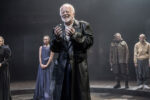
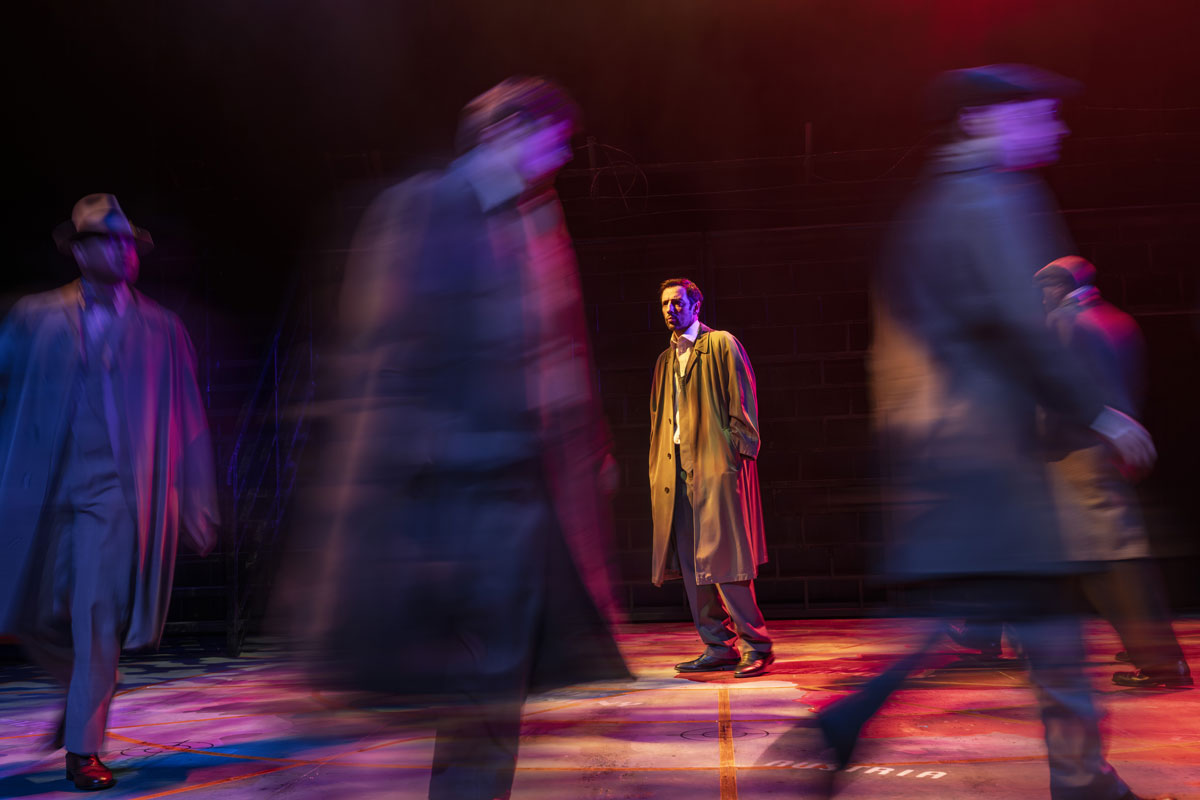
The play opens with Ralf Little’s Leamas standing centre stage, wide-legged (a stance he returns to time and again) and unsmiling. One by one, he introduces the various characters against a backdrop of grey wall covered in grills (literally an Iron Curtain) and topped by barbed wire. It’s the first of many declamatory expositions explaining who’s who and what’s what, leading to the feeling of being at a series of illustrated lectures. Lectures interspersed with who-can-reply-fastest games between him and Control.
The problem with such rat-a-tat delivery is that it leaves little space for ambiguity (which Le Carre’s novel creates in droves), nuance or emotional engagement. It only slows down when Liz, the Jewish Communist librarian who falls in love with Leamas, appears. But even then it’s hard to believe in an affair based on such little conversation or chemistry.
With few onstage props (a table and two chairs, an ominous bucket of water), the actors have to find things to do with their hands. While Leamas usually sticks his in his raincoat pockets, Grainne Dromgoole’s idealistic yet clear-eyed Liz rubs hers against her cardigan or holds them awkwardly in front of her. Such gestures do, though, add to the sense of her being a fly caught in a spider’s web of her own idealism and other people’s hardheaded scheming.
“Different guises”
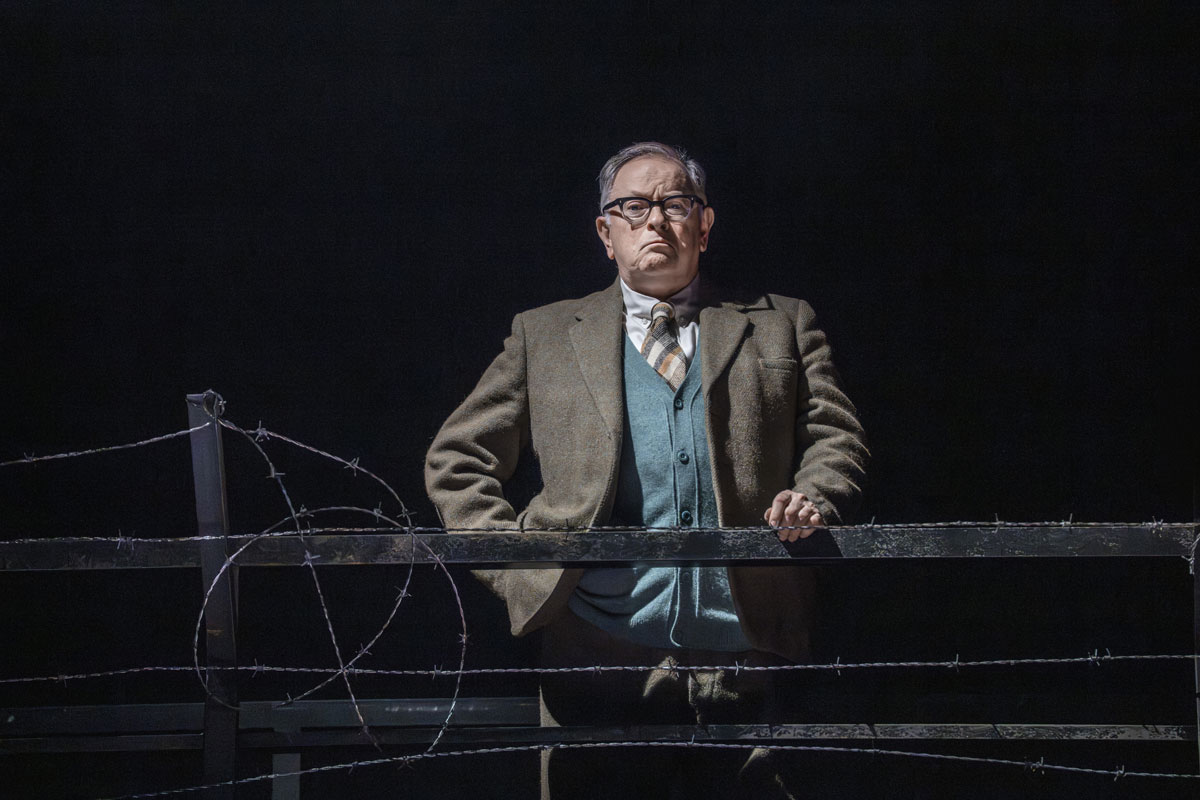
None come more scheming than the morally ambiguous spymaster George Smiley, looming over Leamas’s world like a genial, tweed-clad academic, but utterly steely underneath. Alec Guinness made the role central on TV, while here Tony Turner hovers in the background, occasionally emerging to talk to Leamas or Liz (who, surprisingly, even as she pours him tea in her bedsit, seems bewildered as to he actually is).
Turner is one of a number of actors who take dual roles here: in his case, as a prosecution lawyer in the final courtroom scene, bouncing up and down cartoonishly, shouting his questions in a strangely high-pitched voice. That doubling up of roles adds to the illusion that we’ve seen these people before, but in different guises. Who’s pretending to be whom? No wonder, then, that Leamas ultimately mentally fragments, losing his sense of self, trapped in his own hall of mirrors.
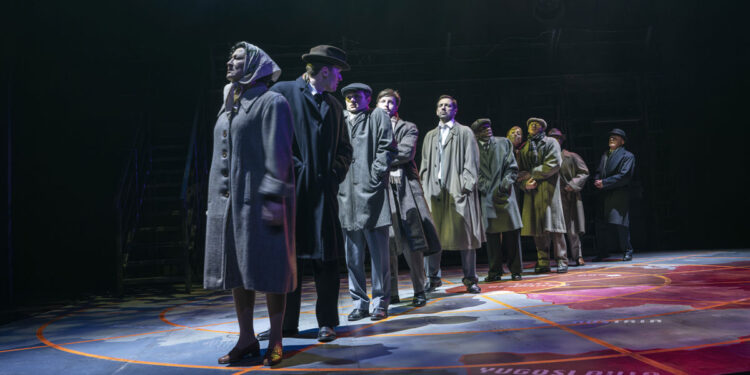
There are some curious repetitions in the script, where Leamas makes a statement which is then repeated as a question. And some uncomfortable references to antisemitism and domineering political figures, still pertinent today. There’s also a broodingly jazzy score by Paul Englishby, with moody trumpets adding a noirish feel. But Max Jones’s floor map of post-war Europe is barely noticeable through Azusa Ono’s shadowy lighting.
Overall, while Le Carre’s novel shocks, this production skims across the surface rather than plumbing his depths of deceit and ultimate damnation.
The Spy Who Came in from the Cold is at the Lyceum until Saturday, then continuing on tour
images: Johan Persson
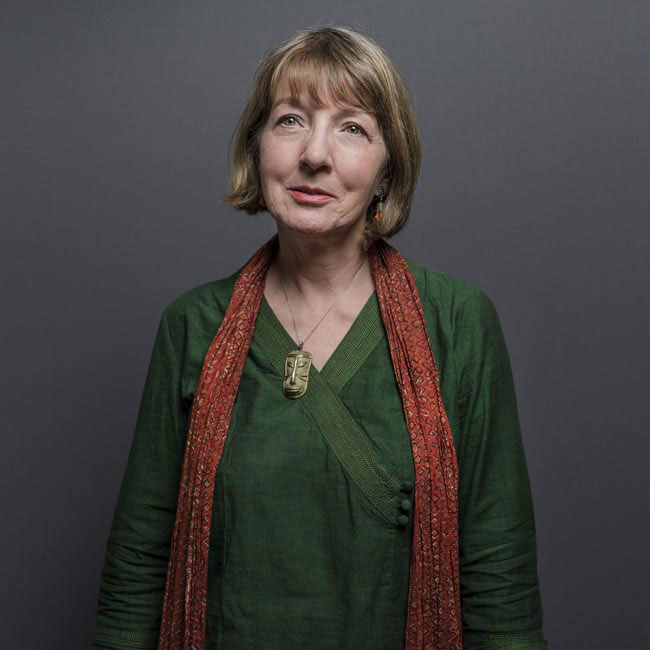
Clare is a journalist, former BBC Radio broadcaster and co-founder of the independent radio production company Pennine Productions. She and her national newspaper travel writer husband Stephen McClarence have been regular visitors to India for different work commissions.
Two years ago, their book, Teatime at Peggy’s: A Glimpse of Anglo-India, was published by Bradt: https://www.bradtguides.com/product/teatime-at-peggys/, and is now in its 2nd edition. They are currently working on a sequel.
Clare’s also written a number of books based on personal testimony, and is currently compiling an oral history of Sheffield Newspapers for Sheffield Archives and the British Library.