Living – Review – Sheffield Playhouse
By Clare Jenkins, March 2026
Leo Butler’s latest play opens in 1969, with an old lady watching the Apollo 11 moon landing on her living-room TV. As she gets up and shuffles silently off stage, a heavily pregnant young woman and her feckless young husband replace her as tenants of this Sheffield council house.
So begins a rapid-fire, adrenalin-fuelled, three-hour-long panorama of one family’s life over 55 years, from birth through to death. Scenes flash past like a speeded-up film with a music soundtrack to match. Speeches and conversations sometimes play ‘pass the baton’ as one character begins a sentence, only for it to be finished by someone else in the next scene. Hairstyles and costumes change equally quickly, it genuinely is a case of ‘blink and you’ll miss it’
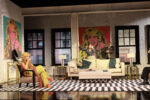
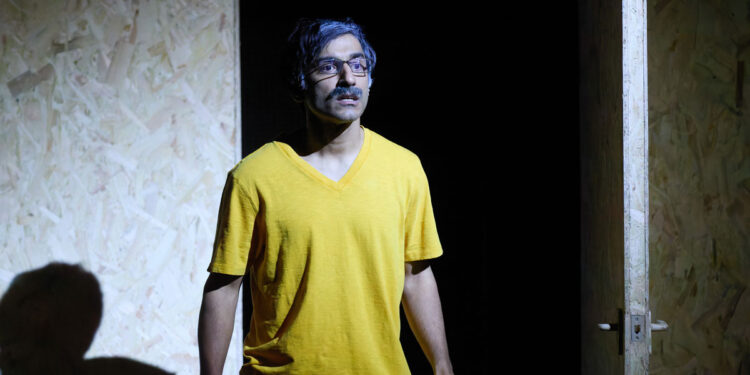
In essence, this is theatre as a tour de force. Not just because of the turbo-charged script, nor the frenetic pace, but also the tirelessly energetic acting, with an eight-strong cast playing over 30 roles. Liz White in particular offers a feisty and moving depiction of Kathy as she evolves from teenage mum through dedicated nurse to lonely widow rescued by carpet salesman Rajesh (Harki Bhambra, pictured above, also brilliant in younger roles) and finally as a grandmother isolated by Covid. “Just let me get out,” she cries pathetically, trapped in her home, before descending into dementia.
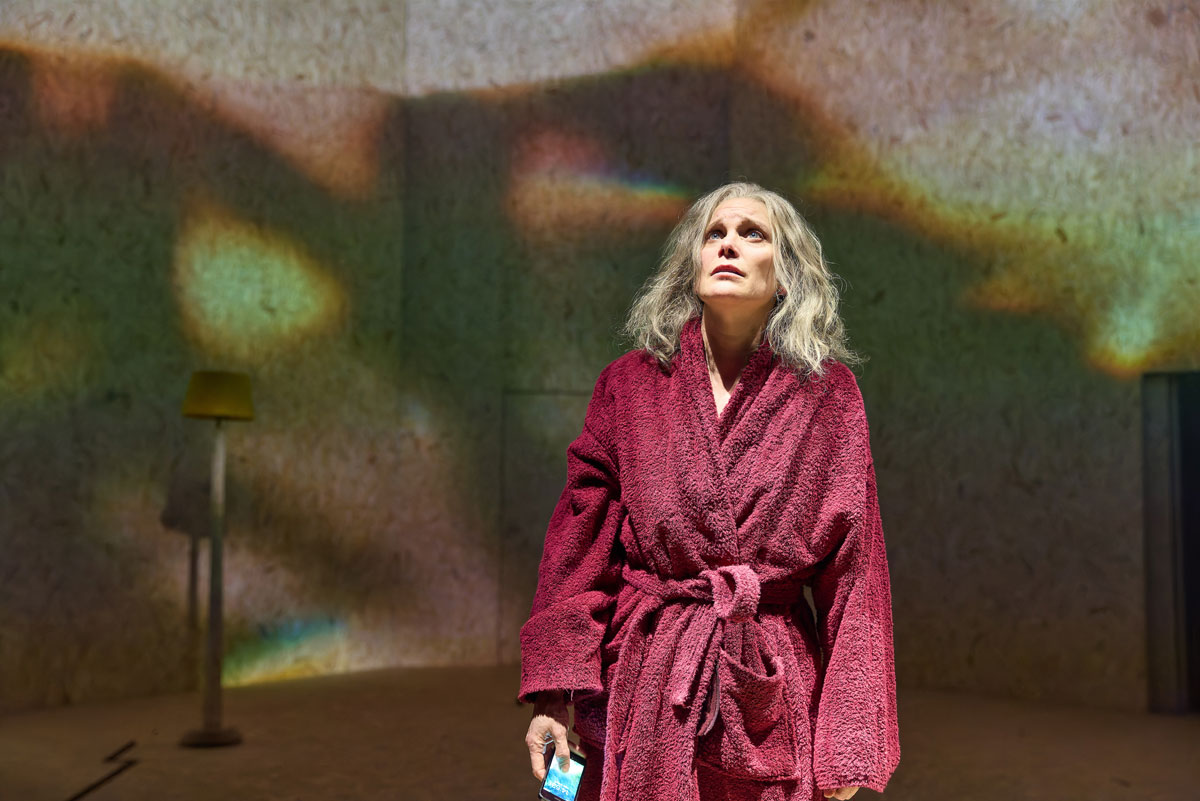
Liz White as Kathy in ‘Living’
“Perfect foil”
Onstage for much of the three hours, she is mesmerising in her portrayal of a working-class woman whose eyes are opened by Germaine Greer’s The Female Eunuch, yet who’s still run ragged by society’s expectations of a wife and mother’s role as family lynchpin.
Kenny Doughty is the perfect foil as her husband Brian, segueing from laidback, would-be Neil Young guitar-strummer through socialist agitator to besuited manager, then into illness and premature infirmity.
Samuel Creasey and Abby Vicky-Russell are equally excellent as the couple’s children Michael and Becky. Starting off as bawling babies, they evolve from fractious children and rebellious teenagers (expect a lot of pretty frank – and funny – sex, along with moments of ear-shattering acid-house madness), into idealistic (Becky) and disillusioned (Michael) adults dismissive of their parents’ views.
Some fine humour is lost through either speed of delivery, strong South Yorkshire dialects or having to compete with the TV or a soundtrack that moves seamlessly from Lennon’s ‘Power to the People’ and Helen Reddy’s ‘I Am Woman’ through Cabaret Voltaire to the Arctic Monkeys.
The chipboard walls probably don’t help the acoustic, either, effective though they are as part of Sarah Beaton’s pared-down set (3-piece suite, sideboard, nest of side tables). They also act as a screen on which the passing months and years are projected.
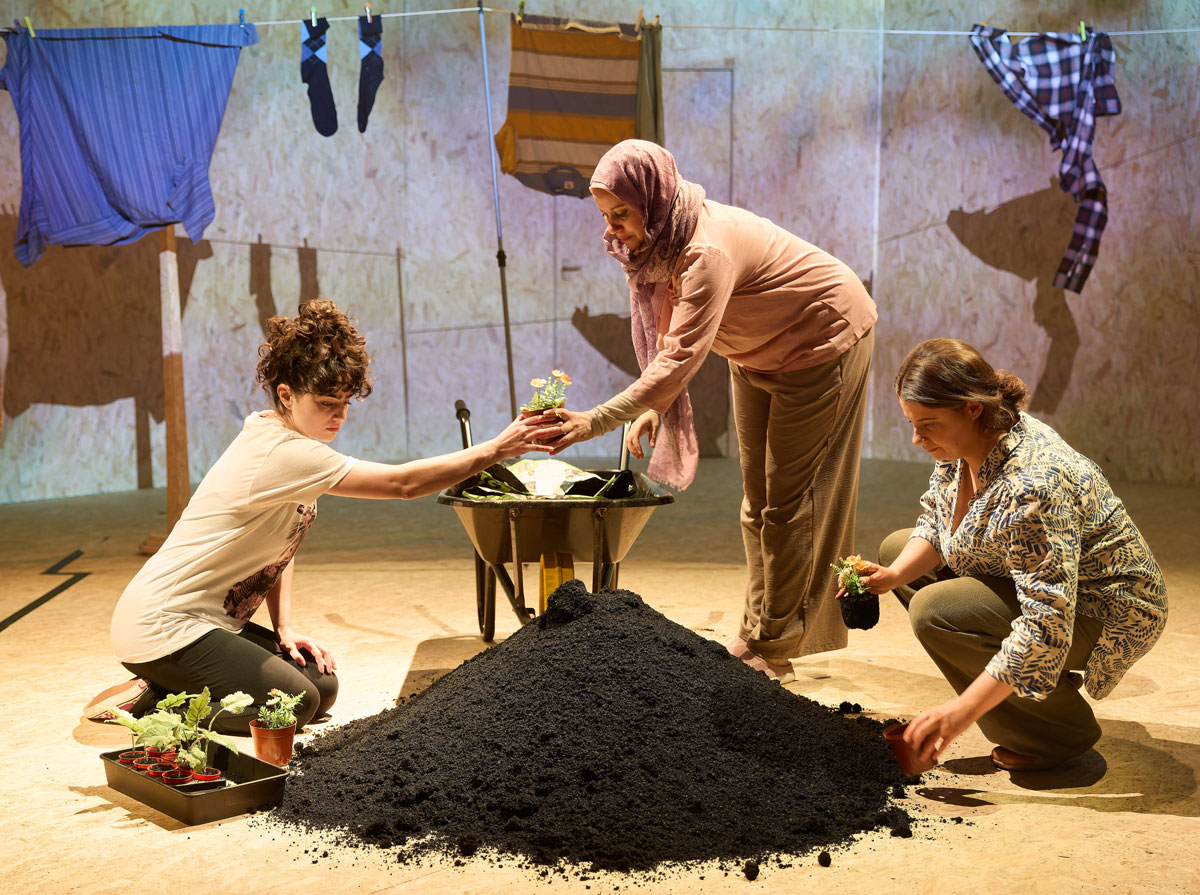
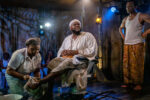
Melina Sinadinou (Maya), Michelle Bonnard (Safiya), Abby Vicky-Russell (Rebecca)
“Dizzyingly fast”
There are times when the script becomes a tad too tick-list. 1969, for instance, is summed up in references to Littlewood’s catalogue, BHS, the rag and bone man, Fray Bentos and Cherry B, decimal coinage and Monty Python’s dead parrot sketch. From there we move on through Ken Loach and Mike Leigh, the winter of discontent, Thatcherism and the Miners’ Strike, Live Aid, Tony Blair, the Stock Market crash and the ‘Nick Clegg’s done nothing for Sheffield’ trope, to Boris Johnson and Donald Trump. From vinyl to CDs to iPod Minis, the vagaries of remote controls and the first computers – the references come dizzyingly fast. Yet throughout they still eat fish and chips, though now with wine rather than a nice cup of tea.
Under Abigail Graham’s agile direction, the pace never falters. At times, it would be a relief if it did, providing space to process everything that’s happening. Instead, it pumps up the adrenalin so relentlessly, the theatre should offer Paracetamol at the door. When reflection does come in the second half, it veers sentimentally close to the nostalgic ‘Back when things were good and people looked after each other’ variety, and the final scenes feel over-extended.
As fragments of a life, though, Living is never less than fluid and thought-provoking, asking that basic question of all of us: just how did we get here from there? “In your 20s,” says the much older Kathy, “you’re ground down. In your 40s, you’re past it, desperate to be noticed. The years fly by like weeks. In your 60s, you’re pottering around, trying not to kill everyone.” This Kathy is bent with arthritic knees, doing the crossword, preferring Cleethorpes to Venice. Hmmm. There are plenty of 70-plus-year-olds around who don’t fit into that ageist category. But then Leo Bulter’s only 51. And, overall, the angers and affections, fun and frustrations of family life are all played out here with humour and poignancy.
Living is at Sheffield’s Tanya Moiseiwitsch Playhouse until April 4th
images: Mark Douet
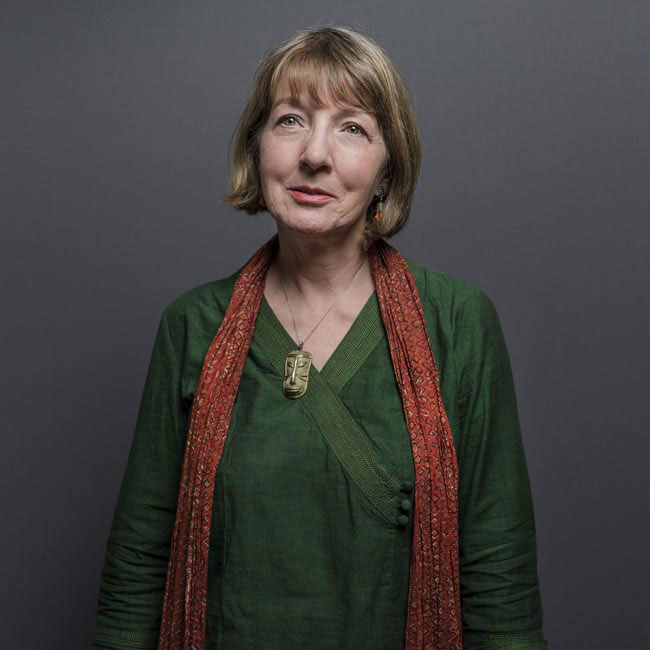
Clare is a journalist, former BBC Radio broadcaster and co-founder of the independent radio production company Pennine Productions. She and her national newspaper travel writer husband Stephen McClarence have been regular visitors to India for different work commissions.
Two years ago, their book, Teatime at Peggy’s: A Glimpse of Anglo-India, was published by Bradt: https://www.bradtguides.com/product/teatime-at-peggys/, and is now in its 2nd edition. They are currently working on a sequel.
Clare’s also written a number of books based on personal testimony, and is currently compiling an oral history of Sheffield Newspapers for Sheffield Archives and the British Library.