Emergency Preparation Guide for Warehouses
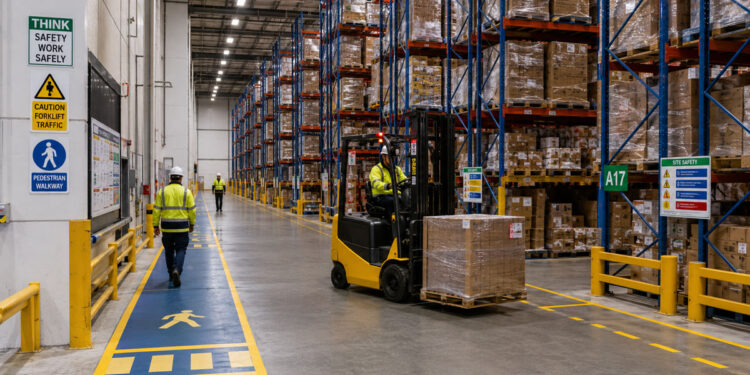
Running a warehouse often means having to expect the unexpected. Loading bay operations require collaboration with countless disparate parties, often while handling sensitive materials, heavy machinery, complex storage systems and unpredictable weather. That’s why any owners or operators need to invest sufficient time and effort into emergency preparation, or a small mistake might snowball into a serious catastrophe.
This article explores the ins and outs of preparing for emergencies in warehouses and loading bay settings, touching on everything from hardware layouts to business continuity protocols.
Proper hardware processes
It’s important to set your physical space up before a crisis hits. You don’t want to get caught in a high-pressure situation and have to operate in a cluttered, ill-equipped environment.
- High-speed doors with manual overrides and failsafes are essential for smooth escapes and containment.
- Fire suppression technology needs to go beyond sprinklers, with proper extinguishers positioned for the specific risks in every zone.
- The space should always be clean and uncluttered for smooth movements.
- Backup power-operated LED emergency lights for warehouses must be installed along all egress routes, as well as photo-luminescent tape in the case of a power cut.
Organise your space for safety and smoothness above all else.
Hazardous materials (HazMat) protocols
Many warehouses and loading bays store chemicals, oils or batteries that can easily accelerate the danger in an emergency. Industrial emergency response needs to consider a sufficient HazMat procedure.
- Safety Data Sheets have to be available digitally and physically for the sake of first responders entering an emergency.
- Battery charging zones must be isolated from the main inventory, equipped with specialised thermal-detection cameras.
- Spill kits should be set up cautiously at 50-ft intervals across chemical zones.
Hazardous materials are the friend of crisis, so manage them properly.

High-rack safety & seismic bracing
Vehicle impacts, explosions or earthquakes are dangerous enough, but racking and storage systems are the biggest threat in these cases.
Anchor your upright racking to the floor with impact guards at the bases.
Make sure any overhead racks are pre-loaded for failure, with maximum capacities clearly communicated.
Install safety netting or wire mesh on the back of racks that border walkways or working areas, containing any potential “fly-off” debris.
When you get prepared for emergencies, it’s not about prevention, it’s about minimising the potential impacts.
Maintaining communication
Clear lines of communication will save lives, so make sure you take a multi-layered approach that makes instructions easy to understand.
Manual air horns should be readily available as a backup alert system.
Use digital check-in/check-out systems for all staff and visitors, as floor wardens need real-time lists to ensure no one is left behind.
Designate a minimum of two clear assembly points, especially important in case if one is blocked by fire or wind. Permanent signage is essential.
Your people are your greatest resource, so they need to be easily informed and accounted for.
Staff training
With this in mind, plans are only as good as the people enacting them. Emergency preparation calls for muscle memory in your staff, who should be properly trained and authorised to enact safety procedures, from top to bottom of your hierarchy. Shadow drills in stimulated emergencies are valuable, as are plentiful team members with first aid capabilities.
Business continuity for the aftermath
Emergency preparation also needs to account for your business’s data, ensuring you can get back to work, even if the physical space is significantly damaged. Warehouse Management Systems (WMS) and shipping logs should be backed up to the cloud, ensuring physical servers aren’t the be-all and end-all of your information.
These insights should be kept in mind by every warehouse owner or operator. By focusing on each of these elements and tailoring your approach to your industry, you can keep emergencies from spiralling into real chaos.