When The Brontës Moved To Haworth
From Drumballyroney in Ireland to Dewsbury and Hartshead, the Brontë family story traces a rise from modest Irish beginnings to Yorkshire respectability. In Thornton in Bradford, “our happiest place”, the family briefly found stability – a new parsonage, deep friendships at Kipping, and the first cries of the children who would change literary history. Yet happiness on the hill was never destined to last. Haworth – harsh, industrial and encircled by moorland – would soon become both sanctuary and crucible: a strange village of crowded graves, hard labour and fierce imagination, where faith, grief and creative fire met and forged the Brontës’ enduring, worldwide legend.
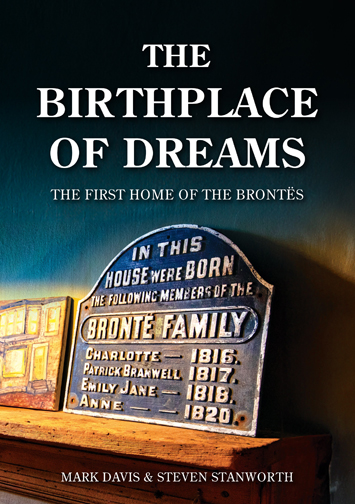
In this extract from Mark Davis & Steven Stanworth’s book ‘The Birthplace of Dreams’ the family make the move into the famous parsonage…
So it came to be that the Brontë family arrived in Haworth, the village in which Patrick accepted the perpetual curacy of St Michael and All Angels’ Church where he would serve his parishioners for forty-one years until his death in 1861. They now had a larger house, a forever home the family could breathe in. They had space, where in time those young, curious and developing minds would write some of the finest nineteenth-century literature ever published.
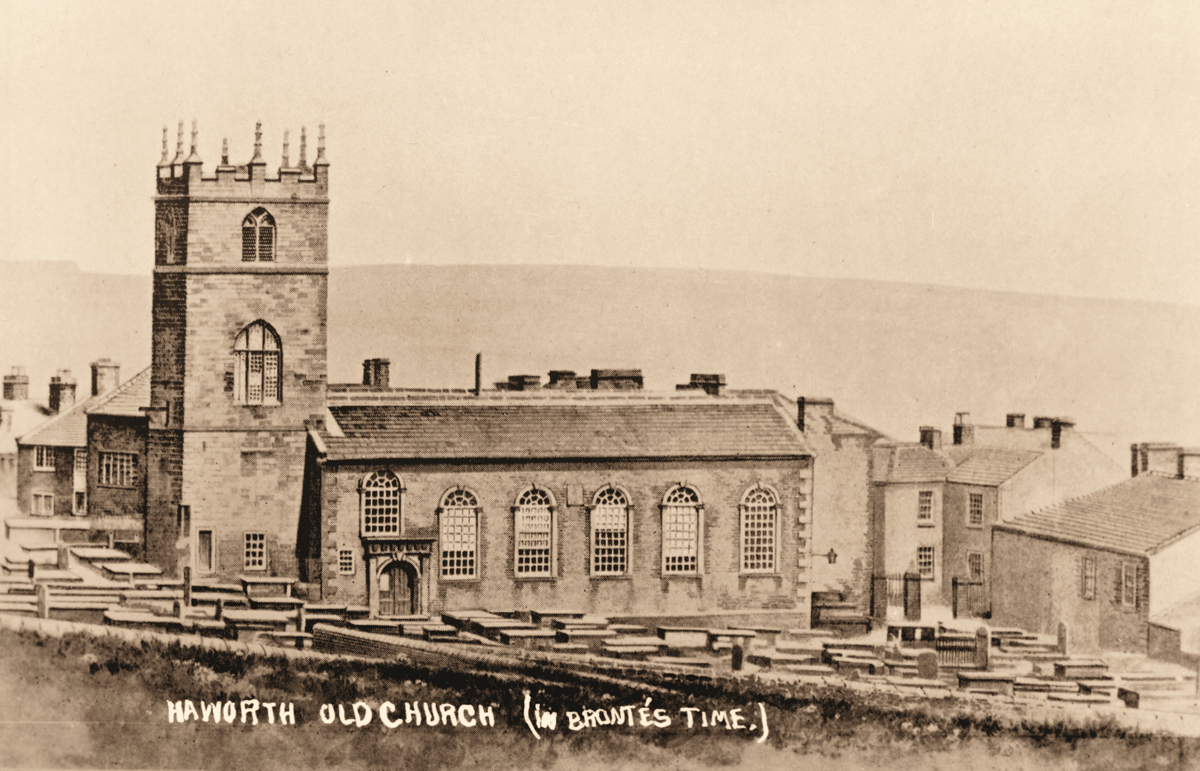
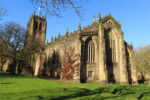
Haworth church as the Brontë family would have known it.
“Rounding up locals”
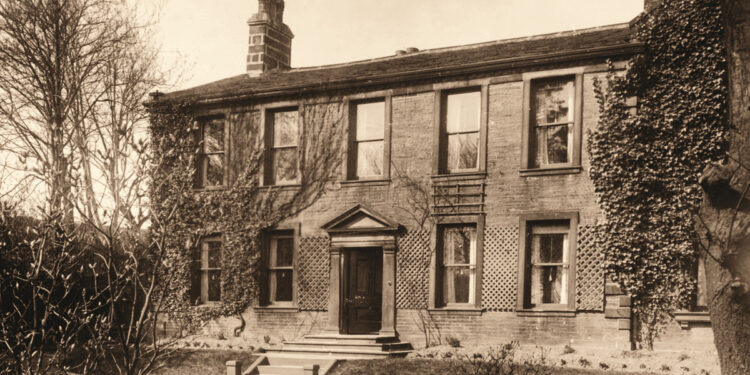
Boasting an impressive central entrance hall, it was flanked by two large accommodating front rooms with a kitchen and storeroom to the rear. Upstairs was equally as spacious; there were four bedrooms and a box room over the hall. In addition, there was a double-vaulted cellar and a small yard to the rear giving access to the all-important inspirational moor. To the front a high stone wall hugged the lawned front garden with flower beds at either side, a place where the children could play safely in comparison to the narrow alleyway at the side of their former home.
The new incumbent wasted no time in getting to work with his ministerial duties; within days of arriving in April, he had performed three burials, four weddings and an equal number of baptisms.
The church footprint, although it is said dates to ancient times, had last been enlarged in 1755 to accommodate the large congregations that William Grimshaw attracted to the village. Grimshaw, who was firm friends with John Wesley, was the rector of Haworth from 1742 until his death from a fever in 1763. He was heavily involved in the Evangelical movement in that period and legend has it he was known as the ‘flogging preacher’, forcibly rounding up locals from the pubs and encouraging them to join his church services. He was known to preach up to thirty times a week. John Wesley wrote of him: ‘A few such as him would make a nation tremble … he carries fire wherever he goes.’ A stone font in the graveyard displays his name.
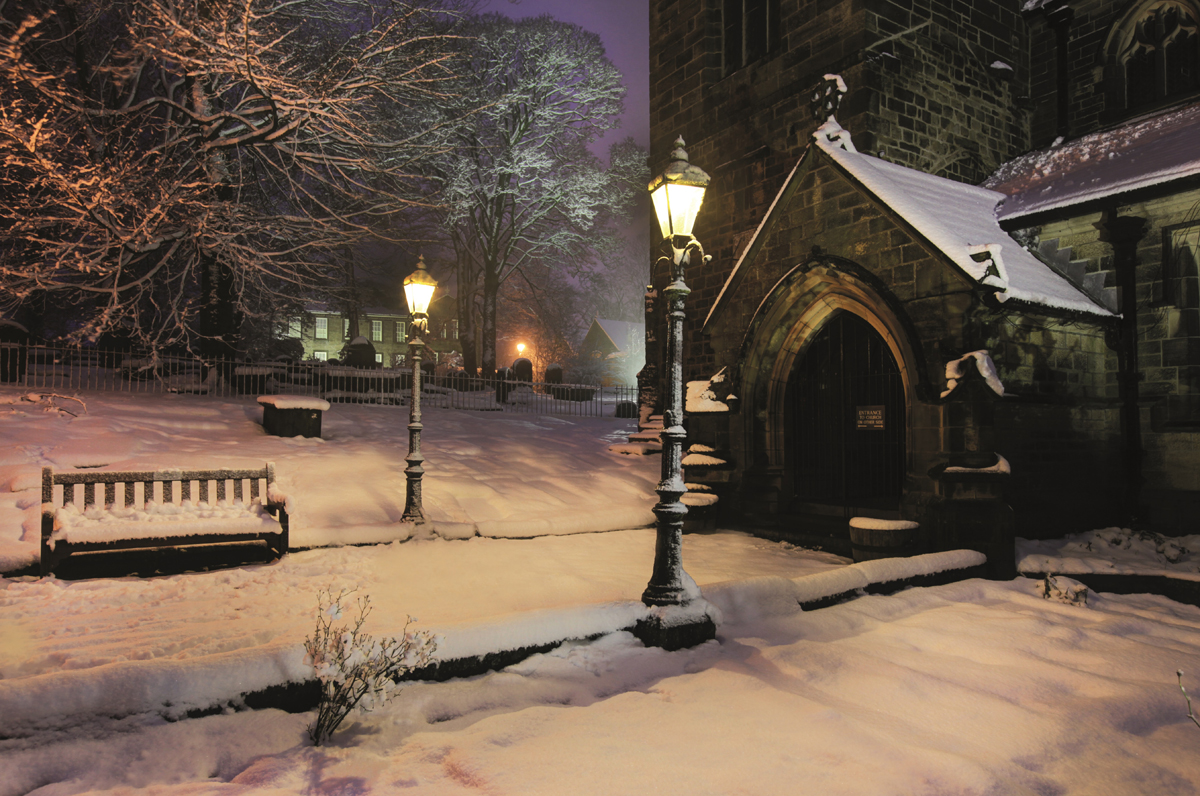
St Michael and All Angels’ Church in more recent times
“Evergrowing flock”
The church we know today was rebuilt by Patrick’s successor Revd John Wade in 1879–81 and all that remains that the Brontë family would have known is the tower, although even that was raised to include a clock face. Wade also extended the parsonage, adding new north and west gabled wings.
In 1820, the village was expanding quite rapidly due to the ever-increasing rise in population as the Industrial Revolution gathered pace. With ten mills being placed locally by the River Worth, it’s no surprise that more than a third of the inhabitants were gainfully employed in the textile industry. Many more worked from home, hand loom weaving or combing. There was also work in the quarries and in the agricultural sector. There were, in addition, a good number of tradesmen and professionals living in the area.
The parish of Haworth took in the surrounding villages of Stanbury, Oxenhope, Oakworth and Cullingworth, to which the conscientious Revd Brontë walked many miles back and forth tending his evergrowing flock. It is to his credit, as he was known to encourage baptisms, officiating over on average 290 of them per year
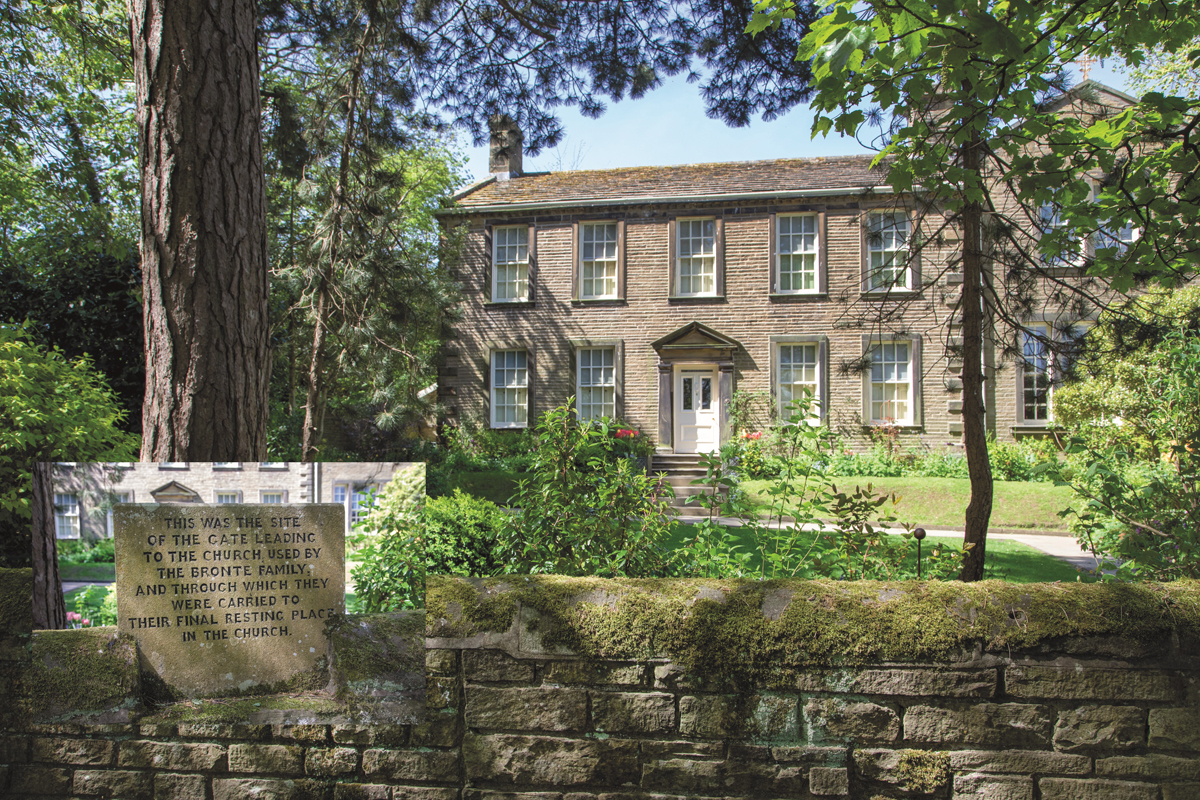
Haworth parsonage, spring 2025
“Tragic circumstances”
In early nineteenth-century Haworth there was a great deal of poverty, although saying that there was also evidence of prosperity. The very poorest working class often shared living space with other families in small back-to-back cottages or badly ventilated and damp basement dwellings. As you would imagine the general health of the population was abysmal, which was further exasperated by an inefficient water supply from the pumps or wells. Much of the water was contaminated by the overflow from the outhouse privies.
The mortality rate in the village was incredibly high and emulated the worst areas of the country in numbers. Families bringing ten children into the world could reasonably only expect five or six of them to live beyond infancy, which in turn brought the overall average age of death down to just twenty-five.
Despite the future looking bright for the family in their new home, it was sadly only a matter of months of their move to Haworth before tragic circumstances would befall them. On 29 January 1821, Maria senior collapsed with stomach pains at the parsonage. Patrick, sensing there was something seriously wrong, called in several doctors to examine her but alas not one of them offered any hope of recovery – all the opinions diagnosed cancer.
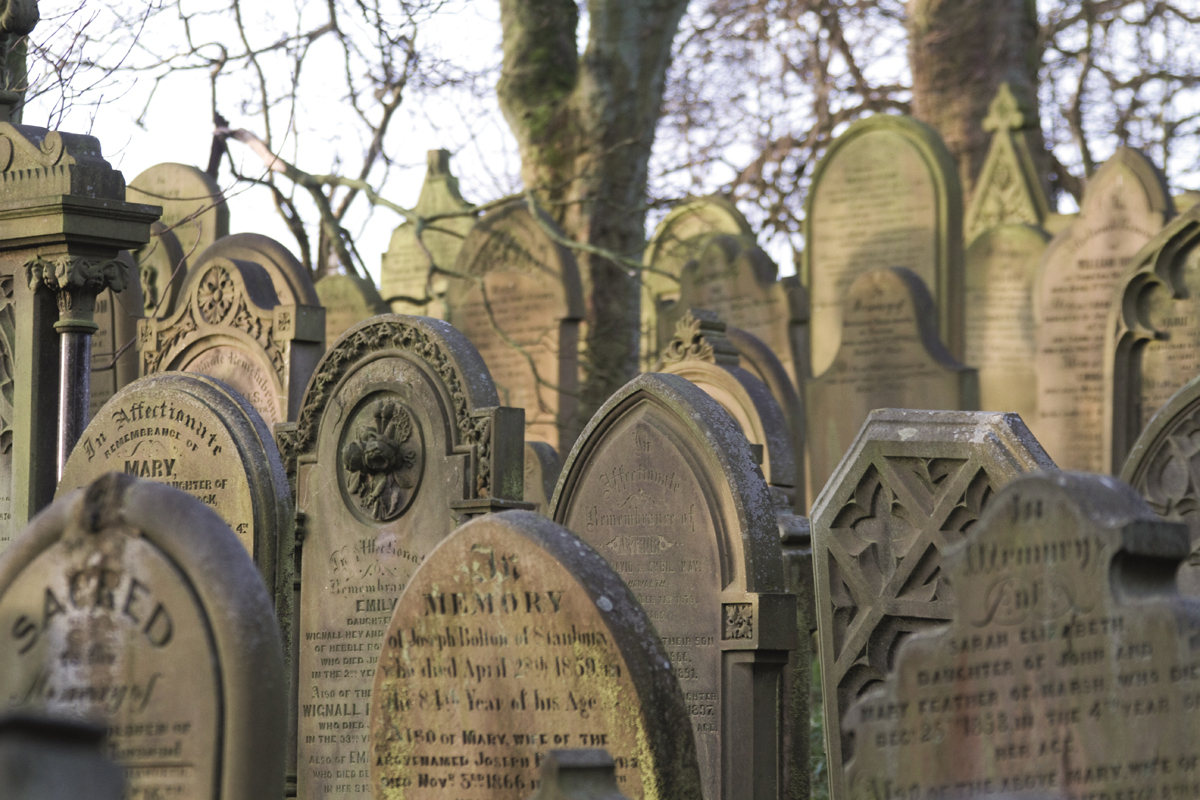
St Michael and All Angels’ graveyard
“Terrible sadness”
Maria had spent most of her married life producing six children in as many years. It must have been torturous for her as she clung onto life at the parsonage with the pain she was suffering. To be aware that she would not live to see her family grow must have been all-consuming, for the nurse had heard her cry out repeatedly ‘Oh God my poor children – Oh God my poor children.’ When she passed away on 15 September, less than eight months after her collapse, her youngest, Anne, was just twenty months old.
 During her illness Patrick had taken on the night nursing himself but had employed a local woman to assist during the day so he could still carry out his duties. Through that dark, lonely period, he still performed 190 baptisms, sixty-two burials and twenty-one marriages. Upon Maria’s sister, Elizabeth, returning from Penzance to help and supervise the nursing, the daily help was dismissed. Elizabeth Firth did much to assist; she visited Maria, twice in February, once in March, and later on 26 May, and she took the eldest children, Maria and Elizabeth, to stay with her at Kipping House for a month.
Maria’s funeral took place on 22 September, with Patrick’s old friend William Morgan of Christ Church performing the service, having married them only eight years previously. He too would have been locked in with the grief and terrible sadness the family felt. William Morgan would also suffer the loss of his wife, Jane, in 1827, but would remarry twice more in his lifetime.
Maria was laid to rest less than a hundred yards from her home under the old church flagstones, in a freshly opened vault that in time would house all but one of her children. None would exceed her thirty-eight years of age.
‘The Birthplace of Dreams’ by Mark Davis & Steven Stanworth is published by Amberley Publishing