The 1908 Leeds Suffragette Riot

By Harry Bratley
By 1908, the suffragettes had been campaigning for women’s right to vote for several years. Founded in 1903, the Women’s Social and Political Union (WSPU) was led by Emmeline Pankhurst and specialised in highly visible confrontations, including acts of violence, to publicise its cause. Its members took every opportunity to embarrass the government.
The Leeds branch of the WSPU regularly held meetings on Woodhouse Moor and Hunslet Moor, often attracting crowds of more than 100,000. On Saturday 10 October 1908, the Prime Minister, Morley-born Herbert Asquith, visited Leeds to make a speech at the Coliseum on Cookridge Street, on the site of the present-day Leeds Arena. The police were concerned that the suffragettes would attempt to disrupt the occasion and confront the Prime Minister, as they had done on many previous occasions. To avoid any disturbance, admission tickets to the event were specifically stamped ‘Men Only’, preventing any disguised suffragette from gaining entry.
28 July 1908. The image shows a group of women carrying placards and banners as they take part in the Women’s Social and Political Union’s procession to Woodhouse Moor, where a huge rally was held.
Jennie Baines, a leading suffragette organiser, had chalked the pavements of Leeds to promote a protest that would take place that afternoon during Asquith’s speech. A crowd of up to 1,500 people assembled outside the building and was addressed by several speakers, including Baines, who had earlier gained entry to the meeting before being removed.
At the same time, a meeting of around 600 unemployed people was taking place in Victoria Square, organised by the Permanent Committee on Unemployment. The committee’s chairman, Alfred Kitson, decided that the group should march to the Coliseum to attempt to secure a discussion with the Prime Minister.
As they approached Cookridge Street, Jennie Baines was proclaiming that unemployment was ‘more a woman’s question than a man’s, for it was the wife who had to meet the landlord’s demand for rent’. As the two groups joined together, she cried: ‘If those tyrants refuse to listen to us, break down the barriers!’
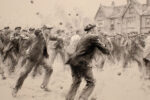
At this cry, the newly amalgamated crowd rushed across Cookridge Street towards the Coliseum doors. Although the group was unable to gain entry to the meeting and the assault caused very little damage, the police interpreted the attack as a riot. Baines and Kitson were arrested, along with several others.

“Arrested again”
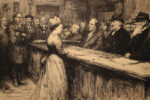
Jennie Baines and Alfred Kitson appeared before Leeds Magistrates’ Court on 15 October, charged with disorderly conduct and unlawful assembly. Kitson was also charged with assaulting a police officer. Both were granted bail and committed for trial at the next Assize Court sitting. Jennie Baines subsequently became the first member of the WSPU to be tried by a jury.
Baines refused to be ‘bound over’ to keep the peace because she ‘did not recognise the laws of this court administered by men’. She was sentenced to six weeks’ imprisonment in Armley Jail. One of the first suffragettes to advocate militant methods, Baines would eventually be imprisoned around fifteen times for her involvement in protests.
In May 1913, she was arrested again for obstruction during a meeting in Hyde Park and sentenced to one month in prison. This led WSPU leaders to conclude that her health could not withstand another period of imprisonment. Baines’s family therefore smuggled her into Wales, where she boarded the Ballarat, bound for Australia. She arrived in Melbourne in December 1913.
The suffragette movement continued its campaign for votes for women for many years. Asquith, an opponent of extending the franchise to women, was replaced as Prime Minister in 1916 by David Lloyd George. While in opposition, Lloyd George had supported the suffragettes’ campaign. Once in government, however, he did everything he could to prevent women from being given the vote. The bombing of his home by the WSPU in 1913 no doubt strengthened his opposition.
Suffragette militancy was suspended during the First World War. In 1918, a coalition government passed the Representation of the People Act, which gave the vote to women over the age of 30 who lived in the constituency and occupied land or premises with a rateable value of more than £5, or whose husbands did. Ten years later, the voting age for women was lowered to 21, placing them on the same electoral terms as men.
The Leeds Suffragette Riot of 1908 was only a small event in the WSPU’s 15-year struggle for the enfranchisement of women.
images are representational
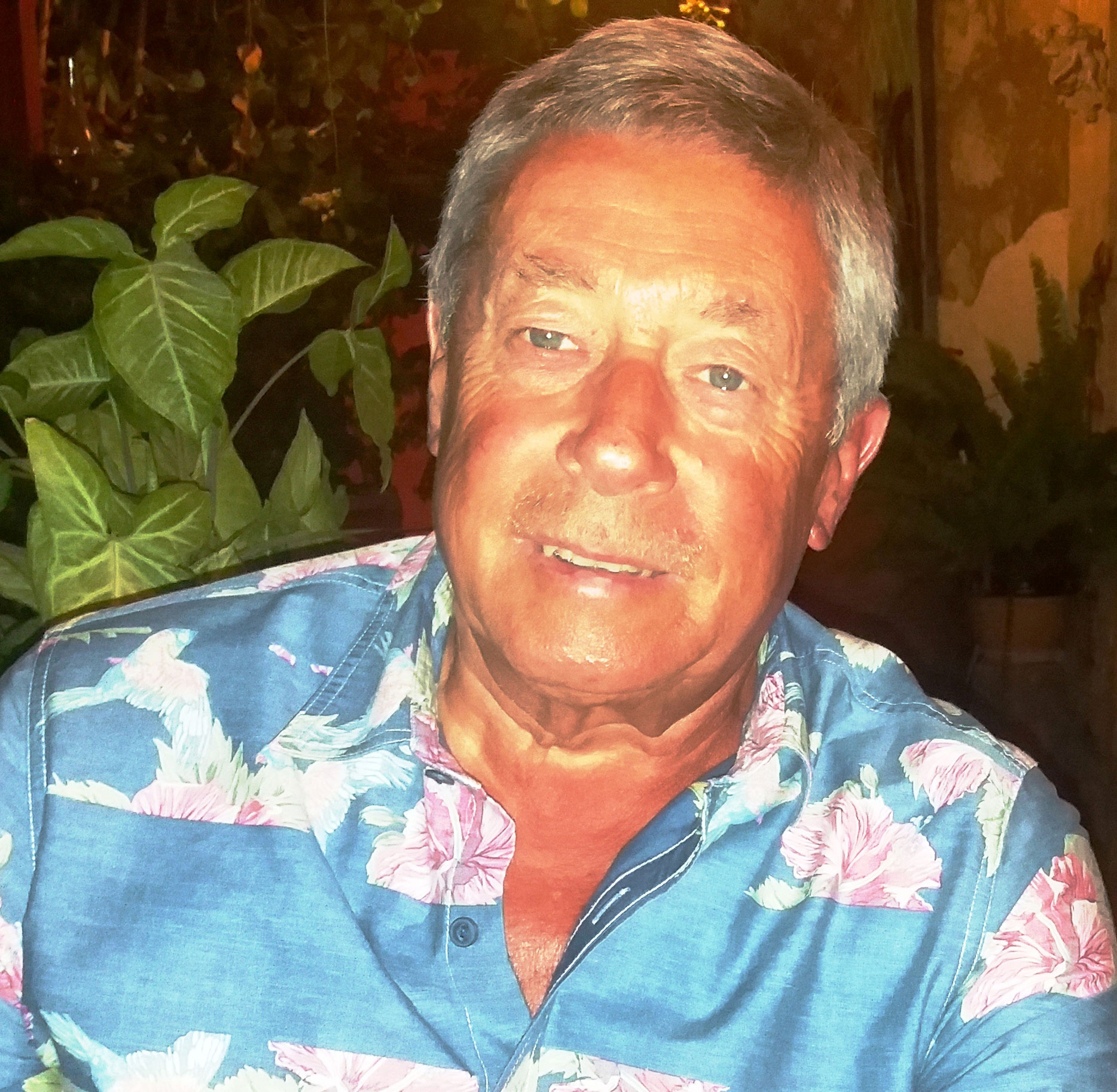
Harry was born in Bradford and has lived in Kippax, near Leeds, for over 40 years with his wife, Ann. At school, he studied History, Geography, and English Literature, dreaming of visiting iconic places like the Grand Canyon, Taj Mahal, and Sydney Opera House. He spent much of his career in the travel industry, allowing him to explore the world and fulfil his childhood dreams. With a lifelong passion for history, Harry pursued further education upon retirement, earning a Bachelor of Arts (Honours) degree in History from university.