The Morley Miners’ Riot of 1893
By Harry Bratley
In 1893, the largest industrial dispute Britain had so far experienced took place when over 300,000 coal miners throughout the country stopped work. Miners in the West Riding played an important part in the dispute, the first major trial of strength for the Miners’ Federation of Great Britain (MFGB), which had only been formed some four years earlier. In Yorkshire, a series of violent confrontations thrust many mining areas into a state of lawlessness and mob rule, climaxing at Featherstone when the army shot and killed two miners.
By the early 1890s, the British coal industry, along with many other businesses, had begun to decline during the economic slowdown known as the ‘Great Depression’. By 1893, the price of coal had dropped 35 per cent lower than it had been in 1890. Consequently, to restore profitability, colliery owners stipulated a significant decrease in wage rates. In response, the MFGB and the Yorkshire Miners’ Association (YMA) were adamant that the 40 per cent wage increase they had secured three years earlier must be maintained. Determined to implement a cutback, employers demanded a 25 per cent cut in wage rates from the end of June. This was resolutely opposed by the MFGB and YMA, and by the end of July, the majority of the 80,000 colliers in the West Riding’s 253 pits were locked out.
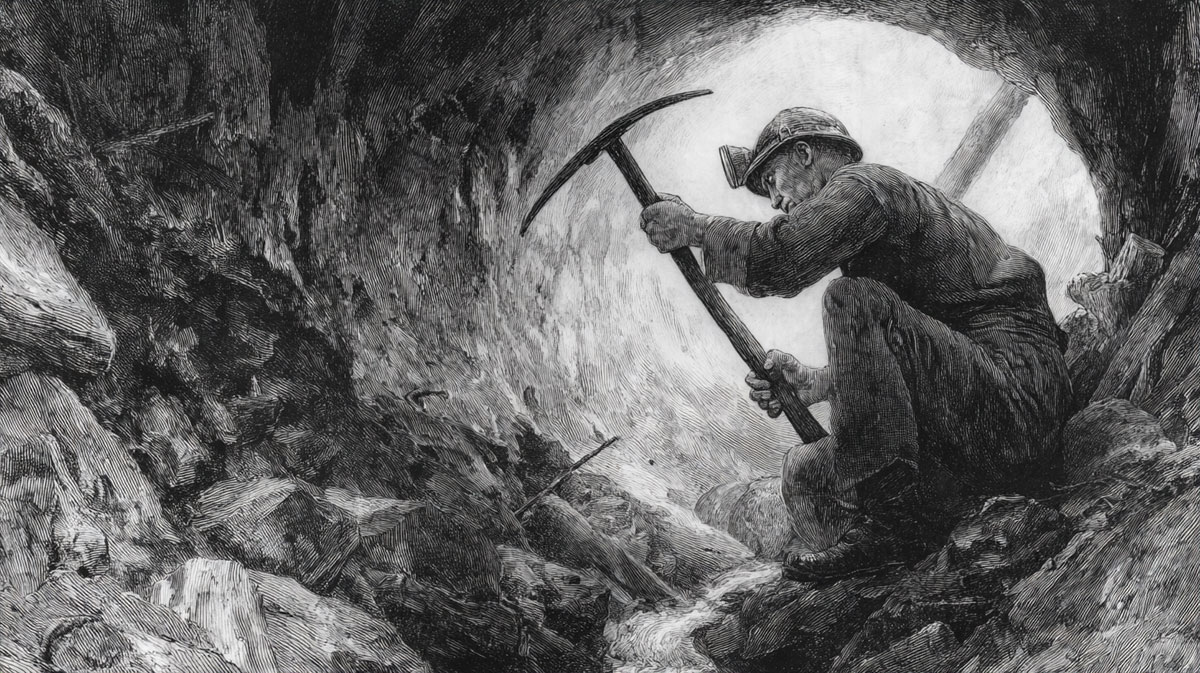
Even before the demand for a 25 per cent cut in wages, grievances had been developing at Morley Main Colliery. As the Leeds Times reported, the manager there gave notice to those working in the Beeston Bed of a reduction of twopence per ton, which they refused to accept. A ballot of the men declared their desire to give notice to stop work, which was approved by the YMA, and the men walked out of the mine, effectively locking themselves out. The situation then deteriorated even further after the announced 25 per cent pay cut. The Yorkshire Evening Post reported that, by late July, Morley Main Collieries had become the scene of considerable disorder. In sympathy with the men on strike from the Beeston Bed, those employed in other parts of the workings also came out and accordingly gave notice to terminate their contracts, which expired on Friday, 28 July, when the men withdrew their labour.
“Have to close”
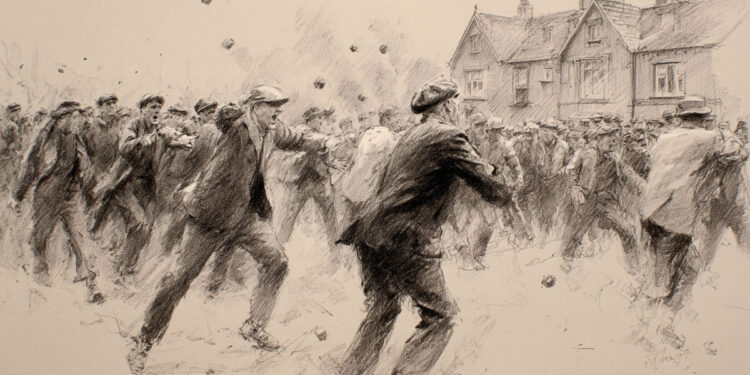
Although the striking pitmen were now locked out of Morley Main Colliery, on the following Monday it became known that a number of ‘blacklegs’ were still working. Those on strike congregated outside the pit during the day, their numbers considerably increased by an influx of striking miners from other pits. When the morning shift of workers attempted to leave the pit yard at 2pm, a gang attacked and chased the men back through the pit gates. The police were sent for and order was eventually restored. The colliery managers decided to keep the men in the yard for their safety as the crowd indulged in name-calling and shouting, with the scene of unrest continuing. When it was considered safe enough for the workers to leave, they were escorted by several police constables. On their way, they were shouted at by hundreds of men, women and children, with stones and other missiles being thrown at both the police and the men they were protecting. Several officers were injured in the melee. Eventually, the men reached their homes; however, to keep the peace, a strong police presence had to remain in the neighbourhood.
The following day, at the Borough Court of Morley, Herbert Holmes, a young miner, was accused of attacking Police Sergeant Horner during the previous day’s disturbances. He denied striking the officer, but the court found him guilty of a serious charge, with a fine of £10 or two months’ hard labour. The court warned that anyone else brought before it on similar indictments would not be dealt with so tolerantly.
The Yorkshire Evening Post reported that the strike was already affecting the town. It stated that very few of the mills in Morley had more than a few days’ engine coal, that there was none in stock at the pits, and that a number of factories would soon have to close. Short time was being worked at several mills, and some difficulty would be experienced in obtaining coal to keep them running.
By the beginning of September 1893, Yorkshire was suffering a breakdown in law and order not experienced since the days of the Luddites and Chartists. Civil disorder spread throughout the coalfields and rioting became a daily occurrence. With the situation becoming uncontrollable, soldiers and police were brought in from other parts of the country. Yorkshire was subject to troop movements, marching mobs, mass meetings and attacks on various pits. Most of the riots took place where either ‘blacklegs’ or non-unionists were still working, or where stocks of coal were being shifted.
“Very menacing”
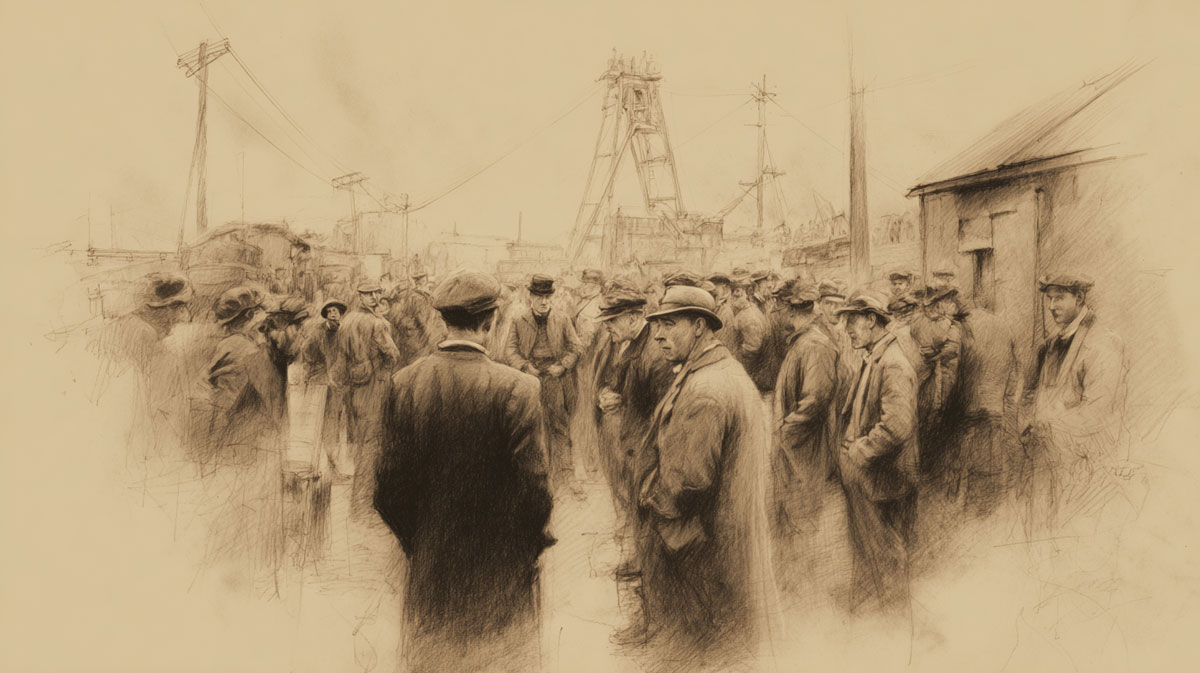
 On Sunday, 3 September, there was an intimidating mass march to Morley. It all started when around 500 miners attended a meeting at Cross Flatts Park, where a protest rally was being organised to Ravels Pit, which was on the way to Morley, to persuade the colliery manager to remove all working men from the pit. According to the Yorkshire Evening Post, the whole body marched off in a determined and menacing manner, the cry being “March to Morley”. The attitude of the crowd, armed with iron gas pipes and cudgels, was very menacing. The crowd swelled along the way to almost 5,000 men as news of the march spread. As they approached the pit, the labourers working there bolted in all directions. Violence then ensued, with one of the workmen thrown into a nearby pond and others attacked in the pit yard. The gathering surrounded the pit manager, demanding that he give details of where the labourers’ homes were and, when he refused, they threatened to kill him. The opportune arrival of a body of police saved his life and prevented more violence by the enraged strikers. Eventually, the colliery owner gave an undertaking not to allow any more workmen to move coal, or to sell any coal for the duration of the dispute, which eventually calmed the crowd.
The numbers had risen by now to between 7,000 and 8,000 men, with miners from Wakefield, Rothwell and Batley joining in, carrying all types of heavy weapons. Marching on, they made for Victoria Colliery at Bruntcliffe, Morley, where it was believed that coal was being moved. The colliery manager assured the miners’ representatives that the only men working were those keeping the mine in good and safe order, and that they had not been moving coal. However, the throng was now looking for trouble and soon became unmanageable. The manager’s house was attacked and every window broken. The police were called for but were unable to cope with the riot. The windows of the colliery office were also smashed, as were two cottages belonging to men who had been working at the pit. The Yorkshire Evening Post described how non-unionists were sought out and taken from their houses, led into the crowd, and beaten mercilessly with cudgels. The treatment received was described as brutal, and it was said that they only escaped with their lives by rushing in the direction of the police for protection.
On the following Monday, a large number of rioters from surrounding towns visited Morley Main Collieries. The houses of men alleged to have been working were attacked, their windows smashed and their contents completely destroyed. To avoid an escalation of violence, extra police from Bradford and Dewsbury had to be drafted into Morley, along with a detachment of soldiers from the South Staffordshire Regiment stationed in Bradford. Throughout that evening, a large number of people thronged the town’s streets, but no further disturbances took place.
“Riotous proceedings”
The next afternoon, nearly 400 men attended a meeting at Morley Co-operative Hall, presided over by Walter Sykes, the check-weighman at Morley Main Colliery. The meeting was addressed by the Town Clerk of Morley and the President of the Morley Co-operative Society, who appealed to the men not to resort to any further violence, as did the leaders of the local miners. Eventually, the following resolution was agreed:
“That we, the miners of Morley Main Collieries, deeply regret the action taken by the mob in our town and other places; we believe that the mob in Morley was composed chiefly of persons who are always ready to promote and take part in riotous proceedings; we do most emphatically condemn their despicable and cowardly action in destroying and damaging the property of those persons who were only doing what they were entitled to do.”
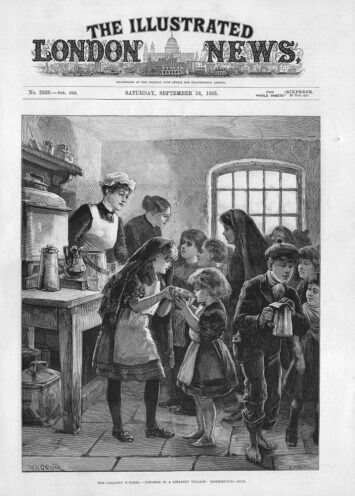
The Morley miners laid the responsibility for the violence upon persons from other districts, including Leeds. During the same meeting, on questions submitted by the MFGB, all the miners voted against returning to work on reduced wages until the dispute was over, which would take another 17 weeks, bringing great hardship to mining families, including the introduction of soup kitchens.
The 1893 miners’ strike and lockout was finally settled by the first-ever government intervention in an industrial dispute. A conciliation board was made up of an equal number of miners and mine owners, chaired by a civil servant. In November, the miners eventually returned to work on their existing wages. These were only guaranteed until February 1894, at which point they reluctantly had to agree to a 10 per cent reduction in earnings, to be reviewed again in January 1896. At this date, the mine owners demanded a further 10 per cent wage reduction, which was refused, and the conciliation board collapsed, leading to future disputes between mine workers and owners for many years to come.
images are representational

Harry was born in Bradford and has lived in Kippax, near Leeds, for over 40 years with his wife, Ann. At school, he studied History, Geography, and English Literature, dreaming of visiting iconic places like the Grand Canyon, Taj Mahal, and Sydney Opera House. He spent much of his career in the travel industry, allowing him to explore the world and fulfil his childhood dreams. With a lifelong passion for history, Harry pursued further education upon retirement, earning a Bachelor of Arts (Honours) degree in History from university.