Yorkshire’s New Night In: How Online Casinos Are Changing Leisure Spending
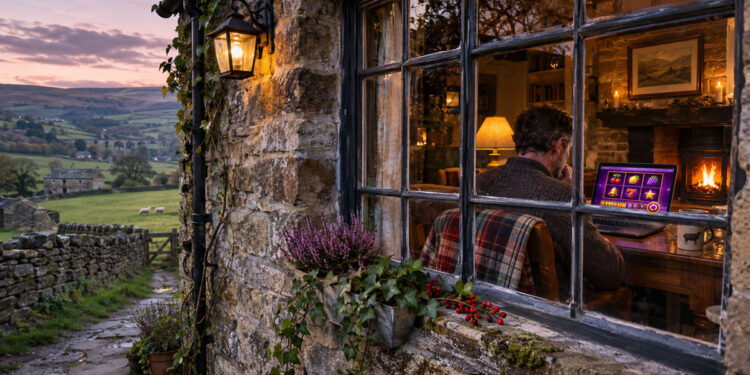
A theatre seat in Halifax offers something a phone cannot: an evening with a beginning and an end, shared with everyone else in the room. The atmosphere described in this Victoria Theatre live review is a useful reminder of what a night out buys. Staying home removes the journey, but it also removes some of the boundaries around spending.
For adults considering the latest new casino sites, that difference matters more than a fresh design. A cinema ticket fixes much of the evening’s entertainment cost before the lights go down. An online casino does not offer the same certainty. Choosing to stay in should not mean leaving the final bill open.
Yorkshire is not a single leisure market. Someone living near a city centre has different evening options from someone facing a drive home from a village pub. Nor is there evidence here that households across the county are moving their entertainment budgets into casino games. The useful question is narrower: how should an individual assess this particular way of spending an evening?
What a new casino site actually means
The word new says little about the business behind a website. A recently launched address might belong to an established licensed company. Equally, a new appearance does not demonstrate that a service meets the requirements for offering gambling to consumers in Great Britain. Website design cannot answer that question.
The Gambling Commission’s register of gambling businesses allows searches by domain name as well as business name. Its records distinguish licence status from the status of individual domains. That distinction is useful when the company name in the footer differs from the name across the top of the screen.
Check the exact address rather than relying on a familiar logo. Read the recorded status and the licensed activities, not simply the fact that a company appears in a search. A pending application is not the same as an active licence. The register explains these categories, making it a better starting point than a badge copied into a website footer.
Licensing is a basic condition, not a promise that playing will be affordable or profitable. A regulated game can still consume the whole amount someone sets aside. No amount of attractive presentation changes that.
A consumer checklist before opening an account
Once the licensing position is clear, the practical questions deserve attention. Can the account holder find the payment rules without registering? Are there charges or restrictions that would affect their intended use? The useful information is in the terms, not an image of a payment card.
Look at how customer support works. An accessible contact route matters when an account query cannot be resolved through a standard help page. Check whether the published contact hours suit the times the service would actually be used. Finding a chat symbol is not the same as establishing that a person can help.
Account controls should be considered before money enters the account. Locate the spending limit settings and read what each limit measures. A deposit limit controls money added; it does not necessarily describe every pound staked using a balance already there. Confusing those figures makes a budget harder to follow.
Terms can also attach conditions to promotional credits. Anyone who cannot explain a condition in ordinary language has not yet established what it means for them. There is no need to accept an offer simply because it appears during registration. Leaving it alone is an available decision.
Budgeting and cooling off
A household leisure allowance needs to survive contact with the rest of the month. An evening at home still sits alongside the heating bill and the cost of getting to work. Money already reserved for those expenses is not spare because it happens to remain in the current account.
Decide on an amount that can be lost in full without replacing it from another pot. That calculation may produce zero. It should not depend on winning some of the money back or on spending less at a later social occasion.
Time needs a boundary too. A planned finish gives the evening an endpoint independent of the balance on screen. Reaching a spending limit early should end the activity, not prompt a search for another account. If stopping repeatedly becomes difficult, a longer break and stronger restrictions are more appropriate than another adjustment to the plan.
Keep the wider Yorkshire evening in view. Money spent online cannot also pay for a ticket at a local venue, and staying home does not recreate the conversation after a performance. The sensible comparison is between the experiences actually wanted, not between a wet walk to the car and an appealing screen.
Back in Halifax, the theatre curtain provides a finish without negotiation. A night in needs its own equivalent. If an activity will not fit inside the amount and time already chosen, it has failed the household test, however modern the website looks.