How Stainless Steel Is Shaping Modern Yorkshire Homes

Yorkshire houses have a way of telling on you. The draught under the door. The rain that arrives sideways. The stone that looks eternal until you try to insulate it. In this landscape, materials don’t get chosen for vibes alone. They get chosen because they cope. And lately, stainless steel is turning up in places it used to avoid – outside the factory, beyond the professional kitchen, right into the domestic scene.
Not as a shiny, restaurant-style cliché. More as a quiet fix. A hard-wearing answer to soft problems. A rail that won’t wobble. A splashback that doesn’t stain. A garden detail that keeps its nerve through winter, when everything else is peeling, swelling, warping.
The Yorkshire home is changing, but the weather is not
Look at the housing stock across Leeds, York, Sheffield, Hull, and the villages in between: terraces, semis, converted barns, old mills made fashionable again. These homes are being updated in the same way Yorkshire people update themselves – practically, with a little stubbornness, and only when it’s worth it. Stainless steel fits that mindset. It doesn’t ask for much. It doesn’t flinch at steam, mud, salt air, or the endless cycle of wet coats and muddy boots.
It also plays nicely with Yorkshire’s new design language: part heritage, part minimalism, part “we found this beam and decided it was a feature”. Stainless can sit next to oak, slate, brick and polished concrete without looking like it’s trying too hard. It’s industrial, yes. But so is the county, if you glance at the past.
Where stainless steel is turning up indoors
Kitchens were the gateway. Now the material is spreading. Homeowners want surfaces that don’t punish them for cooking properly — frying, fermenting, baking, letting a pan simmer too long while the dog starts barking at nothing. Stainless forgives. It wipes down. It doesn’t hold grudges.
- Splashbacks and worktops that shrug off heat, spills and aggressive cleaning.
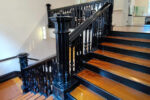
- Handrails and balustrades for stairs and mezzanines in conversions – sleek, safe, unfussy.
- Utility-room sinks that take the hit from paintbrushes, muddy trainers and bucket rinses.
- Hardware – handles, hinges, trims – small pieces that quietly raise the whole room’s resilience.
- Bathrooms via towel rails, shelving and fixtures where moisture usually wins.
The effect is subtle: fewer fussy finishes, fewer “special care” warnings. A home that can be lived in, not curated. Which is, in its own way, a kind of luxury.

Outside, it’s less about shine and more about survival
Yorkshire gardens are not polite. They are wind tunnels with aspirations. Stainless steel has become a useful ally outdoors: planters, edging, pergola fittings, outdoor kitchens, fixings for decking and steps. Especially near the coast – Bridlington, Filey, Whitby – where salty air turns ordinary metal into a long, slow apology.
People notice durability when they’ve paid for something twice. The rusted bracket. The warped latch. The “weatherproof” screw that wasn’t. Stainless is what you move to when you’re tired of replacing.
Choosing the right grade (and why it matters)
Not all stainless steel behaves the same way, and the details matter more than the marketing. For many indoor uses, common grades will perform well. For harsher conditions – outdoors, coastal areas, anything exposed to de-icing salts – selection becomes more specific. It’s worth sourcing components from a specialist supplier that clearly lists grades and applications, rather than leaving you to guess.
A Yorkshire material for Yorkshire living
Stainless steel isn’t trying to be cosy. That’s not the point. It’s trying to last. And in a modern Yorkshire home – where the kettle boils all day, the hallway takes a battering, and the weather is always a step ahead – lasting is a kind of comfort. Quietly. Reliably. Like a good coat.