Why CNC Manufacturing Partnerships Are Becoming More Important for Growing Businesses
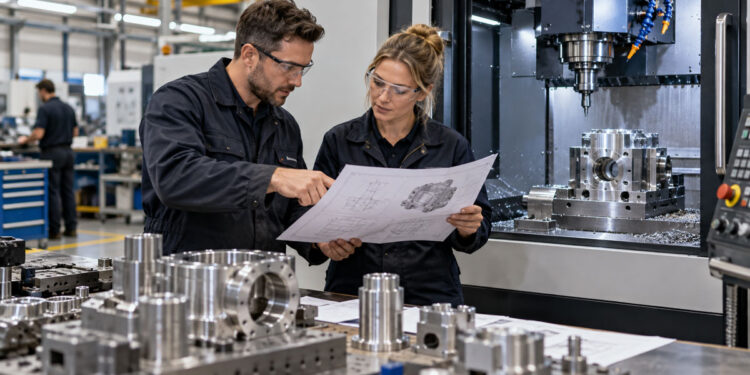
Growth may seem like a completely positive aspect for any business, but with growth comes increased pressures. This is even more prevalent in businesses where physical products, materials and components are involved. Things like higher order volumes, complex projects and tighter turnaround times can each very quickly penetrate exposed gaps in the production process.
Investing in more machinery, a different work environment or other internal resources may seem like the best next step. But it is actually in manufacturing partnerships where businesses can improve with fewer grower pains. It is also a cost-effective way to gain access to specialist capabilities and enhanced experience levels.
Accessing Specialist Manufacturing Capabilities
As products and projects become more complex, larger or more frequent, a growing business may need access to different manufacturing processes. These can include CNC machining, cutting, fabrication, routing, turning or other specialist finishing.
Developing all capabilities in-house can require significant investments in machinery, skilled engineers, higher levels of training, maintenance and production facilities. Opting to partner with specialist manufacturers instead can provide businesses with access to pre-established equipment, expertise and capacity without substantial upfront and continued management costs.
External manufacturing partnerships can therefore provide the greatest value when they address specific capability gaps, improve flexibility or provide additional capacity during periods of increased demand or limited internal resources.
There is still the argument for bringing select operations in-house however. When production volumes are sufficiently high and consistent, it may justify the investment as a commercially beneficial upgrade.
Responding to Changing Production Demands
Production requirements can change significantly as a business develops, with companies often moving between prototyping, small-batch production, repeat orders and larger-scale manufacturing within relatively short timeframes. Working with an external manufacturing partner can provide additional capacity when internal operational needs are already at full capacity.
This flexibility is particularly valuable when demand increases unexpectedly or when a project requires specialist equipment that would not generate sufficient use to justify permanent investment.
External manufacturing can also support businesses launching new products or entering new markets by providing access to additional production capability without requiring immediate investment in facilities, equipment or permanent resources.
Bringing Different Expertise Into the Production Process
One of the primary benefits of partnering with specialist manufacturers is the introduction of valuable expertise into your overall supply chain. Their knowledge of different materials, tolerances, machining techniques and production consistency can help businesses enhance their methods without the need for expensive upfront costs.
Collaboration between designers, engineers and manufacturing teams should be implemented as early as possible to identify any potential production challenges before work begins. This is key for minimising delays, material wastes and unexpected expenditures.
Considerations like material performance, achievable tolerances, production efficiency and suitability for batch manufacturing can influence both the design and manufacturing process. However, successful collaboration depends on providing accurate and detailed information, including technical drawings, dimensions, tolerances, quantities and required surface finishes.
How Technology Is Making Collaboration Easier
As with most industries, digital inclusions in manufacturing workflows have made it far easier for teams in separate organisations to work with the same design information. CAD files and digital drawings can communicate dimensions and geometry clearly, while computer-controlled equipment allows approved designs to be reproduced consistently.
Both automation and digital production management are improving visibility across manufacturing processes, while rapid prototyping options can shorten the route between the initial design processes to practical testing. These technologies do not remove the need for technical discussion, but they can reduce ambiguity and make collaboration between different businesses more efficient.
Choosing the Right Manufacturing Partnership
The success of a manufacturing partnership depends on how well the supplier meets the project’s requirements. Alongside suitable equipment, businesses should consider the manufacturer’s experience with relevant materials, production capacity, quality standards and communication.
Flexibility is also important if requirements change as the project develops. A supplier capable of producing prototypes may not always have the capacity for larger production runs.
Other key details like design specifications, tolerances, quantities and lead times should therefore be agreed early, ensuring both parties have a clear understanding of expectations before production begins.
Manufacturing Partnerships as Businesses Grow
Growth does not mean that every part of operational production capacity needs to sit under one roof. Specialist manufacturing partners can instead form part of a wider supply chain, giving growing businesses access to additional skills, production capacity and technology whenever needed.
As requirements become more and more complex, successful manufacturing relationships increasingly demand clear communication, compatibility with technical processes and the ability to freely adapt.
The strongest partnerships of this style will be able to support changing production demands, whilst also giving growing businesses greater choice over how, where and when their products are manufactured.