Wellness Real Estate: Inside the World’s Fastest-Growing Property Sector
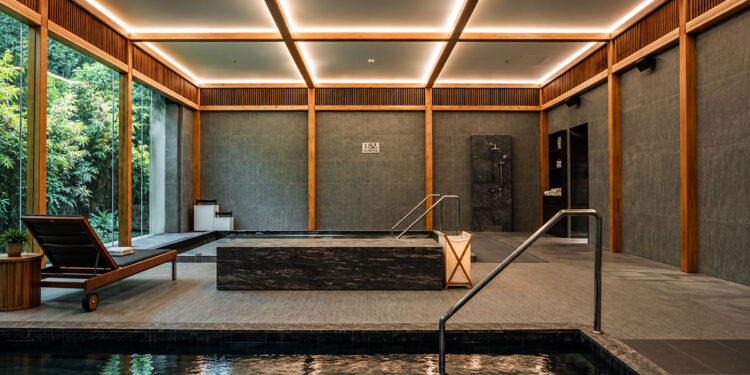
Real estate has always sold shelter. Increasingly, it is being asked to sell health as well. The Global Wellness Institute, the leading research body for the global wellness economy, valued the wellness real estate market at 876 billion US dollars in 2025, up from 151 billion in 2017, and projects it will reach 1.8 trillion dollars by 2030. Averaging 23.6 percent annual growth since 2019, it remains by far the fastest-expanding segment within the broader 11-sector wellness economy, growing at roughly double the pace of the next fastest category, mental wellness. What began as a handful of boutique developments marketing air filtration and yoga studios has become a mainstream design discipline, one that increasingly determines how homes, resorts, and entire communities are planned from the ground up.
Why the Category Is Growing
The demand driving this growth has a clear, measurable basis. Non-communicable diseases, heart disease, cancer, diabetes, and respiratory illness, now account for 74 percent of all deaths worldwide, according to the World Health Organization, and are closely linked to physical inactivity, poor air quality, and chronic stress, the very conditions that wellness real estate is designed to counter. Add to that a rapidly aging global population and a lasting post-pandemic sensitivity to indoor air quality and health infrastructure, and the appeal of a home designed to support daily movement, cleaner air, and genuine access to nature becomes less a lifestyle preference than a practical response to how people actually get sick. Developers have taken note: what started as a set of add-on amenities is increasingly treated as core infrastructure, on par with security or utilities, rather than an optional upgrade.
What Counts as Wellness Real Estate
The Global Wellness Institute defines the category broadly: residential, commercial, and institutional properties built with intentional health-supporting elements woven into their design, materials, amenities, and programming, rather than layered on afterward as an amenity. In practice, this covers a wide range of measures. Circadian-friendly lighting and improved air and water filtration address the basics of a healthy indoor environment. Active design, walking paths, staircases positioned to encourage use, dedicated running and cycling infrastructure, responds to the reality that most chronic disease risk is shaped by daily movement rather than occasional exercise. Green space, biophilic design, and shared outdoor areas support mental health alongside the physical. What distinguishes genuine wellness real estate from a marketing label is the sequencing: these elements are planned into the masterplan and architecture from the outset, rather than retrofitted once a project is already under construction.
A Category Growing Fastest in Asia
The growth is not evenly distributed. Regional data from the Global Wellness Institute shows Latin America, the Middle East and North Africa, and Europe posting the sharpest annual gains in recent years, though Asia-Pacific markets are closing the gap quickly. Thailand offers a clear example. The Institute’s most recent country data puts Thailand’s total wellness economy at 42.7 billion US dollars in 2024, up from 38.8 billion the year before, ranking the country 24th largest globally and ninth within Asia-Pacific. Within that figure, wellness real estate was among Thailand’s fastest-growing wellness sectors, expanding at close to 23 percent annually. The pattern reflects a broader shift in how the country’s property market is maturing: as Thailand has professionalised its approach to wellness, moving beyond spa tourism toward preventive health, longevity, and infrastructure-led wellbeing, developers have followed, incorporating running and cycling infrastructure, sports facilities, and green space into new residential and mixed-use projects rather than treating them as a secondary attraction.
What This Looks Like in Practice
Global demand has translated into a measurable premium. The Global Wellness Institute’s own research has found that homes designed around residents’ health command sales price premiums averaging 10 to 25 percent above comparable properties without them, a figure that has held steady across successive editions of its research even as the wider market has grown. In residential township developments, this typically shows up as connected running and cycling infrastructure, generous green and open space, and sports and recreation facilities designed to support daily movement rather than occasional use.
This same shift toward infrastructure that is planned in from the start, rather than layered on later, is visible in Thailand’s own residential developments. Reignwood Park, a mixed-use township north of Bangkok, has built a 10-kilometre uninterrupted running and cycling lane through its masterplan, together with a fitness area spanning 800 square metres, with further health-oriented facilities planned as the project progresses.
The benefits of wellness real estate reach beyond buyers actively seeking a spa or an on-site personal trainer. The underlying logic sits closer to public health than luxury: the built environment shapes how much people move, how well they sleep, how often they see other people, and how easily they access green space, often without residents consciously noticing any of it. As the sector approaches a trillion dollars in annual value, likely by 2027 on the Global Wellness Institute’s own projection, that logic is moving from a niche selling point toward a basic expectation of new development. For buyers evaluating a home or community today, the more useful question has shifted: from whether wellness features exist, to whether they were designed in from the start.