The Boatman’s Call by Nick Cave and the Bad Seeds – Album Review
By Ellie Victor
It enters the room quietly, takes a seat by the window, and somehow ends up saying more than almost anything else. Released in 1997, after years in which Nick Cave had made his name as gothic preacher, hellfire poet, biblical ranter and beautifully unhinged ringmaster, The Boatman’s Call was the record where he dimmed the lights and allowed vulnerability to do the talking.
That, really, is what makes it still so startling. This was not the Cave of The Birthday Party, that feral, confrontational force of nature who once seemed to exist in a permanent state of artistic combustion. Nor was it the Cave of murder ballads, thunderclaps and Old Testament menace. The Boatman’s Call found him writing love songs, break-up songs, and songs so emotionally exposed they almost seem embarrassed by their own candour. It is not a loud record, but it will floor you with its emotional power.
Here, the Bad Seeds, so often deployed like a thunderstorm, show extraordinary restraint. Mick Harvey, Blixa Bargeld, Thomas Wydler and company understand that these songs do not need grand gestures. Piano, organ, brushed drums, the occasional sigh of guitar, all placed with the care of a caress. If previous Cave records were cathedrals in flames, this is more like the chapel after everyone has gone home, candles guttering in a breeze.
“Devotional”
Of course, the main calling card is ‘Into My Arms’, and there is no point pretending otherwise. It is one of those songs that has long since escaped the album that birthed it, a standard in all but name, beautiful enough to make cynics wince and romantics crumble. Cave’s piano is plain, almost conversational, and that is precisely why it works. No adornment or theatrical veil, just a love song bruised by doubt. When a songwriter produces something this clean and devastating, the rest of the field is left staring at its shoes.
Yet The Boatman’s Call is no one-song sanctuary. ‘Lime Tree Arbour’ is the sound of someone retreating from the world, not in defeat but in reflection. The stately ‘Brompton Oratory’ deepens the album’s ecclesiastical hush, all incense, distance and yearning, as though Cave has wandered into a vast sacred space only to find his own thoughts echoing back at him. ‘People Ain’t No Good’ offers one of Cave’s bleakest shrugs at human frailty, its title almost comic in its bluntness until the song reveals the sorrow beneath the line – it’s actually Cave himself that’s no good. “We’d buy the Sunday newspapers / And never read a single word,” he sings, somehow capturing love’s awful hope and inevitable doom in a single, simple couplet.
‘(Are You) The One That I’ve Been Waiting For?’ is exquisitely poised; romantic without becoming syrupy, devotional without losing its nerve. It lifts cheekily from Scott Walker’s monumental ‘Montagu Terrace (in Blue)’ – and deserves to be mentioned in the same breath. There are songs here as strong as anything Cave’s hero Leonard Cohen ever wrote about yearning, and that is not praise I hand out lightly.
Much has been made over the years of the record’s emotional backdrop, and understandably so. It is often linked to Cave’s relationship with PJ Harvey and the heartbreak that followed, though it is best understood not as a neat roman à clef but as the sound of personal upheaval being distilled into something more lasting and universal. This is music for the aftermath, when the mind starts saying things aloud it had previously tried to keep in the dark. ‘Where Do We Go Now But Nowhere?’ sounds like exactly that kind of thought, Cave moping around some half-remembered duck pond; “You on the balcony, my future wife / Oh who could have known, but no one.”
 “Jolt of truth”
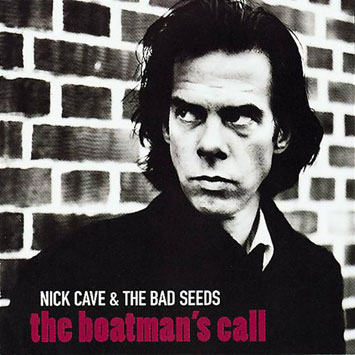
Those songs feel inseparable from PJ Harvey because they sit within an album Cave later framed as emerging from the wreckage of that relationship. ‘West Country Girl’ points strongly in her direction, while ‘Black Hair’ turns a seemingly simple physical detail into a vessel for longing, fixation and memory. Yet neither song feels sealed inside private mythology. Cave writes with enough openness and emotional intelligence that the listener does not need a map to feel the ache.
What makes the album so enduring is that Cave never confuses vulnerability with softness. The voice remains commanding, the writing precise, the emotional intelligence almost unnerving. He is not wallowing here. He is observing the damage with a poet’s eye and a penknife’s precision. The lyrics prod the live wire and the songs sting. They have that nerve-twang quality, the sharp jolt of truth that makes great writing impossible to ignore.
There is also bravery in the sequencing, in the refusal to offer relief. The Boatman’s Call does not divert. It asks the listener to sit still and feel the thing properly. In lesser hands that might have become oppressive. Here it becomes immersive, almost sacred. Each track feels like another page from the same private notebook, written in the same dim light, with the same mixture of tenderness and exhaustion.
Nick Cave has made many extraordinary records, from the deranged splendour of The Birthday Party years to the grand, haunted beauty of later Bad Seeds work. But The Boatman’s Call remains singular because it captures the moment when one of rock’s most compelling dramatists realised he no longer needed the mask. He could simply sit at the piano and tell the truth.
5.0 out of 5.0 stars

Ellie has spent over three decades dissecting riffs, rhythms, and rockstar egos, all in pursuit of the perfect review. Her music writing journey began at 12 with a glowing 10/10 diary entry for Echo and the Bunnymen, and she’s been chasing that high ever since. Armed with encyclopaedic knowledge and a soft spot for the sonically daring, Ellie will review anything that’s put in front of her – as long as it’s on vinyl.