How Text to Speech Technology Is Reshaping the Way We Consume Content
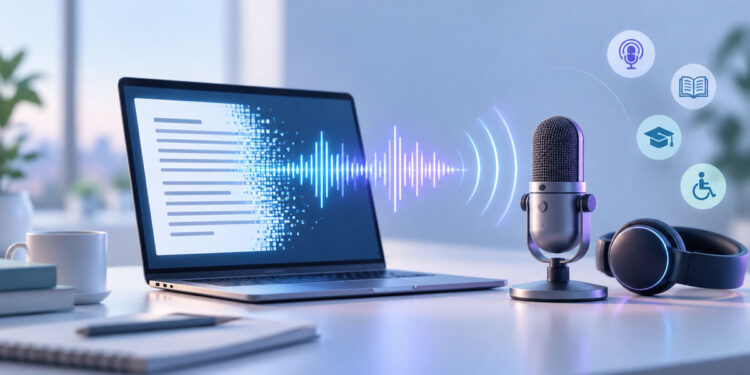
A decade ago, Text to Speech conjured up flat, mechanical voices reading out sat-nav directions or subtitles for the hard of hearing. That has changed considerably. Today’s voice synthesis technology can sound close enough to a real presenter that listeners often can’t tell the difference, and that shift is quietly reshaping podcasts, audiobooks, e-learning and even customer service.
How Text to Speech Systems Actually Work
At its core, a Text to Speech engine takes written text and converts it into spoken audio using neural networks trained on thousands of hours of recorded speech. Early systems stitched together pre-recorded syllables, which is why they sounded stilted and mechanical. Neural TTS models instead learn the patterns of pitch, rhythm and emphasis that make speech sound natural, and the better ones can now clone a specific voice from a short sample rather than relying on a generic narrator.
Why Podcasters, Publishers and Educators Are Paying Attention
The appeal is obvious once you consider the workload involved in producing audio content. A publisher converting written articles into audio used to need a studio, a narrator and hours of editing. An AI voice generator can do the same job in minutes and at a fraction of the cost, and it can be regenerated instantly if the source text changes. For independent creators without access to a recording booth, automated voiceovers have become a genuinely useful shortcut rather than a compromise.
According to Grand View Research, the global AI voice generators market was valued at $3.6 billion in 2023 and is projected to reach $21.8 billion by 2030, growing at nearly 30% a year. That kind of trajectory doesn’t happen without genuine demand behind it.
Separately, Forbes reports that the broader AI cloning market, which includes voice cloning, is expected to more than triple by 2029. Taken together, the data points to a technology that has moved well past the novelty stage and into everyday production workflows.
In the UK, small businesses and public sector bodies have started adopting these text-to-audio engines for much the same reasons: producing multilingual customer announcements, internal training material or marketing voiceovers without the overhead of booking a studio or hiring a voice actor for every update.
Where Text to Speech Fits Into Everyday Life
Beyond publishing, the practical uses keep stacking up. E-learning platforms use it to turn course material into audio without booking a narrator for every update. Audiobook publishers use it to produce backlist titles that would otherwise never get a human recording. Accessibility tools rely on it to read out web pages and documents for people with visual impairments or reading difficulties, and video creators increasingly use it for voiceovers when they would rather not appear on camera or need the same script delivered in more than one language.
That last point, multilingual delivery, is where the technology has made its most noticeable leap. Older systems needed a completely separate voice model, and often a separate voice actor, for every language. Newer engines can take a short voice sample in one language and generate natural-sounding speech in another, while keeping the same vocal character throughout. Fish Audio, for instance, builds this cross-lingual cloning into its Text to Speech platform, letting a voice cloned from a 15-second sample speak fluently across 80-plus languages, tackling the stiff, robotic delivery that put a lot of people off earlier voice tools.
Emotional range is the other area under scrutiny. A flat narrator is fine for a weather alert but not for an audiobook chapter or a character-driven video. Some platforms, Fish Audio among them, let users tag sections of a script with cues such as excitement, whispering or sadness, so the output includes natural pauses and inflection instead of a monotone read-through. It is a small detail, but it is often the difference between audio that sounds machine-made and audio that sounds like someone who understood the material actually read it.
None of this is without its caveats. Voice cloning raises real questions around consent and misuse, and most reputable platforms now require some form of verification before a voice can be cloned. There are also practical limits: listeners can still notice a synthetic voice over a long stretch of audio, and a well-produced human recording remains the benchmark for prestige projects such as flagship documentaries or literary audiobooks.
What Comes Next
This technology is unlikely to replace human narrators for every use case, and nobody is claiming it should. But as neural voice models keep improving, Text to Speech is no longer a novelty bolted onto accessibility settings; it is becoming a standard part of how publishers, educators and independent creators get their words heard, in whichever voice and language suits the audience best.