How to Choose the Ideal Space for Your Personal Retreat 2026
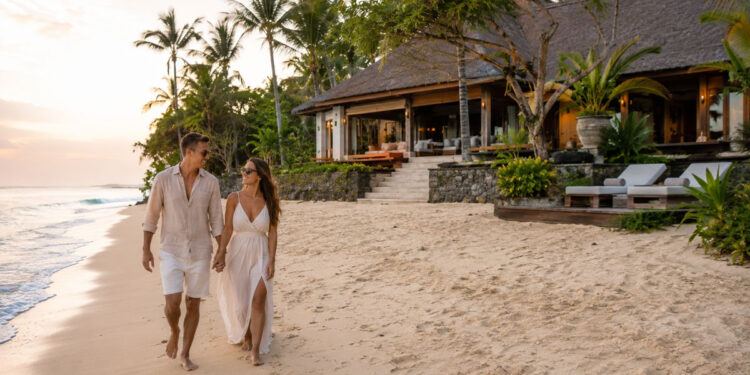
More people are booking solo stays that have nothing to do with tourism. No guided tours. No packed itinerary. Just a week or three away from everything that demands something from you. The market for intentional retreats has grown into something the hospitality industry is finally taking seriously. Here’s what to actually look for.
The Shift That Changed How People Think About Retreats
A couple of years ago, “personal retreat” meant a wellness resort with morning yoga and overpriced smoothies. That’s still an option. But something shifted – people started wanting fewer organised activities and more unstructured time. A private space, a view that doesn’t require explanation, and ideally, a working kitchen.
The concept now sits somewhere between remote work travel and slow tourism. You’re not on vacation exactly. You’re not running a full work schedule either. You’re just… pausing. And the space you choose shapes how well that actually works.
If you’re looking at Southeast Asia, Bali remains the reference point for this kind of travel. Not because it’s trendy, but because the infrastructure genuinely supports longer stays. For a solo traveller or a couple, Bali villas one bedroom properties offer that balance of privacy and access to local life without the noise of a resort compound. You get a pool that’s actually yours, a staff member who knows your coffee order by day two, and no one scheduling your mornings for you.
That’s the setup. Now let’s talk about how to actually choose.
What to Think About Before You Pick a Destination
Nobody wants to think about immigration paperwork when they’re planning a retreat. And yet this is exactly where people lose money and time.
Bali is still one of the easier options on paper. Sixty days on arrival, extendable once. Most Western passports, no application in advance, no proof of funds at the border – usually. The B211A social-cultural visa that everyone used as a workaround between 2022 and 2024 has become genuinely unpredictable. Some people sail through it at Denpasar. Others wait weeks with no clear timeline. If you’re planning anything longer than two months, get proper advice from someone currently based in Bali, not a blog post from 2023.
Portugal tightened the Digital Nomad Visa after a wave of applications overwhelmed the system. The income threshold went up. Processing times vary wildly – your application might take three weeks or four months depending entirely on which consulate handles it. Porto and Lisbon are still worth the effort. Just start the process embarrassingly early.
Mexico? Honestly the most low-friction option right now. No visa required for most nationalities, up to 180 days, and immigration at major airports is rarely difficult. Oaxaca, Mérida, San Miguel de Allende – all of them work well for extended stays. The infrastructure isn’t perfect but the bureaucratic overhead is close to zero. That matters more than people admit when they’re planning a retreat, not an expedition.
One more thing worth saying: check entry requirements two weeks before you fly, not two months. Policies shift. What’s accurate in January may not be accurate in March.
Climate Windows That Actually Work
Most destinations have maybe eight to ten genuinely good weeks per year. The rest is too hot, too wet, or too crowded.
Bali’s dry season runs April through October, but July and August mean traffic, packed coworking spaces, and villa prices up thirty percent. May or early October is the smarter call. Quieter, cheaper, and the light in October is noticeably better.
Uluwatu gets its best southwest swells June through September. Ubud, sitting at 500 metres, gets surprisingly cold in the evenings that same time of year. Bring a layer.
Portugal’s Algarve peaks in May and September. The beaches clear out fast after the first week of September, prices drop, and temperatures hold at 24–26°C well into October.
Oaxaca works best October through March. Dry air, consistent markets, and morning light that makes you want to stay longer than planned.
The Space Itself: What Actually Matters
This is where most people make mistakes. They optimise for aesthetics in photos and underestimate how much the physical space affects their mental state day-to-day. You’re going to spend a lot of time in that room. Choose accordingly.
Here’s what to check before you confirm a booking:
- Natural light in the workspace area – if you’re working even part-time, a dark corner kills focus faster than a bad internet connection
- Kitchen functionality – not just “does it have a kitchen” but does it have a proper knife, a cutting board that isn’t warped, a stove that actually heats evenly
- Noise at different hours – a beautiful villa next to a temple with 5am ceremonies or a busy road changes everything. Read reviews specifically for noise mentions, not just the overall star rating.
- Outdoor space that’s actually usable – a pool is great. A shaded terrace you can sit on from 10am to 2pm without burning is better.
What “Private” Actually Means in Practice
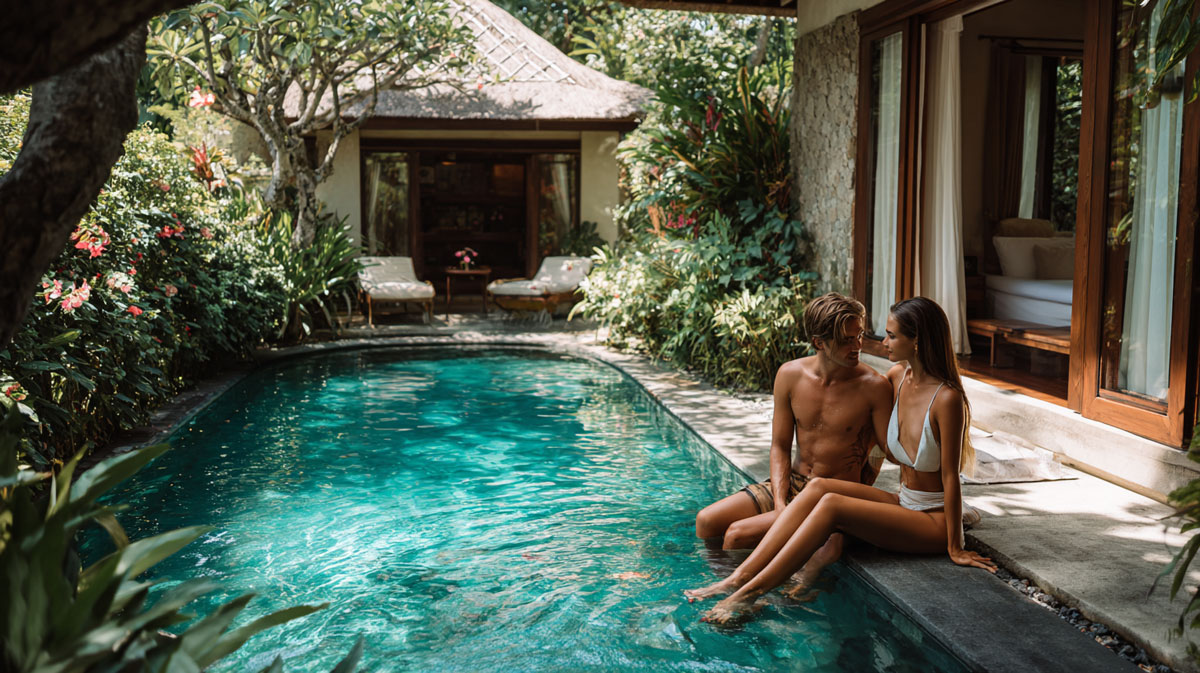
Private pool. Private entrance. No shared walls with other guests. These three things matter more than square footage. A 60sqm villa with no shared spaces will feel more restorative than a 120sqm apartment where you pass five people on the way to the lobby.
Sound is the other variable. Some properties market themselves as private while sitting in compounds where you hear everything through the walls. Ask specifically. Look at satellite images of the surrounding area. A padded review score doesn’t tell you that your nearest neighbour is fifteen metres away.
Retreat Type vs. Space Type
Not every retreat suits every space. Worth being honest with yourself about what you actually need before you start browsing listings.
- Creative reset – private villa with outdoor space, a slow neighbourhood, ideally a town with a market and local restaurants within walking distance
- Physical restoration – proximity to nature matters more than interior design here. Access to trails, the ocean, and thermal pools.
- Deep work retreat – stable fibre internet, minimal social friction, a kitchen so you’re not losing two hours a day to logistics
These aren’t mutually exclusive. But they do shift which features you should prioritise when comparing options. A place that’s perfect for one mode can be actively counterproductive for another.
The Practical Side of Booking Well
Booking through a curated platform rather than a generic OTA makes a meaningful difference for villa stays. You get vetted properties, actual local contact, and someone who answers messages on a Sunday evening when the hot water stops working.
For Bali specifically, working with a platform like The Young Villas means the logistics have already been sorted – staff included, airport transfer coordinated, villa manager reachable without cold-messaging a stranger on WhatsApp at 10pm. That layer of support matters more than people expect before their first extended villa stay.
Longer stays also unlock negotiated rates. Most villa owners don’t advertise this, but a straightforward direct inquiry for 14+ nights will almost always yield a better price than booking seven nights twice. Ask. The worst answer is no.
Finding Your Ideal Retreat Space: What the Decision Actually Comes Down To
The whole point of this piece was simple: more people want retreats that are genuinely restorative, not just aesthetically pleasing for content. The space you choose is doing real work – structuring your days, affecting your sleep, determining how often you interact with strangers when you’d rather not.
So choose it the way you’d choose anything that’s going to share your mornings with you for two weeks. Slowly. With some scepticism. And with a clear idea of what you’re actually trying to recover from – because that answer changes everything about what you should be looking for.