An Interview with Alan Goble, Author of the International Film Index
By Tony Greenway
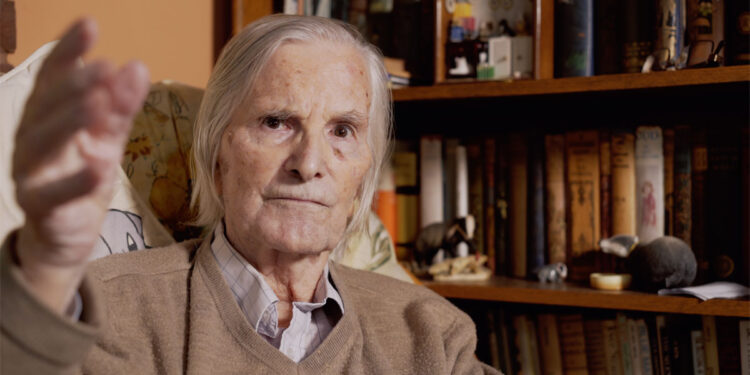
There are film fans and there are film fans. And then there is Alan Goble, a man in a category all of his own.
Goble had always been a big film buff — but back in the 1970s he started the Herculean task of listing every film ever made, anywhere in the world. It didn’t matter if it was a major Hollywood blockbuster or an Australian-Bhutanese comedy about football-mad Tibetan monks (there is one, since you ask — and it’s called Phörpa). If it had been released in the cinema or on TV, he wanted to tell the world about it.
So he began getting up at 5am every day to research and write the world’s ultimate movie guide before starting his day job in the civil service. He called his cinematic labour of love the International Film Index and catalogued every genre: full-length features, TV movies, short films, documentaries, cartoons, video and cable films, exploitation flicks — and even porn films.
“It became a habit”
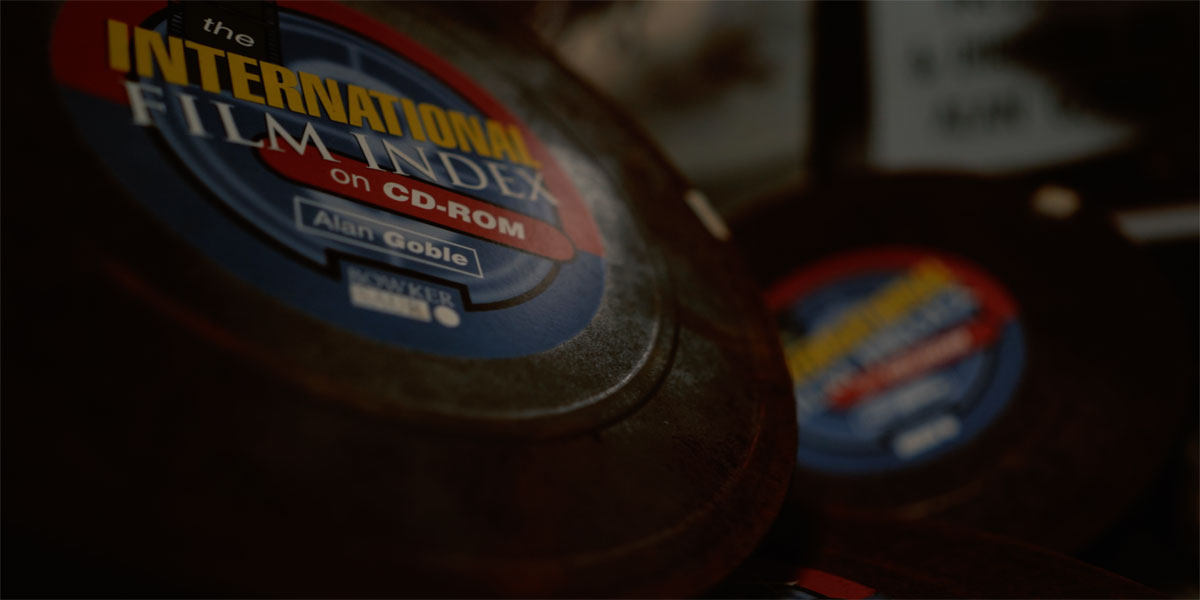
Of course, these days, if you want to look up details of obscure films, you can use something known as ‘the internet’. Yet before online existed, there was only one way to find out about, say, a series of Finnish movie comedies featuring an unemployed chancer called Numbskull Emptybrook. Or the Burkina Faso feature film, Le Sang des Parias (1973). Or an Outer Mongolian culture clash movie called Aldas (1995). Or a 1956 cartoon called The Ostrich Egg and I. And that was to read Goble’s masterwork, which was published in 1990 in two massive volumes the size of breeze blocks. It was then updated and republished on CD-ROM in 1996, back when CD-ROMs were a thing.
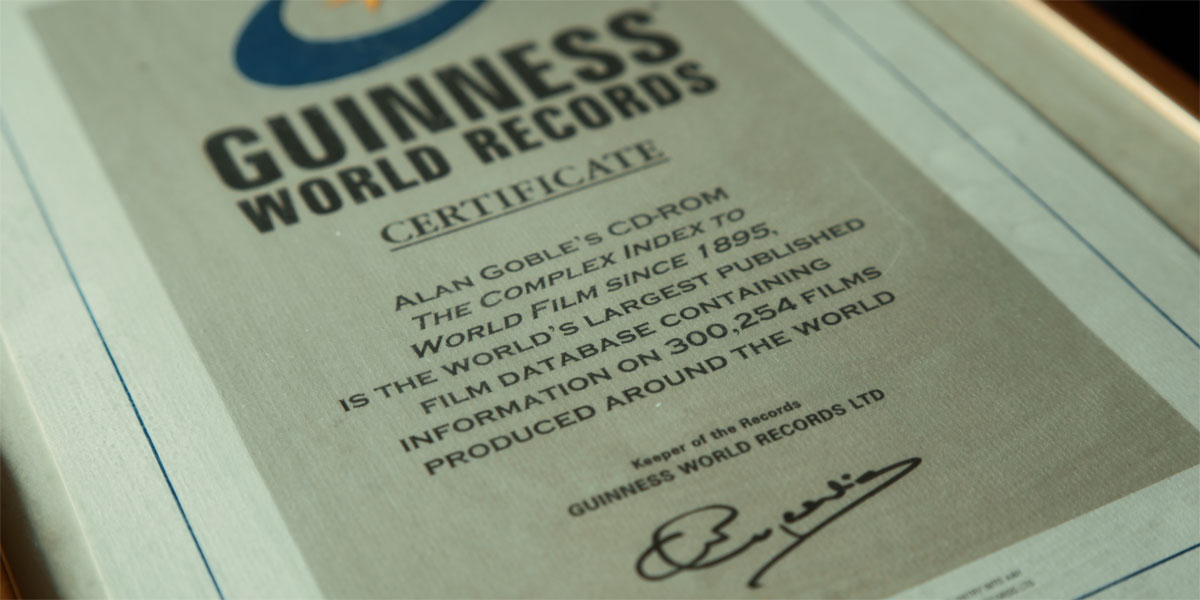
The International Film Index went on to win a Guinness World Record as the largest published film database. It also caught the eye of the late, legendary BBC film reviewer Barry Norman, who said of Goble: “Passion is to be found in the most unexpected places… I salute him.” The Index has since been renamed the Alan Goble Film Database and moved online where it’s used by academic bodies such as the American Film Institute (AFI) — although it’s now available to individual subscribers, too. At last count it featured 527,000 films from 255 countries.
In his time, Goble has been a greetings card verse writer, a football referee, a movie extra and even tried his hand at stand-up comedy. But the International Film Index, which he worked on singlehandedly for more than 50 years, is probably his greatest, proudest achievement. And while it must have felt like a thankless task sometimes, he never considered giving up. “Because I worked on it every morning it became a habit,” he explains. “And as it grew, I could see that I was actually creating something. That encouraged me to continue.”
“It got difficult to manage”
Why did you start writing the International Film Index? And did you always have the idea of turning it into a book?
Not initially. It frustrated me that when American films came over to the UK — and vice versa — the titles would sometimes change. You know: Farewell My Lovely in the UK would become Murder My Sweet in the US, for whatever reason. So I started making a list of those movies, and then began adding in non-English film titles. It grew from there. And grew. And grew. Also, at that time there weren’t any books dedicated to listing films from different countries. So I thought: ‘I’d better do it myself then.’ And, anyway, I’d always wanted to write a book. So why not?
Where were you getting your movie information from? This was the 1970s and 1980s, so it’s not as though you could search the internet and find it there.
I was finding information in magazines and newspapers, but mainly books. That was important because I wanted to cross-reference all my entries with a written, published work. That way, readers could be assured I was only including proper films that had been given public screenings. I’ve spent lots of money on books over the years, actually. I’ve got a library of around 15,000 books now — and around 2000 of them are about film.
You started writing your database by hand on index cards. You must have had thousands of them.
I did. It got difficult to manage and they took up a lot of space, so I ditched the index cards and switched to a typewriter and reams of paper. But then I just ended up with a lot of paper. Thankfully I got my first computer in 1984 and began cataloguing everything on that.
“It’s error-free”
You even included porn films in the Index, which is something most mainstream film guides would never have done.
Well, I thought if someone had taken the trouble to make a film, I was going to include it, whatever the subject. My only proviso was that the film must have had a public showing. I also discovered that porn wasn’t something that started in the 1960s — there were plenty of pornographic films made in the 1910s. I went to the Pordenone Silent Film Festival in Italy and a chap said to me: ‘Porn? That’s nothing unusual.’ Mind you, he was Swedish. Different countries, different attitudes.
Did the dawn of the internet steal your thunder?
It did rather. My database is limited to the title of the film, the date, the country of origin, the director and the first 12 cast members. But unlike some sources on the internet, it’s error-free and verified.
What’s your favourite film?
That’s never changed. Elmer Gantry (1960) starring Burt Lancaster. He’s very good in it. He plays a charlatan character — and it’s very powerful. And also Jean de Florette and its sequel Manon des Sources (both 1986). Oh, and Meet Me in St Louis (1944) with Judy Garland and child star Margaret O’Brien. She could cry on cue and was so good at it that when a director told her to shed tears she’d ask: ‘Which eye?’
And the worst?
I think the worst film I’ve ever seen is The Garden of Allah (1936) with Marlene Dietrich. I always call her Marlene Dirt Track. It was so bad, and yet some people think it’s wonderful.

“Fascinating character”
Have you a favourite memory from your time working on the Film Index?
The esteemed UK film critic and historian David Robinson — who wrote the official biography of Charlie Chaplin — always recommended me and my work. I bumped into him once in Pordenone as he was walking down the street with one of Charlie Chaplin’s sons. He introduced me and said: “This is Alan. He’s a phenomenon — like your father.”
Are you a fan of modern cinema?
Not really. It’s not like I think: “Devil Wears Prada 2 is out — I’ll go and see that.” I don’t like it when directors take a good film and try to make a better film. The last film I can think of that really impressed me was An Education (2009) with my favourite actress, Carey Mulligan. That made me want to watch her other films. Actually, I also liked The Ballad of Wallace Island (2025). She’s in that, too.
You’re a film star yourself now. A documentary about your life and work has been made called ‘Title (Year) Director. Place.’ How did that happen?
I was interested in making a film about a judge called Frederic Weatherly who wrote the lyrics to ‘Danny Boy’, which Valerie — my late wife — and I used to love. It was our favourite song. Weatherly was a fascinating character, so I went to a filmmaker called Chris Collier and told him my idea. While we were talking, I also told Chris my story. He listened and then said: ‘Actually, I’d rather make a film about you…’
alangoblefilmdatabase.com
For information about free trials email: [email protected]
‘Title (Year) Director. Place’ is available on Amazon to rent or buy
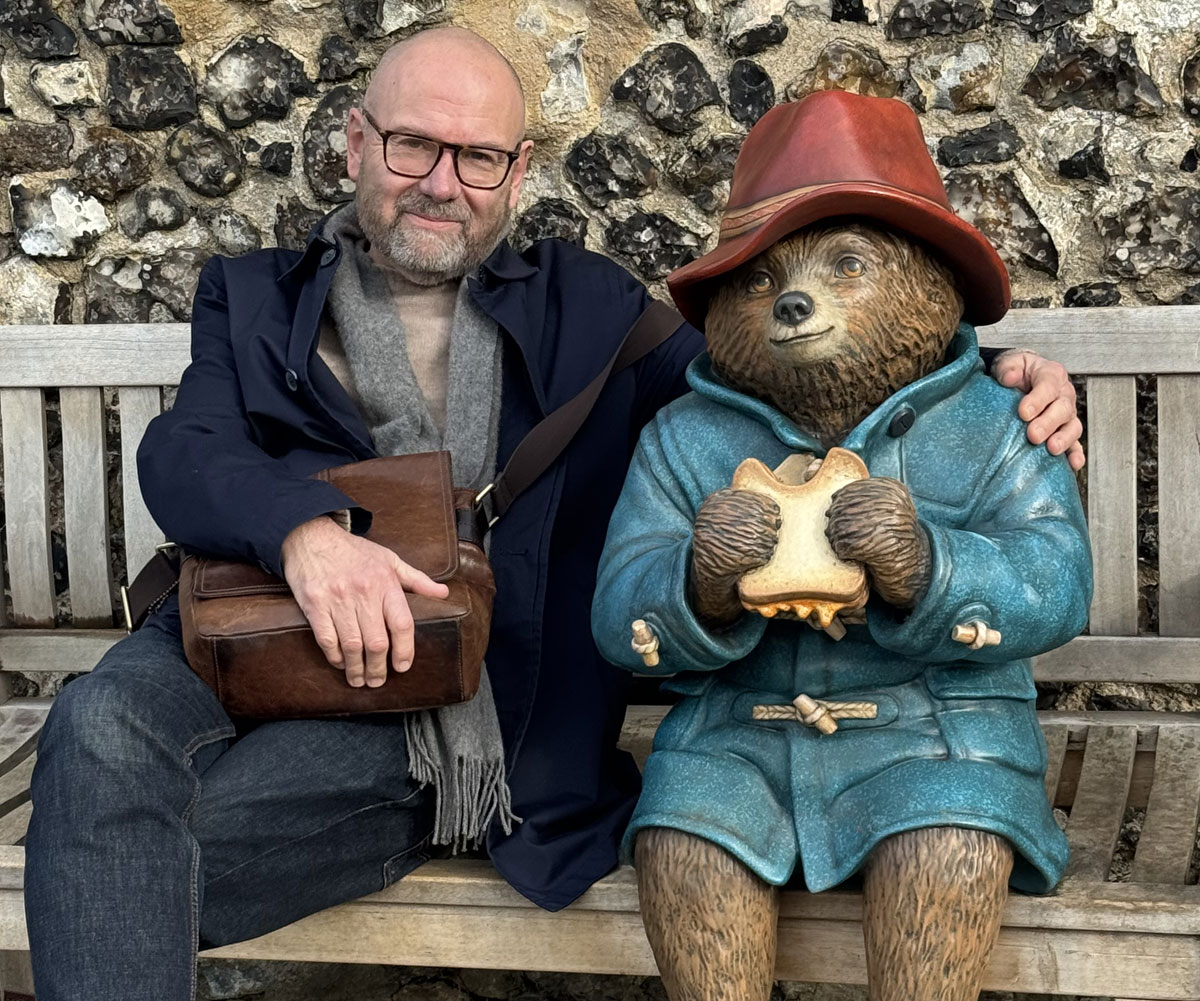
Tony Greenway has been a journalist for more years than he cares to remember. In his time working for the regional and national press he’s written about art, television, film, travel, food and business. He’s interviewed film stars, TV presenters, musicians, authors, supermodels, entrepreneurs and a Spice Girl — and he’s edited a number of lifestyle magazines too. His most recent project is a YouTube podcast called Bonding with Dad, where he shows his feminist film student daughter various James Bond movies and explains why she should like them. This goes about as well as you’d expect.
tonygreenway.co.uk / youtube.com/@BondingWithDad