What Does a Green Chasuble Mean? Reflections on Colour Symbolism in the Church
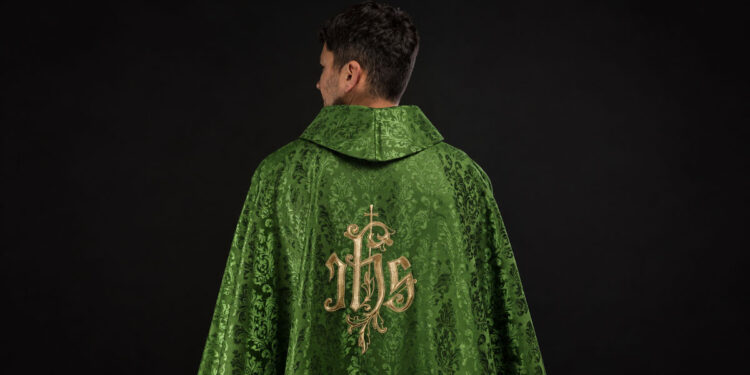
The vestments worn by clergy during liturgical celebrations are far more than mere garments. Each colour, each symbol, carries a profound theological meaning, reflecting the mysteries of faith and the seasons of the Church’s year. Among these, the green chasuble holds a special place, representing a vital period of the Christian calendar. Understanding the symbolism of this colour allows for a deeper appreciation of the liturgy and the messages it conveys.
The Significance of Green in Liturgical Context
Green, in its most fundamental sense, symbolizes life, growth, hope, and renewal. In nature, it is the colour of spring, of new beginnings, of the earth teeming with life after winter. This connection to natural cycles makes it a powerful metaphor for the spiritual journey of believers. Within the Church, green is the colour of Ordinary Time, the longest liturgical season, which spans from the feast of Pentecost until the Advent season, and then again from the Epiphany until Ash Wednesday. This extended period is not one of intense penitence or extravagant celebration, but rather a time for steady growth in faith, for living out the teachings of Christ in the everyday, and for deepening one’s relationship with God.
Why is Green Used for Ordinary Time?
Ordinary Time, as the name suggests, is the “ordinary” or “counted” time of the Church’s year. It is the time when the faithful are called to live out their baptismal promises, to practice charity, and to grow in holiness through consistent prayer and participation in the sacraments. The colour green perfectly encapsulates this ongoing spiritual development. It’s a reminder that faith is not a one-time event, but a continuous journey of becoming more like Christ. It signifies perseverance, the quiet but steady work of the Holy Spirit in our lives, and the hope of eternal life that sustains us.
The Chasuble as a Symbol of Christ’s Sacrifice
The chasuble, the outermost liturgical vestment worn by the priest at Mass, has its own rich symbolism. It is often described as representing the seamless robe of Christ, or the yoke of Christ, signifying the burden and the grace of his ministry. When worn by the priest, the chasuble visually represents the priest acting in persona Christi Capitis – in the person of Christ the Head. Therefore, a green chasuble signifies not only the season of Ordinary Time but also the priest’s ministry of leading the faithful through this period of growth and hope, embodying the enduring presence and life-giving power of Christ.
What Other Colours are Used in the Church and When?
Understanding the significance of green is enhanced by recognizing the meaning of other liturgical colours:
White/Gold: Joy, Purity, and Triumph
White or gold vestments are used during seasons of joy and celebration, such as Christmas and Easter, and on feasts of Our Lord, Mary, and saints who were not martyrs. This colour signifies purity, innocence, glory, and the resurrection. It is the colour of divine light and heavenly joy.
Red: Sacrifice, Martyrdom, and the Holy Spirit
Red is the colour of fire and blood. It is worn on Pentecost to symbolize the Holy Spirit descending upon the Apostles, and on the feasts of martyrs, representing their shedding of blood for the faith. It also signifies love and the Passion of Christ.
Violet/Purple: Penance, Sacrifice, and Preparation
Violet is the colour of penance, sorrow, and preparation. It is primarily used during Advent and Lent, seasons of repentance and anticipation. It calls the faithful to examine their lives, to turn away from sin, and to prepare their hearts for the coming of Christ or for the celebration of his Passion and Resurrection.
Rose: Joyful Anticipation
Rose is a variation of violet and is used on two specific Sundays of the liturgical year: Gaudete Sunday (the third Sunday of Advent) and Laetare Sunday (the fourth Sunday of Lent). On these days, the Church allows a brief pause in the penitential season to express a more outward joy and anticipation of the coming celebration.
Black: Mourning and Death
Black was traditionally used for Masses for the Dead and on Good Friday. While its use has become less common in some regions, it symbolizes mourning, death, and the solemnity of grief, while also pointing towards the hope of resurrection.
The Role of Green in Ordinary Time
The recurring nature of Ordinary Time, marked by the green chasuble, emphasizes the ongoing call to live a Christian life. It’s a time for building habits of prayer, for deepening understanding of scripture, and for strengthening community bonds. Green reminds us that God’s grace is constantly present, nurturing our spiritual growth like sunshine and rain nurture a plant. It signifies the possibility of renewal in our daily lives, a chance to start fresh, to let go of past mistakes, and to strive towards holiness with renewed vigor and hope.
Choosing a Green Chasuble
When selecting a green chasuble, whether for a parish or for personal use, several factors come into play. The richness of the green, the style of the chasuble (e.g., Roman or Gothic cut), and the embellishments all contribute to its overall impact. A simple, unadorned green chasuble can convey the understated yet profound message of Ordinary Time. Conversely, a chasuble with intricate embroidery, perhaps featuring symbols of growth like leaves or vines, or even the IHS monogram, can add a layer of visual depth to the liturgical celebration. Many beautiful options can be found, with materials ranging from fine silks to more durable, practical fabrics, ensuring that the vestment is both fitting for the liturgy and suitable for its intended use. For a wide selection of high-quality chasubles, including those in green, chasubles.com offers a variety of styles and designs.
Living the Symbolism of Green
Ultimately, the meaning of a green chasuble extends beyond the sanctuary. It serves as a reminder to the faithful throughout the week to cultivate growth in their own lives, to embrace hope, and to live in accordance with the teachings of Christ. It’s an invitation to see the divine in the ordinary, to recognize God’s constant presence in the unfolding of our lives, and to participate actively in the ongoing work of redemption, nurtured by the vibrant, life-affirming colour of green.
| https://chasubles.com/ |