Why Thermal Monoculars Are Becoming Popular With Outdoor Enthusiasts
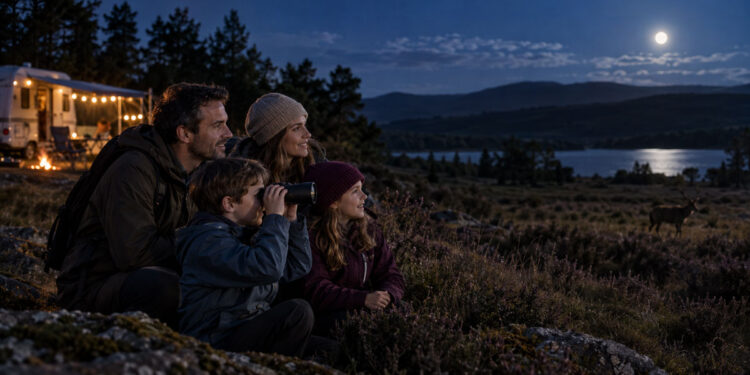
For decades, outdoor enthusiasts have relied on torches, headlamps and night-vision devices to extend their time outside after dark. Today, another technology is becoming increasingly common in hiking packs, wildlife-watching kits and search equipment: the thermal monocular.
Once associated mainly with professional users, thermal imaging is now more accessible, portable and practical than it was even a few years ago. Improvements in sensors, battery life and image processing have made compact thermal devices useful for everything from locating wildlife to navigating unfamiliar ground at night.
But what exactly is driving this growing interest, and where do thermal monoculars offer a genuine advantage?
Seeing heat rather than reflected light
Traditional night-vision equipment amplifies available light. It can work extremely well under moonlight or near artificial illumination, but performance may be limited in complete darkness, dense woodland or poor weather.
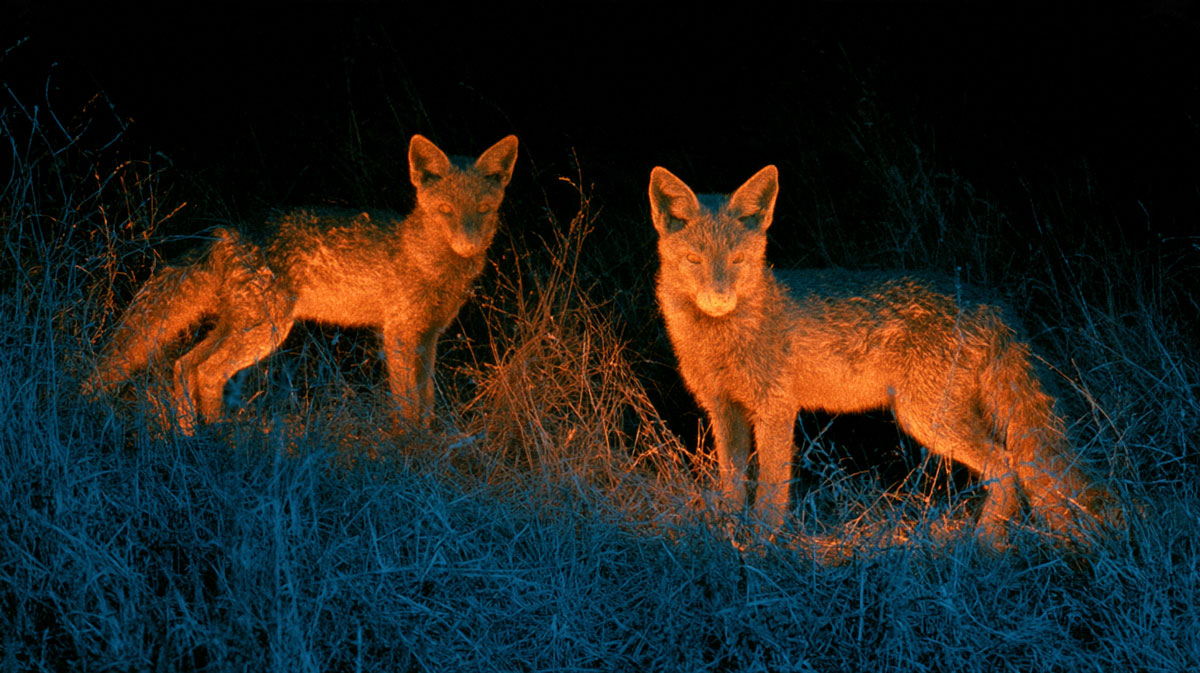
Thermal imaging works differently. Instead of relying on visible light, it detects differences in infrared radiation emitted by objects. Warm bodies such as people and animals typically stand out against cooler surroundings, even when the scene appears completely dark to the naked eye.
That distinction is important outdoors. A deer standing among trees, a person separated from a group or an animal moving through tall grass may be difficult to identify with a torch. A thermal monocular can reveal the heat signature and help the user understand what is present before deciding how to proceed.
Thermal images are not photographs in the conventional sense. They show temperature contrast, which means detail and colour can vary depending on the device’s display modes and the conditions. Even so, that contrast can provide information that ordinary optics cannot.
Compact technology suits modern outdoor use
The size and weight of older thermal equipment were major barriers for recreational users. Carrying specialist kit on a long walk is rarely appealing if it takes up substantial space or adds fatigue.
Modern monoculars are designed with portability in mind. Many can be held in one hand, operated with gloves and carried alongside binoculars, a phone or a GPS device. This makes them more suitable for hikers, campers, wildlife observers and countryside workers who need occasional visibility after sunset rather than a permanently mounted system.
Ease of use also matters. A practical thermal monocular should start quickly, offer straightforward controls and provide a clear display without requiring extensive technical knowledge. Features such as digital zoom, image capture and multiple viewing palettes can be useful, but they should support the core purpose rather than complicate it.
For buyers comparing options, it is worth looking at compact equipment for night-time viewing with attention to sensor resolution, detection range, battery performance and overall ergonomics. A device with an impressive specification is not necessarily the best choice if it is uncomfortable to hold or difficult to operate in the field.
Useful applications beyond observation
Wildlife watching is one of the most obvious applications. Thermal imaging allows observers to detect animals that might otherwise remain hidden in darkness or vegetation. Used responsibly, it can help people understand movement patterns without relying on bright lights that disturb the environment.
Outdoor safety is another factor behind the technology’s popularity. If a member of a walking group falls behind, thermal imaging may help locate them more quickly. On a campsite, it can provide an additional way to check the surrounding area without sweeping a powerful beam across neighbouring tents or habitats.
Thermal monoculars are also useful for identifying heat sources. Campers may be able to spot a smouldering area near a fire, while landowners and countryside professionals can use thermal equipment to inspect boundaries, outbuildings or livestock areas after dark.
Of course, a monocular should complement sensible preparation rather than replace it. Maps, navigation skills, communication equipment and a reliable torch remain essential. Thermal imaging can show that something is warm, but it may not always tell you exactly what it is or whether it presents a risk.
What affects performance in the real world?
Marketing specifications often focus on maximum detection distance, but real-world performance depends on more than range. Weather, humidity, vegetation, the size of the target and the temperature difference between the target and its background all have an influence.
A person in an open field may be easy to detect at a considerable distance, while a small animal behind foliage could be much harder to distinguish. Rain and high humidity can reduce clarity, and warm surfaces may blend into one another after a hot day.
Resolution is another key consideration. Higher-resolution sensors generally provide more detail, which can make it easier to interpret a scene. However, sensor quality is only part of the experience. Display resolution, image processing and lens design also affect how useful the final image appears.
Before buying, consider how the monocular will actually be used. For occasional campsite checks, a lightweight entry-level device may be sufficient. Those planning long-distance wildlife observation or regular work in large areas may benefit from greater range, a sharper sensor and longer battery life.
Responsible use matters
As thermal equipment becomes more affordable, responsible use deserves equal attention. Wildlife should not be repeatedly pursued, surrounded or disturbed simply because it can be detected. During breeding, nesting and harsh weather periods, observation should be especially cautious.
Users should also respect privacy and local restrictions. A thermal device can reveal activity that would not ordinarily be visible, so it should never be used to monitor private property or people without a legitimate reason. In some settings, additional rules may apply to the use of optical or heat-detecting equipment.
The best approach is to treat thermal imaging as an observational aid, not a substitute for judgement. Keep a sensible distance from animals, avoid shining additional lights unnecessarily and follow access regulations wherever you are.
A practical tool for after-dark adventures
Thermal monoculars are becoming popular because they solve a clear problem: they help people make sense of dark environments without depending entirely on visible light. Their portability makes them realistic for everyday outdoor use, while improvements in image quality and battery technology have broadened their appeal.
They are not essential for every walk, and they cannot replace navigation skills or common sense. However, for wildlife enthusiasts, campers, hikers and anyone who spends meaningful time outdoors after sunset, a thermal monocular can add a valuable layer of awareness.
The technology’s real strength is not novelty. It is the ability to reveal heat, movement and presence when ordinary vision reaches its limits. Used thoughtfully, that can make nighttime exploration more informed, safer and considerably more engaging.