Scotland’s Porridge Route: The Path to the Golden Spurtle

By Kevin Pilley, October 2025
Scotland is the best place to get your oats – and support bowel regularity – as well as learn how to operate a spurtle.
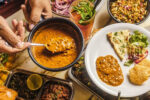
Ahead of the prestigious World Porridge Making Championship, VisitScotland has unveiled a porridge trail map of Scotland to help visitors taste the delicacy in all its nutritious forms – from Lindsay and Matthew Keir’s Wooley’s of Arran oatcakes to Munlochy, Inverness Black Isle Brewery’s Halo oatmeal stout.
And, of course, there are hotel and guesthouse breakfast bowls of traditional Scottish internal heating, with or without salt. Porridge, after North Sea oil, is Scotland’s national fuel.
The Scottish Porridge Oats Trail is a gruelling gastro trail that will appeal to gruel enthusiasts, congee connoisseurs, polenta anoraks, millet-mush and Irish stirabout lovers, oatmeal addicts, Romanian “teci e ovaz” nerds, fans of frumenty, and regular food historians.

Bonerbo Lodge, St Andrew’s
“Simmering oats”
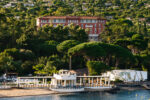
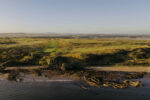
Oats were introduced to Scotland around 600 AD. Traces of barley porridge found in pots excavated in the Outer Hebrides have been dated to 2,500 years ago. Stay at Graeme and Emma Clark’s Glenegedale House on Islay overlooking the Mull of Oa and the Atlantic Ocean or, on the east coast, in the Guillemot or Puffin luxury lodge on Jessica and Andrew Stevenson’s Bonerbo oat farm near St Andrews, Fife, and taste the real thing, piping hot.
Or go through the porridge menu at Broad Bay House on the Isle of Lewis. You can visit working grinding mills and, at Blair Atholl Distillery near Pitlochry in the Highlands, taste brose whisky and oat liqueur, which goes back to 1475. In Aberdeenshire, have a Portsoy artisanal ice cream and, at Skibhoul Bakery (est. 1885) on the Isle of Unst, Shetland – the UK’s most northerly bakery – try their oceanic oatcakes made using seawater.
The Scots have immortalised porridge in poetry and song. Soldiers carried oats as rations in the fourteenth century. Before the days of AGAs, stoves and microwaves, Scottish crofters hung an iron pot over the hearth, simmering oats, water and salt to stave off hunger and pneumonia. Leftovers were poured into a lined drawer and left to solidify into a gelatinous mass before being cut into slices to take on the road as a packed lunch, or fried in fat for dinner.

Glenegedale House on Islay
“No lumps”
The coveted Golden Spurtle will be awarded to the 2025 World Porridge Making Champion, held in a tiny village hall in the Cairngorms National Park. The 2025 event has attracted over 60 entries from 14 countries.
The porridges must be made from untreated oatmeal (pinhead, coarse, medium or fine) – not with oat flakes or rolled oats – and only with water and salt. Heathens will be disqualified. No prior cooking is allowed, although oatmeal may be soaked.
Each competitor is required to produce at least two pints (1.1 litres) of porridge, to be divided into four portions for the judges to taste. Judging will be based on consistency, taste and colour, and on the competitor’s hygiene in the cooking process. Heat winners must be available to compete in the final cook-off (20 minutes) and will be required to produce a second batch of two pints (1.1 litres) of traditional porridge.
The porridge should be seasoned accordingly. It must be thoroughly cooked and have no lumps. The ideal colour of perfect porridge is a light, creamy gold.

The Porridge Making Championships
“Even consistency”
A further award will be made for the best speciality porridge. Chopping and grating are permitted.
Recipes for the speciality porridge must be submitted for approval at least four weeks in advance of the event. Hobs with two rings will be provided by the organisers. Competitors are asked to provide their own favourite porridge pan and spurtle, etc. No additional cooking equipment is provided by the organisers. Washing services for equipment are provided in the hall. There is no electricity supply at the workstations and contestants must therefore rely on the gas cooking rings or battery-powered devices. Each heat lasts 30 minutes.
To get the consistency right, many cooks traditionally used a spurtle – a polished, pointed stick carved from beechwood – shaped to help create a smooth, even consistency. A Druid belief passed down through the ages held that luck could be ushered in by stirring exclusively clockwise to mimic the direction of the sun.
The event began in 1994. The 2024 World Porridge Making Champion, Chris Ormiston from Inverurie in Aberdeenshire, used Himalayan pink salt in his oats. He attributed his success to precise temperature control, cooking his porridge to 92°C for optimal creaminess.

The championships are held every year in October
“Staple part”
The year before, Kim McGee from the Philippines won with her coconut and pandan porridge, inspired by the traditional Filipino dessert “buko pandan”.
“The Golden Spurtle competition not only honours culinary skill but also fosters a sense of community and cultural exchange, uniting porridge enthusiasts from diverse backgrounds in celebration of this humble yet cherished dish.”
“Oats have been a staple part of the Scottish diet for centuries,” says Alan Meikle, Managing Director of porridge producer Hamlyns of Scotland, which sponsors the competition. “They’re wholesome, comforting, and a big part of our food heritage.”
A bowl (or packet) of gut-microbiome-nurturing and thymoleptic (mood-boosting) porridge is a national emblem of resilience, frugality and pride.
Kevin Pilley is a former professional cricketer and the ex-chief staff writer of PUNCH magazine. His humour, travel, lifestyle and food & drink work appears worldwide. He has been published by over 600 titles.
Frequently Asked Questions about Scotland’s Porridge Route & the Golden Spurtle
What is Scotland’s porridge trail?
A VisitScotland map linking porridge hotspots, mills, bakeries and stays—from Wooley’s of Arran oatcakes to Black Isle Brewery’s Halo oatmeal stout in Munlochy.
Where can visitors stay for standout porridge?
Glenegedale House on Islay (Mull of Oa views), and the Guillemot or Puffin lodges on the Bonerbo oat farm near St Andrews serve piping-hot bowls.
Any other tasty stops on the route?
Try the porridge menu at Broad Bay House (Isle of Lewis), brose whisky/oat liqueur at Blair Atholl Distillery, Portsoy artisanal ice cream, and Skibhoul Bakery’s seawater oatcakes on Unst.
What is the World Porridge Making Championship?
An annual October cook-off in a Cairngorms village hall. In 2025 it attracted 60+ entries from 14 countries, awarding the coveted Golden Spurtle.
What are the rules for the traditional category?
Only untreated oatmeal (pinhead/coarse/medium/fine), water and salt. No flakes or rolled oats. No pre-cooking (soaking allowed). Minimum two pints (1.1L) per batch.
How is porridge judged?
On consistency, taste and colour—plus good hygiene. Ideal porridge is thoroughly cooked, lump-free, and a light, creamy gold.
What’s the competition format?
Heats last 30 minutes on gas rings (no electricity at workstations). Heat winners return for a 20-minute final and cook a second 1.1L batch.
Is there a speciality porridge award?
Yes. Chopping and grating are permitted; recipes must be submitted at least four weeks in advance for approval.
Who are recent champions?
2024: Chris Ormiston (Inverurie) used Himalayan pink salt and precise 92°C cooking. 2023: Kim McGee (Philippines) won with coconut and pandan porridge.
What is a spurtle—and why stir clockwise?
A polished beechwood stick used to stir porridge for a smooth, even consistency. A Druid tradition favours clockwise stirring to follow the sun.
How deep do Scotland’s porridge roots go?
Oats reached Scotland c.600 AD; barley porridge in Outer Hebrides pots dates back 2,500 years. Porridge has long been a staple of resilience and frugality.
Why does porridge matter culturally?
It is part of Scotland’s food heritage—wholesome, comforting and mood-boosting—celebrated through poetry, song and the Golden Spurtle community.