How to Choose Protective Cases for Commercial Equipment

Commercial enterprises frequently transport high-value tools, delicate electronics, and scientific instruments between operational sites. Protecting assets during transit remains a primary logistical priority, as equipment failure from impact or environmental exposure can incur severe financial penalties. Business owners often ask how to select the appropriate protective enclosure, how internal foam density affects shock absorption, and which external materials withstand industrial environments. The answers lie in analysing transport risks, choosing military-grade external shells, and utilising precision-cut internal cushioning. This guide provides a structured framework for selecting professional transit containers that safeguard critical equipment, minimise operational downtime, and protect capital investments.
Assessing Asset Vulnerability and Operational Risks
Before buying any transport container, an organisation must conduct a detailed assessment of the machinery requiring protection. Different equipment types present distinct vulnerabilities. For instance, diagnostic medical tools, broadcasting gear, or optical sensors are particularly sensitive to high-frequency vibrations during road or air transport. Conversely, heavy mechanical tools or industrial calibration gear require protection against heavy impacts and compressive forces during loading.
Operational environments dictate the enclosure’s structural requirements. If a business sends equipment to offshore rigs, construction sites, or outdoor broadcast locations, the threat extends beyond physical impacts. Water ingress, salt spray, fine dust, and temperature fluctuations can destroy delicate circuitry or corrode steel mechanisms. Companies should document every environmental variable the equipment will encounter throughout its lifecycle, including whether containers will travel by commercial air freight, flatbed truck, or maritime vessel. Each transport mode introduces specific stresses, such as the sustained vibrations of air travel or the physical shifts of sea transit. Defining these parameters ensures the selected container has the precise engineering specifications required to protect its contents.
Why a Flight Case Provides Supreme Industrial Protection
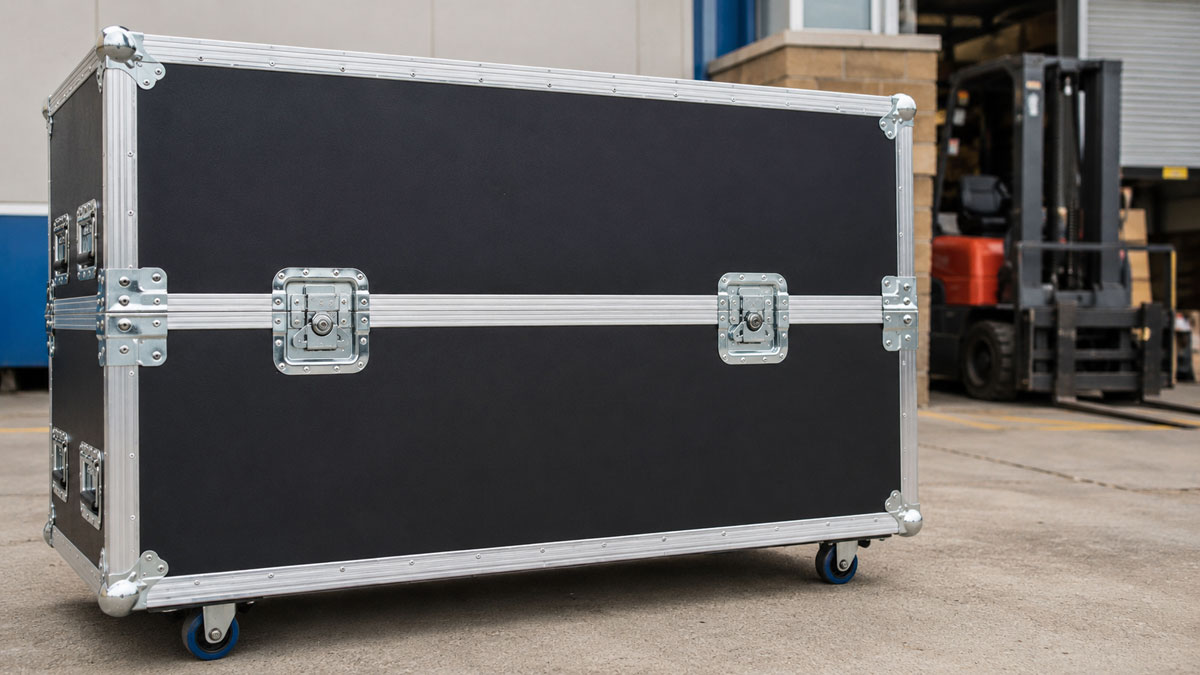
When standard plastic containers fail to meet industrial demands, specialised heavy-duty engineering is necessary. A professional Flight Case offers an excellent solution for businesses transporting high-value equipment over long distances. This container is constructed from premium birch plywood or lightweight plastic sheets, reinforced with zinc-plated steel ball corners and heavy-duty aluminium extrusions. Flight Case Warehouse manufactures these high-specification containers in the UK, offering extensive standard ranges alongside custom design options to suit diverse industrial applications. These structures are built to withstand repeated commercial transport cycles, making them ideal for heavy equipment.
Selecting an industrial enclosure requires verifying build quality and the material’s origin. High-grade options utilise tongue-and-groove aluminium profiles that interlock perfectly when closed, preventing dust and moisture from entering the interior. The steel ball corners absorb the energy from major drops, distributing the force throughout the outer framework rather than allowing it to reach the internal machinery. For businesses moving heavy broadcast equipment or surveying tools, investing in this level of physical security prevents costly repairs and keeps projects on schedule. Structural integrity ensures that, even under severe compressive forces, the interior volume remains unchanged, preventing pressure from crushing sensitive components.
Material Integrity and Outer Shell Selection
The choice of outer shell material affects the container’s overall weight, durability, and protective capabilities. Traditional flight containers rely on heavy plywood panels, typically six to twelve millimetres thick. Modern manufacturing adds a bonded laminate exterior, such as a phenolic resin or a tough plastic covering, which resists scratches, chemicals, and mechanical punctures. Plywood remains a preferred option for large, heavy items because it offers exceptional structural rigidity and resists bending under immense pressure.
For applications prioritising weight reduction, advanced polypropylene or polyethene moulded cases offer a viable alternative. These containers are manufactured using injection or rotational moulding techniques. Rotational moulding produces seamless corners and thicker edges, which inherently reinforce the weakest points of a container. Moulded plastic enclosures frequently carry specific Ingress Protection ratings, such as IP67, indicating total protection against dust and temporary immersion in water. Logistics managers must balance the container’s total weight with the specific structural hazards at the destination.
Testing Standards and Certifications for Industrial Cases
To ensure a container can withstand the rigours of commercial transport, businesses must look for verified testing standards. The most recognised benchmark in asset protection is the military standard classification, specifically MIL-STD-810. This standard includes laboratory tests that simulate environmental stress, including low-pressure altitude testing, exposure to extreme temperatures, temperature shock, rain, humidity, dust exposure, and random vibration.
Another critical certification is the ATA Specification 300, established by the Air Transport Association. Category 1 containers certified under ATA 300 must withstand at least 100 round-trip flights. This requires the case to survive multiple drops from a height of 2 feet onto a hard surface without losing structural integrity. Checking for these industrial ratings provides objective proof of durability, allowing logistics managers to select containers with full confidence in their performance.
Internal Cushioning and Custom Foam Engineering
An outer shell prevents punctures and withstands external impacts, while internal cushioning absorbs shock waves and protects delicate internal components. Standard, off-the-shelf foam inserts rarely provide adequate protection for specialised commercial tools. Professional containers use precision-engineered foam interiors, shaped via computer numerical control routing or water-jet cutting to match the exact dimensions of the equipment.
The choice of foam material is critical. Polyurethane foam is open-celled and flexible, making it ideal for lightweight objects or equipment requiring gentle cushioning against minor vibrations. However, heavy industrial tools or calibrated monitors will easily crush open-cell foam, causing the asset to bottom out against the hard outer walls during a drop. For heavier commercial gear, closed-cell polyethene foam is the industry standard. Polyethene foam is dense, rigid, and highly resistant to repeated compression. It does not absorb water, oils, or chemical solvents, ensuring the internal environment remains clean and stable. Engineers calculate the equipment’s static loading and fragility factor to determine the correct foam density, ensuring maximum deceleration during an accidental drop.
Hardware, Latches, and Transport Dynamics
A container is only as reliable as its hardware components. Industrial transit cases must feature high-quality recessed handles and latching mechanisms to ensure longevity. Surface-mounted handles are easily sheared off during automated baggage handling or warehouse stacking. Recessed butterfly latches are preferred, as they twist completely flat against the case wall, eliminating the risk of accidental opening during transit.
Transport dynamics also include how easily a container moves through a supply chain. Heavy equipment enclosures should feature integrated, heavy-duty castors or telescopic handles paired with corner wheels. Castors must have industrial bearings and polyurethane tyres to withstand rough concrete floors and heavy load distributions. Furthermore, when containers travel via aircraft cargo holds, pressure differentials can create a vacuum inside sealed enclosures, making them impossible to open upon arrival. To resolve this issue, high-quality moulded containers incorporate automatic pressure-equalisation valves. These valves allow air to pass freely while blocking water molecules, maintaining internal balance without compromising fluid protection.
Long-Term Financial Advantages of Premium Protection
Sourcing cheap, generic storage boxes may seem cost-effective in the initial budgeting phase, but this strategy leads to long-term financial losses. The true cost of equipment damage extends far beyond the price of a replacement tool or a repair bill. When a critical diagnostic instrument or a specialised mechanical component breaks during transit to a remote work site, entire operational teams are left idle. This downtime delays project delivery schedules, damages corporate reputations, and can trigger contractual penalties for missed deadlines.
By contrast, allocating resources to high-specification transit containers provides substantial financial security. These professional enclosures protect assets across hundreds of transit legs, significantly extending the operational lifespan of the equipment. Businesses reduce insurance claims by demonstrating a commitment to secure logistics protocols. Furthermore, the total cost of ownership for a premium container is remarkably low over a decade of service. Choosing durable, verified protection keeps commercial enterprises’ tools fully operational and ensures seamless business continuity across all domestic and international project locations.