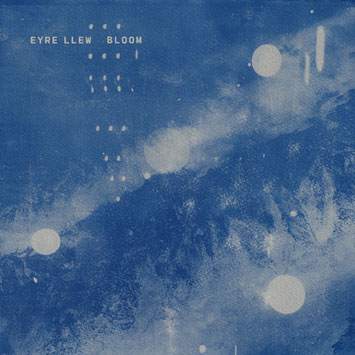
Bloom by Eyre Llew – Album Review
By David Schuster
Let’s get the elephant in the room out in the open straight away. Then we can release him back into the wild, and we’ll all have a lot less cleaning up to do. The question: is it valid for one band to sound so much like another that comparisons are inevitable?
There’s no getting away from the fact that Eyre Llew sound like Icelanders Sigur Rós. They have the same cinematic, slow-burning tunes, gradually building to soaring, windswept heights and dying away like echoes in caverns deep and dark.
I’d argue that this is not only acceptable, but standard practice across all the arts. If you listen to a wide spectrum of musical styles, this might be something you instinctively rebel against. After all, don’t we want artists to be unique? Well, no. There will only ever have been one Pablo Picasso, but there have since been many hundreds who have followed his Cubist style, each bringing new life to that school of painting. If you are wedded to a particular genre, such as Country and Western, and even more so a niche subgenre like Cowpunk, this is probably something you’ve already implicitly accepted. So, Eyre Llew might occupy the same sonic space as Sigur Rós, but their songs are their own original compositions, played with skill and emotion. As such, they provide a welcome addition for those who love this wistful, spacious, nostalgic style.
Right. That’s got that out of the way.
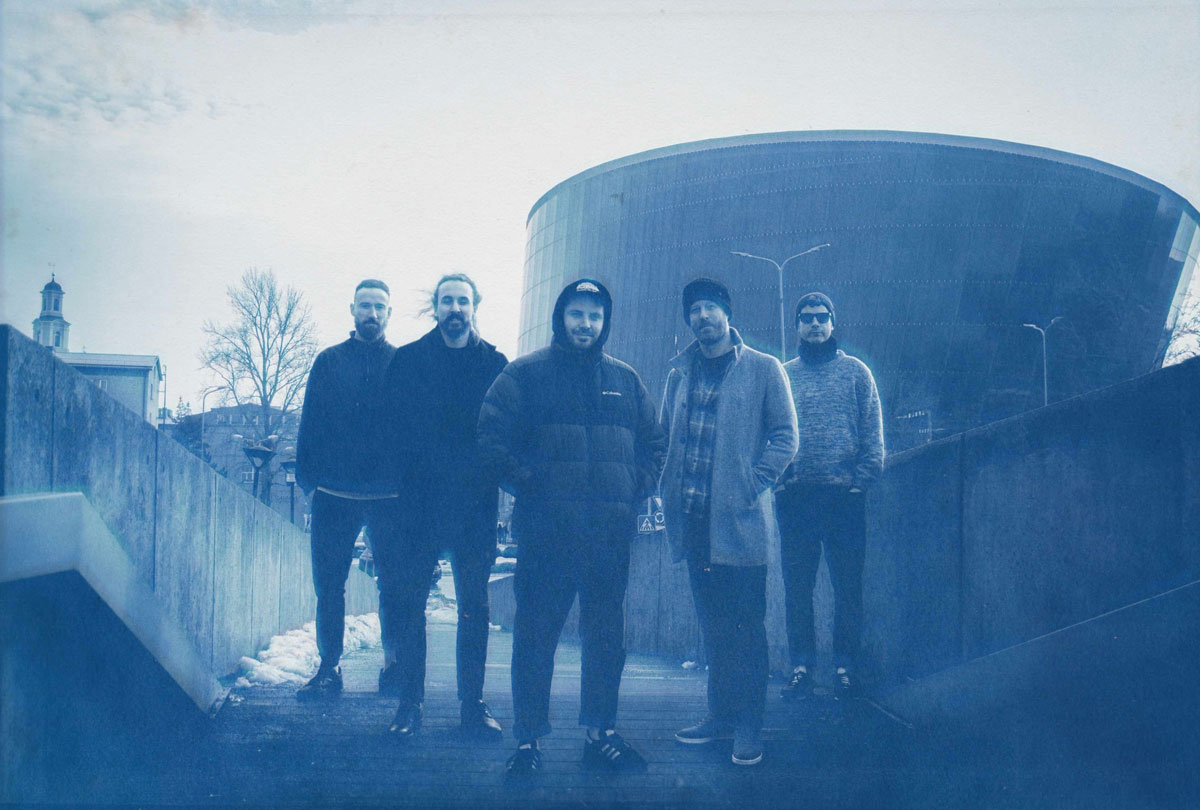
Eyre Llew, 2026
“Ebbs and flows”
Bloom is the long-awaited second album from the Nottingham band. Originally formed as a trio, the group featured Sam Heaton on guitar and vocals, Jack Bennett also playing guitar, and Jack Gibson Clark with the unusual combination of drums and piano. However, in 2024, they expanded to become a five-piece, with the addition of Russ Clark on bass and Laurie Illingworth on piano and drums. Their sound, too, has evolved. This is a more confident album than their debut, Atelo, more willing to allow space for the delicate beauty of the songs to emerge.
The title track is sublime. Slow, bright church-organ chords are eventually joined by Heaton’s falsetto vocals, the words of the lyrics drawn out to become sounds, but charged with meaning. The clever use of voice more as an instrument than as a vehicle for traditional lyrics puts me in mind of Cocteau Twins’ Elizabeth Fraser on their classic Blue Bell Knoll. Gradually, a deep, ominous bass-drum beat is added before the whole quintet reaches a musical climax two-thirds of the way through. It’s then that the group’s new confidence comes to the fore. The instrumentation falls away, back to a simple organ with heavy vibrato, taking almost a minute and a half to slide into silence. The transition is so subtle that it’s difficult to tell where the music stops and the silence starts. Just beautiful.
‘Oban’, the current single, also has it all. Heaton’s quiet, twangy guitar and vocals are softly joined by the rest of the instruments, all still low and slow. The sound ebbs and flows, the susurration of white waves on the silver sands of a remote West Highland beach. After the second verse, the instruments take over, gradually building in tempo and intensity, reaching a crescendo where the vocalist whoops over the final bars. It paints a picture of wildness, rough heather and windblown trees clinging to Atlantic coasts. If you let yourself become immersed in it, it’s truly spine-tingling.
 “Sense of mystery”
I’ve spent time in Oban. And, while it is surrounded by some of the most stunning scenery in the UK, the town itself has two conflicting identities, neither of which matches this compelling image. For most of the time, it’s a cosy 1950s world of double-fronted grey-granite bed and breakfasts, coach parties and cream teas. Then, on bank holidays, the bars fill with Glaswegian day-trippers and it’s more like the Wild West. I’ve actually been in a pub in Oban where the door crashed open to the shout of, “I’ll fight anyone in here!”
There’s a word for this disparity between the perception and reality of a location: anemoia, meaning nostalgia for a time or place you’ve never experienced. But that’s the magic of a well-crafted tune: it can weave such an illusion.
The band obviously have a strong sense of place. As well as ‘Oban’, there’s also ‘Miningsbury’, apparently a small village in Lincolnshire, and a reference in ‘Bloom’ to a place that revels in the name of Pydyris, which may, or may not, be a location near Cardiff Central station. It all adds to an intriguing sense of mystery. Of the eleven tracks, only ‘Everywhere’ doesn’t quite fit. It’s certainly a great song, comparable to the folk-rock style of Peter Gabriel’s 1977 hit ‘Solsbury Hill’, and it will be a festival crowd-pleaser, but it doesn’t quite sit comfortably with the overall feel of Bloom.
Eyre Llew’s haunting, cinematic music deserves to be brought to a wider audience. As was the case with Enya and the BBC’s The Celts, they would be ideally suited to providing the soundtrack to a landmark TV series. Highly recommended.

David Schuster describes himself as an “adventurer, collector, musician and writer. Not necessarily in that order.” Growing up west of the Pennine hills of the UK and living his adult life east of them, he’s inclined to think that the Wars of the Roses were a mistake. David loves discovering new bands and musicians and is happiest listening to live music. He has travelled extensively in the UK and is fascinated by the variety, history and landscapes of the thousands of islands that comprise the British Isles. David is always reassured when online shops confirm that he’s not a robot.