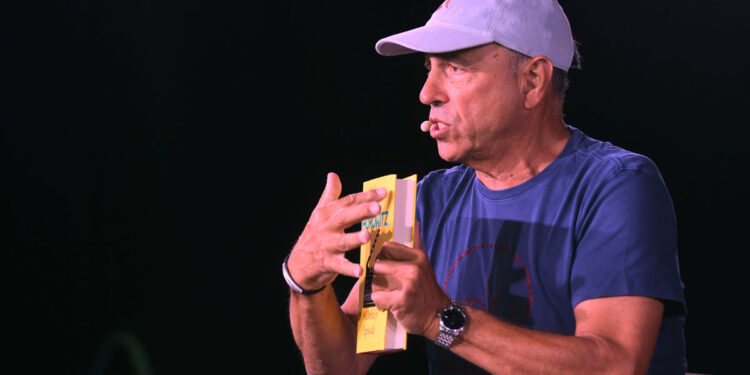
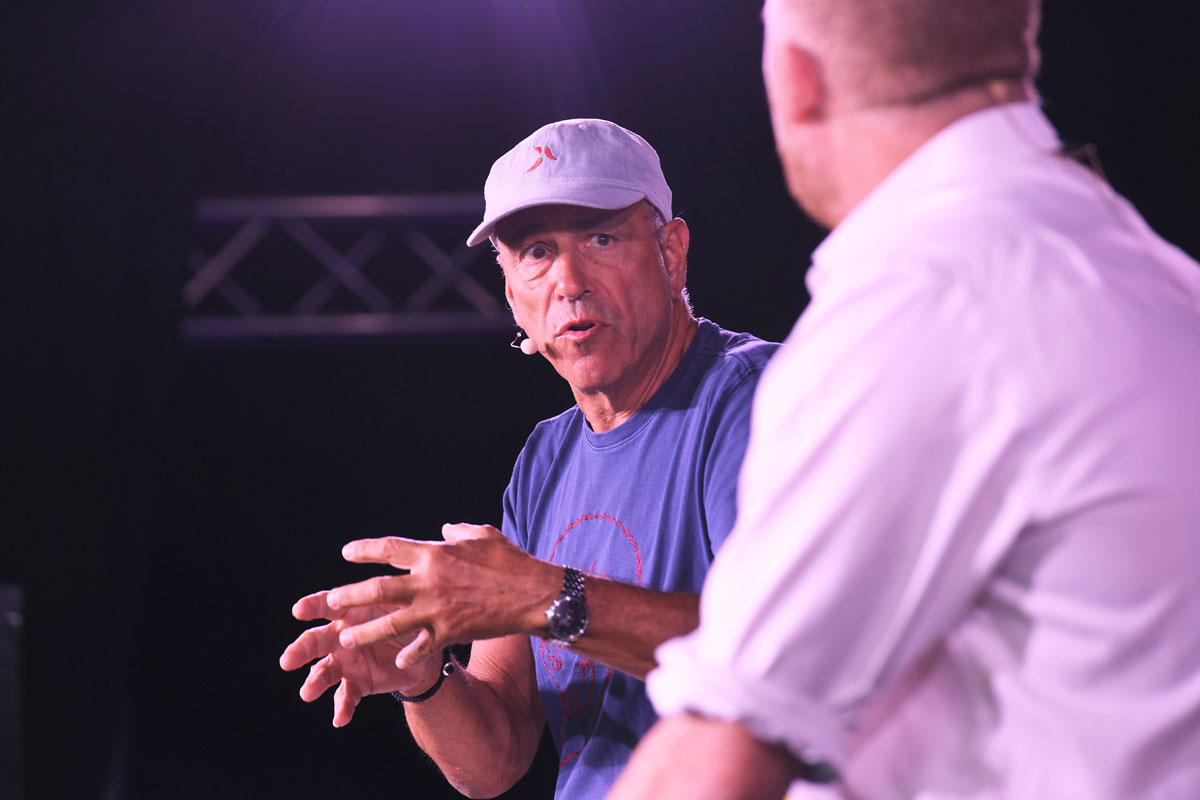
Anthony Horowitz in Conversation at Theakston’s Old Peculier Crime Writing Festival
By Sarah Morgan, July 2026
“I was born to write.”
So declares Anthony Horowitz, the prolific, bestselling author behind the Alex Rider, Susan Ryeland and Hawthorne and Horowitz series, not to mention a variety of other standalone books and TV dramas.
“I knew when I was 10 that I was going to be a writer,” he claims during a talk at the Theakstons Old Peculier Crime Writing Festival in Harrogate. “At 17 I knew I was going to be a crime writer. I write with a fountain pen because I love the scratch of the nib on the paper; I love the ink on my fingers. I’ve never done anything else.”
It’s 9 o’clock in the morning, and although those attending the sold-out event are mostly a little bleary-eyed, Horowitz is full of energy, retelling amusing stories in which he’s usually the butt of the joke.
For example, he regales everyone with recollections of his miserable public school years.
“My reports always said I was hopeless, a waste of space, so I left with an inferior complex. In fact, I’ve still got it and it’s so bad I worry my inferior complex isn’t as good as other people’s…
“The only place I enjoyed myself was in the school library, where I could escape. It’s no coincidence books are shaped like little doors – they’re a gateway into other worlds. My life is basically a series of gateways into other worlds.”
Horowitz’s first audiences were the boys he shared a dormitory with; he would tell them tales once the lights went out.
“I suddenly realised the power stories could have,” he remembers. “Would I have swapped my miserable school years for happiness but no writing career? Probably not. The misery might have been worth it.”
Being away from home meant that he didn’t get to know his parent as well as he’d have liked. Although he adored his mother, his father remains a somewhat enigmatic figure.
“I think my dad was a white collar criminal – he ducked whenever he saw a policeman,” grins Horowitz. “He knew people in government and he once persuaded me to deliver a fortune in bearer bonds to a mysterious address on my bicycle when I was 13. But one useful thing he did do is introduce me to Arthur Conan Doyle and Sherlock Holmes.”
The stories have been hugely important to the writer; he even ended up creating several of his own, becoming the first author to be endorsed by the Conan Doyle estate to do so.
“Ideas come to me every day”
He’s also penned three James Bond novels, having been commissioned by the Ian Fleming estate, although it’s for his original work – both on TV and the page – that he remains best known.
Horowitz created the Foyle’s War drama, and wrote most of the first season of Midsomer Murders. More recently, he’s adapted his own Susan Ryeland books for the small screen – the third series of which, Marble Hall Murders, is now in production.
Alongside him throughout it all is his wife Jill Green, who produces each show: “She’s the only person I know who works harder than me. While making Foyle’s War, we never argued about who did the washing up, but we did argue about how many Spitfires I could shoot down.”
He’s in Harrogate to promote his latest Hawthorne and Horowitz book, A Deadly Episode. As his fans will already know, he appears in each book as a fictional version of himself who has been hired by a detective to write about how he solves crimes. His research for the project has brought him to Yorkshire – he wanted to find the place where Hawthorne grew up, and settled on Reeth near Richmond.
But next up is a book set in Berlin in 1945. After that, who knows? But one thing is for sure, Horowitz won’t be sitting with his feet up for long.
“Ideas come to me every day, thirty or forty times. Every. Single. Day. When I read a newspaper, while travelling on a train… Stories are everywhere I look.
“I know exactly what I’m going to write about because of the structure. I work everything out. To prove it, in an early Midsomer Murders, a character is reading Magpie Murders – that was seven years before I wrote it, but I was already thinking about it.
“Formula is my biggest fear,” he adds. “I want to tear the envelope, to try to find things that have never been done before.”
Horowitz spends 11 hours a day at his desk, but does enjoy getting out into the open air: “I think the happiest I am is when I’m walking in the countryside with Jill and our dog Chase. Walking is underrated; it’s wonderful thinking time.”
As for the work itself, he’s keen to point out that while it can be all-consuming, it’s not like having a ‘real’ job.
“I’m not working in the way a factory worker or a nurse does,” he admits. “I’m doing the writing I’d be doing even if I wasn’t selling anything. I can’t stop.”
And that will be music to the ears of his devoted fans.
images: Gerard Binks
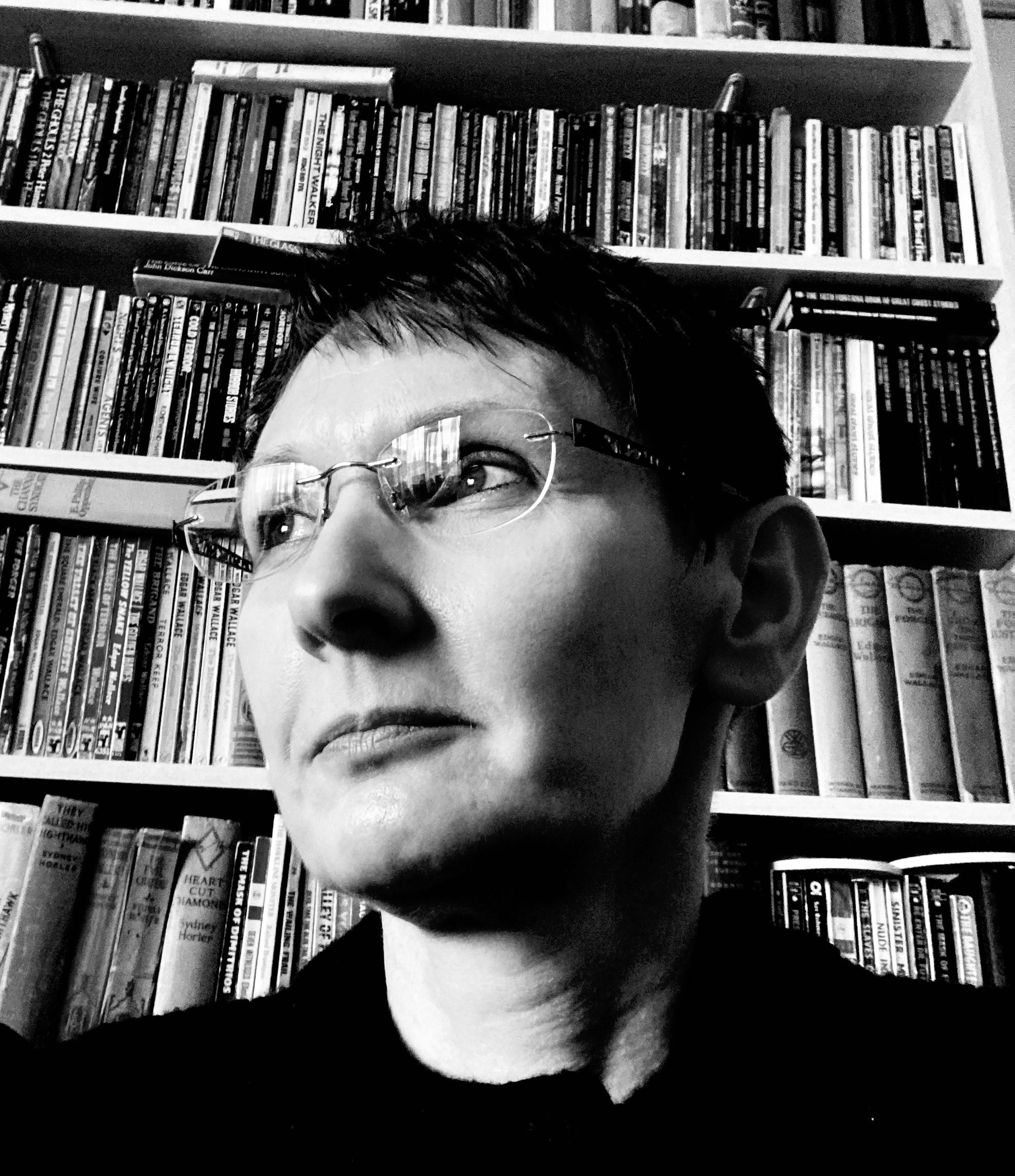
Sarah Morgan studied film journalism at post-graduate level with the BFI and has been writing about TV and film for PA Media’s newspaper, magazine and new media customers since 1996. She’s also written for a wide range of other publications, both online and in print, including the book Offbeat and Intermission magazine, and is a regular contributor to the Talking Pictures TV podcast. When she isn’t watching movies, she’s collecting and reading vintage crime and horror paperback books or, for her sins, watching her beloved Sheffield Wednesday.