I Play Rocky (2026) – Film Review
Director: Peter Farrelly
Cast: Anthony Ippolito, AnnaSophia Robb, P.J. Byrne
Certificate: 15
By David Reid
Rocky (1976) is well known for being an iconic film, and also as the starting point for one of the great film franchises in movie history. This encompasses five films in the original Rocky series, Rocky Balboa, and then the three spin-off Creed films, starring Michael B. Jordan. It might well be thought that, aside from possible further sequels, the time has arrived for Rocky and company to hang up their boxing gloves. Well, as it turns out, Hollywood has other ideas.
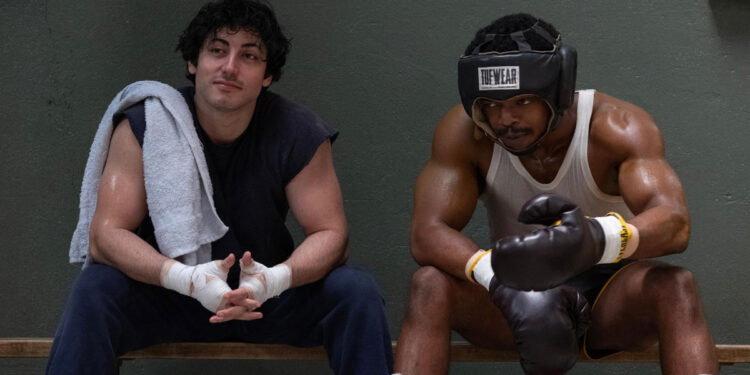
I Play Rocky is not a remake of Rocky. It tells the tale of how Rocky came to be. In other words, it is the story of how the original film was created, from page to screen, to acclaim, awards and eventual legendary status. It is directed by Peter Farrelly, who directed the Oscar-winning Best Picture Green Book, and is known for making quirky comedies, either by himself or with his brother, Bobby, such as There’s Something About Mary and Dumb and Dumber.
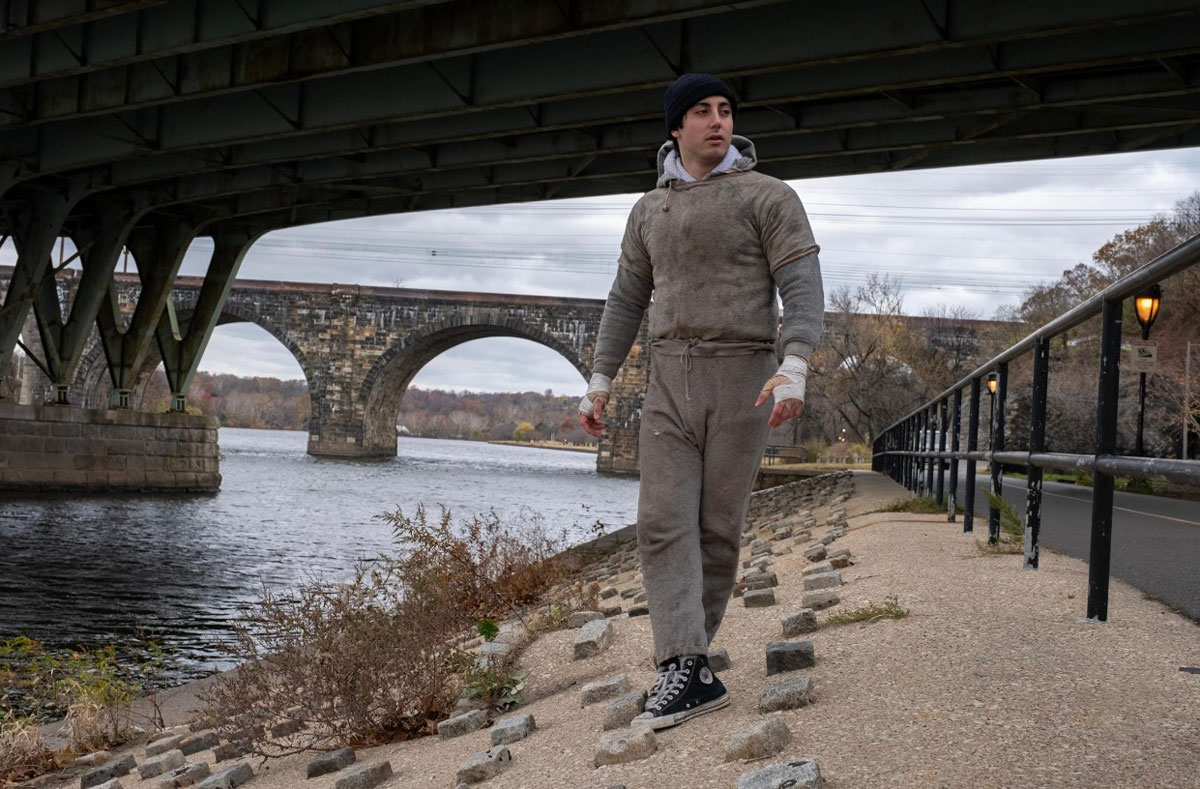
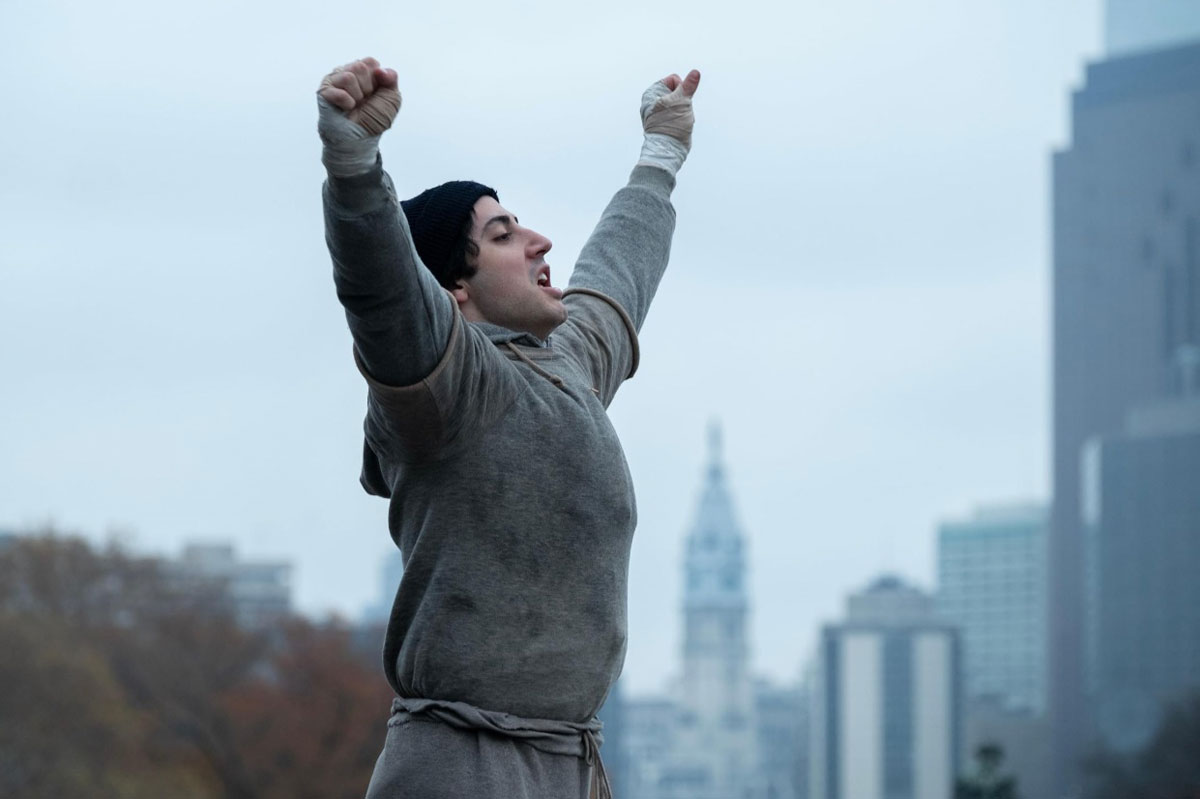
With a quality director at the helm, another important piece of the jigsaw is who will play Sylvester Stallone, the actor who played Rocky. Up steps New Yorker Anthony Ippolito, in his first leading film role. It has been reported that, even before there was a script or an audition process, this young, aspiring actor spent years sending in unsolicited audition tapes for the role. As it turned out, the production team looked no further for their lead actor. On screen, Ippolito so resembles Stallone, in looks and voice, that Sly seems ever-present in this movie.
And so to the story. We encounter Sylvester Stallone, a struggling actor, competing against the odds for bit parts. His wife, Sasha, played by AnnaSophia Robb (Bridge to Terabithia), is supportive and encouraging of her husband’s dream. She is bright and articulate, providing an effective foil for the often moody demeanour of her husband, while guiding him to consider scriptwriting as well as acting.
“Increasingly intense”
Inspired by watching a Muhammad Ali boxing match, Stallone writes the screenplay for Rocky in three and a half days. Hollywood’s would-be producers, Irwin Winkler (P. J. Byrne) and Robert Chartoff (Toby Kebbell), love the script, in the main, although they baulk at the idea of Sylvester Stallone playing Rocky. Although, in the 21st century, films can be made on smartphones and unknown actors can find a route into mainstream productions through short films, 1970s Hollywood relied upon established stars to entice the viewing public.
Winkler and Chartoff take the putative project to United Artists executive Sandy Maddox (a composite character, played by Tracy Letts, known for Lady Bird and Homeland). He is sceptical about the idea of a boxing movie, and it is out of the question that an unknown actor could play the lead.
In preparing this review, I couldn’t uncover a pre-Rocky, seventies award-winning film which did not feature at least one well-known lead actor. What the film studio said made good business sense at that time.
There follows a series of negotiations in which United Artists tries to buy Sylvester Stallone out of his cherished wish to star in the film. This makes for a number of scenes where the bargaining becomes increasingly intense, with Tracy Letts emphasising the comedic angles, whilst Stallone sinks lower into financial difficulty.
As we now know, the movie gets made, but with an ongoing threat that going over budget or needing additional shooting time would give the studio the right to replace Sylvester Stallone with a recognised star.
“Twists and turns”
John Avildsen (Jay Duplass) is hired as the director, largely for his capacity to work fast and keep to a tight budget. He had also shown an ability to produce quality drama, having directed Jack Lemmon to a Best Actor Oscar shortly before, for Save the Tiger.
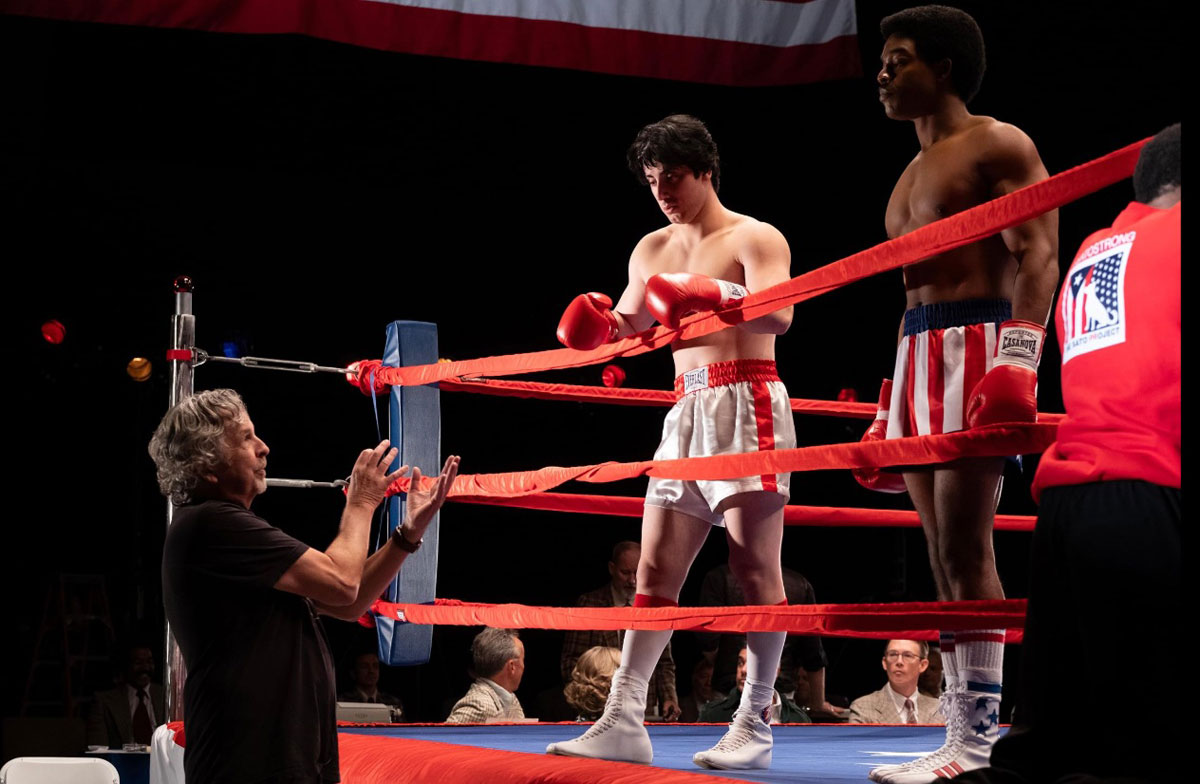
The ‘making of’ scenes are almost worth the price of admission alone, for their fly-on-the-wall view of the filming process at the time. Experience the thrill, once more, of Rocky’s training regime and his famous salute on the Philadelphia Museum of Art steps.
However, production challenges came thick and fast. For example, like me, you may have assumed that Sylvester Stallone must have had some experience in the ring as a boxer. This was not the case, so he and the other actors had to be trained from scratch.
The use of Steadicam techniques was then in its early days, and we see the process in action. There are many twists and turns, deftly managed by the director and cinematographer Sean Porter.
The soundtrack emphasises the period feel of the piece, with good use of Philadelphia soul and soft rock, including tracks by Hall & Oates and ELO. Tribute is also paid to Bill Conti’s fabulous Rocky theme, ‘Gonna Fly Now’. Although questioned at the time, it went on to top the Billboard Hot 100 chart.
“Madcap aspects”
Special mention should be made of the screenplay by Peter Gamble (House of Sand). It skilfully juxtaposes sensitive scenes with vulnerable characters against an almost slapstick comedy feel in some of the more madcap aspects of Hollywood filmmaking.
At times, Winkler and Chartoff resemble Statler and Waldorf from The Muppets, as the difficulties of film production mount up. At times, the script is very funny, producing audience guffaws at my Saturday morning screening.
There are also strong supporting performances by Matt Dillon as Frank Stallone Sr., Kiki Seto as Talia Shire, and Robert Morgan as Burgess Meredith.
I could imagine that many might be put off by the idea of a Rocky film, or feel that the franchise has run its course. Whilst that would be understandable, at heart, this is a well-crafted tribute to a single-minded actor who created a unique film after taking on and beating the big-studio Hollywood culture.
It is a film which takes a fresh and vibrant look at a classic. Blessed with good performances and a strong script, this is a movie which rises above the well-worn clichés to produce one of the most entertaining films of the year.

David’s passion for cinema began with his first trip to the movies during The Troubles in Northern Ireland, where a screening of Jaws was dramatically interrupted by a bomb scare. Growing up in such an environment made entertainment scarce, deepening his appreciation for film and the arts. Over 25 years ago, he won a national film review competition, earning free cinema for life. This experience has allowed him to explore a vast range of genres and storytelling techniques. His reviews aim to provide insightful commentary without spoiling key surprises, helping audiences decide if a film is for them. He believes great filmmaking is rooted in strong storytelling, engaging viewers through narrative depth and presentation.