5 WTA Dark Horses Ahead of the French Open (2026 Edition)
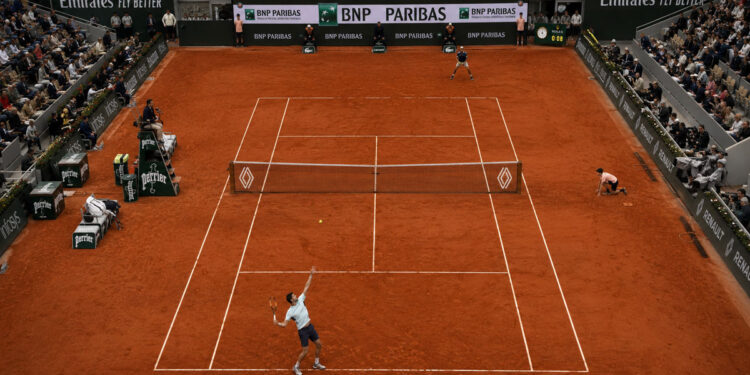
The French Open still runs close to the starting line with the same obvious question: how does anybody survive Iga Swiatek’s patterns of clay and Aryna Sabalenka’s first hit violence? But Paris is not a city for the favorites. Jelena Ostapenko’s 2017 upset and Barbora Krejcikova’s 2021 advance are great reminders that Roland-Garros will pay for nerves, as well as reputation, just as much as it will for imagination.
The reason for this is that value-conscious bettors should not just consider the price at the top. Favorites are the constant winners, but intelligent bettors who elect to make French Open picks via the full tournament coverage will know that the greatest edge is often not always found from clearly marked favorites, but instead from watching for player form, matchup pressure, and clay specific tools before the market catches on.
The five WTA dark horses aren’t necessarily long shots. They are all mid-seeded threats, volatile tennis underdogs, but all have a tactical route to a run at the French Open 2026 second week. One key change: Beatriz Haddad Maia was a pre-tournament favorite, but her first-round defeat to Francesca Jones at Roland-Garros has opened the door for Hailey Baptiste as the better current value pick.
Beyond the obvious: Why dark horses define a Grand Slam
Clay is able to bridge the gap between talent and problem solving. A big serve is a good help, but it’s not often that’s the end of it. The surface demands players to be able to defend their corners, slide into balance, change level, create patterns, and recharge after extended return games. It’s that volatility that makes Roland-Garros predictions a mix of movement and patience as well as power.
One of the best ways to make a bet on women’s tennis is to find out how to make opponents play on their feet. The Stuttgart team played for first strike accuracy, the Madrid team played for kick, height and spin, and the Paris team can vary from day to day depending on the heat, wind and court speed. This watchlist combines the latest in form with WTA predictions tailored for matchup hunting.
Mirra Andreeva: The all-court prodigy with clay-court grit
Mirra Andreeva’s clay game is now contender-level. She saw off Swiatek in the semifinals of Stuttgart to make the final, which she lost to Marta Kostyuk, after winning against Linz in April. That’s not prospect noise; it’s solid clay evidence.
She begins the betting case with her mind. Andreeva is very quick with the read, doesn’t panic on a switch and doesn’t fear winning ugly points. She can play the ball high for a backhand, flat into the open court or drag big hitters forward. That’s the type of frustration that leads to vulnerable moments when facing top-eight seeds.
Qinwen Zheng: Explosive power ready for a grand stage
Qinwen Zheng in 2026 is a high-risk, high-reward pick. Indeed, her elbow layoff made the market wary but her triumphant return from Doha, which featured 20 aces and 43 winners against Sofia Kenin, proved that the serve and forehand are still powerful weapons.
Zheng’s hefty topspin forehand isn’t just a shot that gets the job done on clay; it keeps the opponents away from the doubles alley and allows for a more open net. Madrid did suffer from some rust, and there’s always a game in hand against someone like Elena Rybakina, but that might retain betting value. For two weeks, if her timing is right, she can power through a favourite without rhythm playing a part.
Emma Navarro: The strategist with classic clay-court smarts
The archetype of the hard-court slugger is hardly applicable to Emma Navarro. Strasbourg changed the narrative, though, and her 2026 start was marred by health problems, before she defeated top seed Victoria Mboko to claim her first clay title, and third WTA trophy.
Navarro’s edge isn’t a single highlight shot. Balance, footwork, court sense, and the ability to play one ball more. That profile maps well to best-of-3 clay tennis as well when opponents overhit to ball 7 or 8 of a set. She’s a good “survive and stress” value for underdog wagers.
Linda Noskova: The fearless ball-striker and giant-killer
Linda Noskova is a threat because she doesn’t seek consent. She saw her way through Coco Gauff 6-4 1-6 7-6 in the round of 16 in Madrid to advance to the quarterfinal. That was a familiar theme for she, to swing through reputations.
Her flatter ball is a somewhat atypical clay projectile. It’s fast off the kick in warm weather, skidding away and giving defenders time to react. Noskova can leak errors, which is why she’s better suited to match markets than conservative futures. But as a bracket buster, she’s fearsome.
Hailey Baptiste: The updated live long shot
With Haddad Maia out, Hailey Baptiste is the better current value pick. She held her breath at the match points to beat Sabalenka in Madrid, advanced to her first semifinal in a WTA 1000 event and defeated former Roland-Garros champion Krejcikova in the first round of the French Open.
Baptiste’s serve is an easy point, but her biggest improvement is composure under pressure. Madrid demonstrated her ability to regain speed, pick up tempo after a spell of lost games, and be free to go up and down at 5-5 points. She’s not a safe bet, but betting guides aren’t just about safe bets. They are based on mis-priced ceilings.
Final thoughts: Who will emerge from the pack?
Diversity is the draw for this group. That’s IQ from Andreeva, power from Zheng, movement of Navarro, fearlessness of Noskova and momentum of Baptiste. None is perfect, which is why they can remain playable, but each has a respectable path to the red dirt.
Check injuries, weather, rest days and opponent weaknesses throughout the draw as the draw progresses, don’t lock in positions. The 2026 champion might still be a favourite, but the next moneymaking French Open tale may well be from this pack.