Steam, Scenery and Snowdon: Wales By Train – Travel Review
By Kevin Pilley, May 2026
He wasn’t happy.
“Why didnae ‘kin wake me up?” asked the Scottish man who missed Snowdon.
“You knew I wanted to see Snowdon. That was the whole point of getting this here train. And I missed ‘kin thing.”
The Scottish lady who saw Snowdon shrugged. She had a strong Glaswegian accent. “It’s ya fault for having that big lunch y’ad and all them beers. Anyhows, I got a picture of it on oor wee phone camera in my hands here.”
“A picture is nae the ‘kin same,” sulked the Scotsman who was part of a bus tour party occupying most of the third-class carriage aboard the Welsh Highland Railway’s NG/G16 No. 138. She was facing towards the engine and he was facing away. He had enjoyed a good sleep and she had seen all the sights.
He shook his head in disbelief and disappointment and said something which wasn’t Ffestiniog.
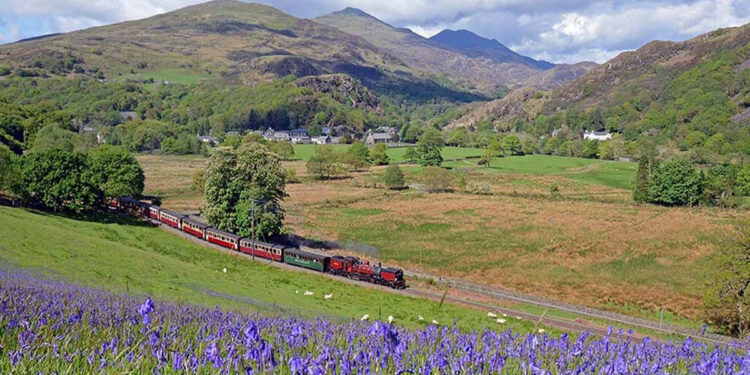
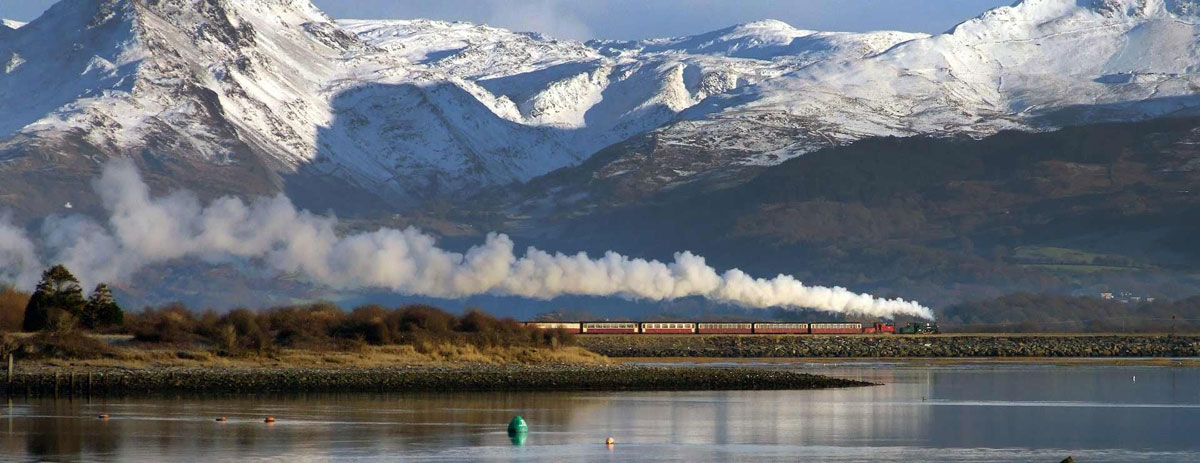
The Ffestiniog Railway Company – Rheilffordd Eryri – is the oldest independent railway company in the world. It operates the oldest narrow-gauge railway in the UK: 1ft 11½in. From March to November, it links up with the longest heritage railway – the 2011 Welsh Highland Railway – for a 40-mile, two-and-a-half-hour, £40 journey from Blaenau Ffestiniog, then west coast to north-west coast, from Porthmadog to Caernarfon’s new £3m station.
“Stunning mountain passes”
The Scotsman managed to remain conscious until Croesor, location of the Glaslyn Osprey Centre, and saw Cnicht, or “knight’s helmet”, and Beddgelert, named after a legendary hound killed by a Welsh king who thought it had eaten his baby. But his eyelids began to droop near Rhyd Ddu, or “black ford”, and he slept through most of the Gwynedd scenery: the rivers, waterfalls, oak woodlands, river-cut gorges and hand-cut gorges. He snored through stunning mountain passes, or cols, and the tunnels cut by Cornish tin engineers passed him by.
Pulled by the 60-ton 1893 “Linda”, we passed her sister “Blanche” at Tan-y-Bwlch, meaning “under the pass”, where the late Mrs Bessie Jones used to welcome passengers in traditional costume and give them tea in the station house. We rubbernecked the tiny Campbell’s Platform – a stone hut, gate and bench. The halt served Plas Dduallt manor house, where Oliver Cromwell reputedly sheltered during his campaign against the Royalists of North Wales. Colonel Andrew Campbell bought the house in 1962 and ran his own train. An explosives expert, he helped with rock blasting during the construction of the line.
There are several request stops, including Coed y Bleiddiau, meaning “Wood of Wolves”, where you can rent your own platform and private halt, and stay in the restored 1863 station house.
Established by an Act of Parliament in 1832, the Ffestiniog originally served 23 slate quarries. The speed of its “dandy” wagons was controlled by brakemen who risked serious injury leaping from one wagon to another to tighten or loosen brakes. Steam locomotives were introduced in 1863 with the Small England engines “Princess” and “Mountaineer”. The line was served by other locos, including “Little Giant”, “Little Wonder” and “Welsh Pony”.
“Old-world charm”
The Ffestiniog Railway Company is the oldest surviving railway company in the world. The original line closed in 1936, but from 1951 was completely rebuilt by volunteers. It was the world’s first preserved steam railway.
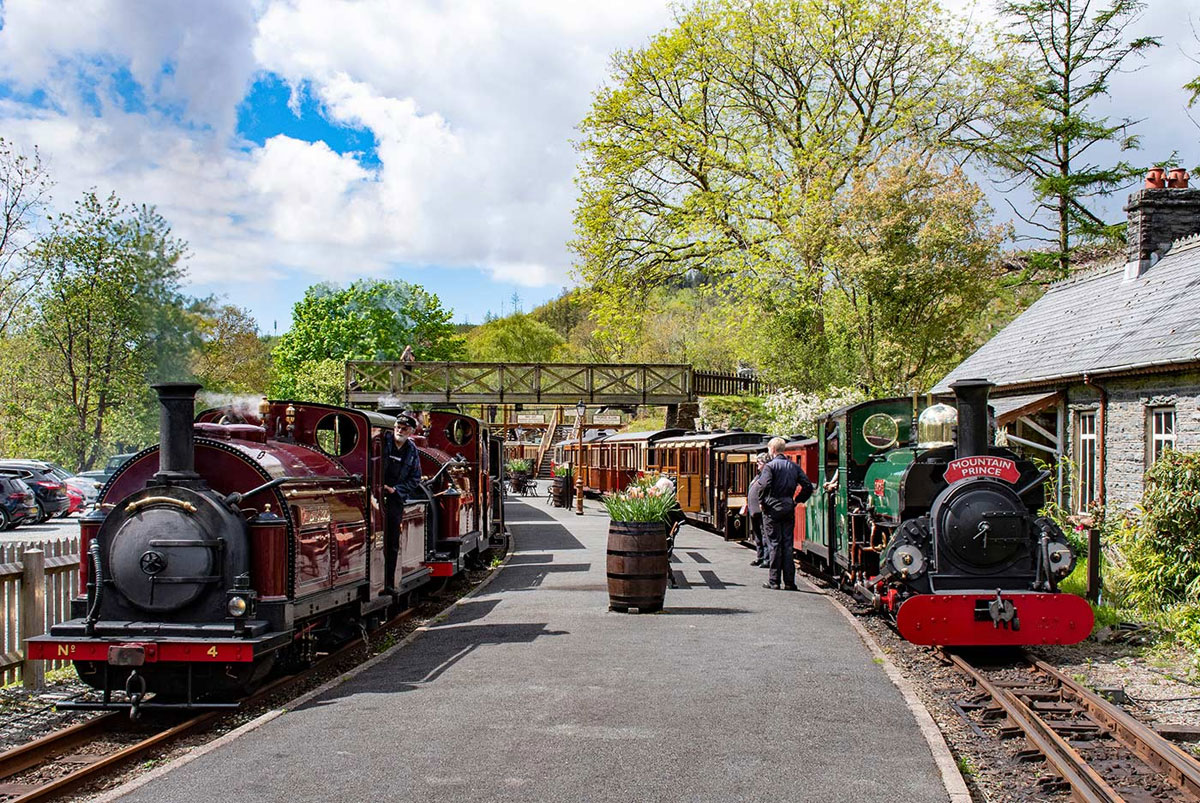
The 11 “Great Little Trains of Wales” are the way to see some of the best scenery in the British Isles. As well as modern observation and Pullman carriages, offering afternoon teas complete with silver tiered cake stands, polished brass fittings, hardwood interiors and liveried staff, the Ffestiniog and Welsh Highland railway routes preserve the old-world charm and romance of steam travel, offering bygone sounds and smells as well as ancient landscapes. That is, if you can keep awake and not be lulled into a doze by the clackety-clack as the train sways through the countryside, or hypnotised by the lady in front shuffling from one window to another so she doesn’t miss a photographic opportunity. Especially the biggest sight of all.
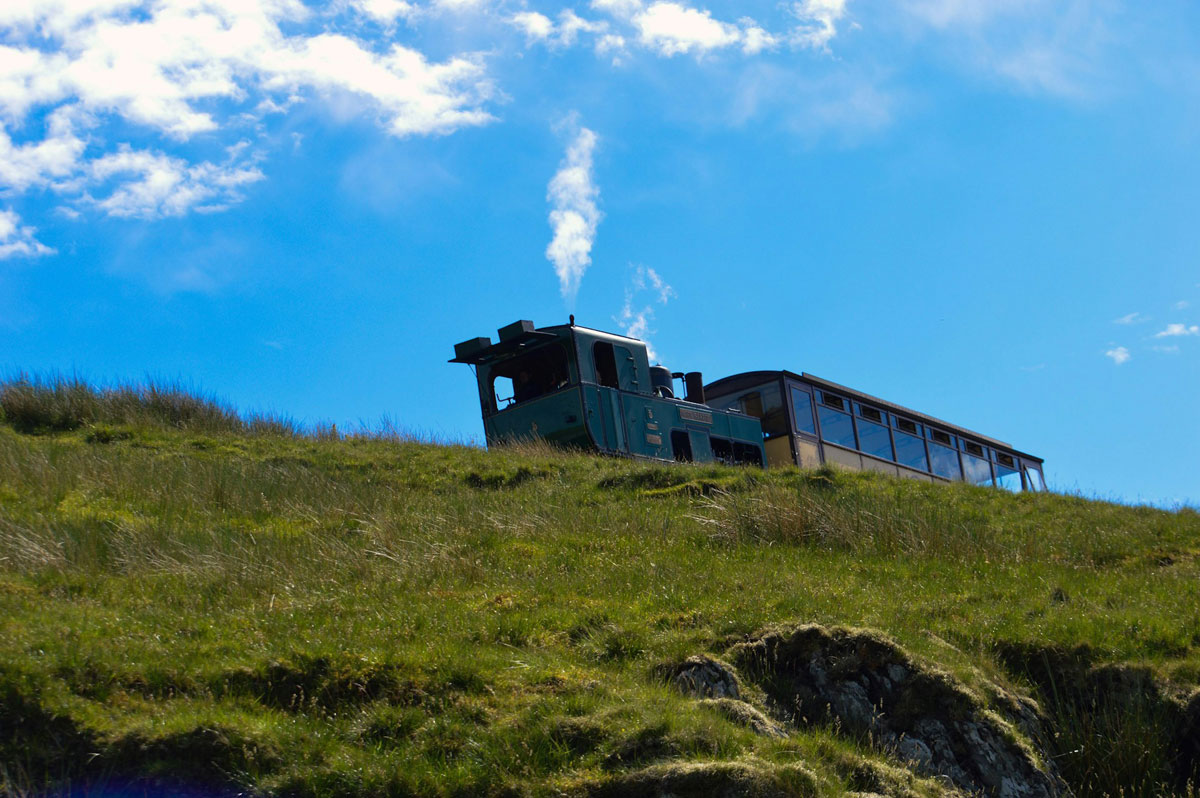
Known as Yr Wyddfa in Welsh, at 3,560ft (1,085m), Snowdon – Old English for “snow hill” – is the highest point in England and Wales. For £39 return, either the heritage steam engine “Lily”, with its original Swiss chassis and bogie, or the diesel “Mountain Goat” takes you along the 1896 track to the summit and the “Land of Eagles” (Hafod Eryri). Carriages are named after Welsh celebrities, such as Dame Shirley Bassey. The route takes in two viaducts, Hebron, named after a chapel built by Welsh-speaking locals in 1833, the Valley of Reeds, Rocky Valley and Clogwyn, home of the witch Canthrig Bwt.
There is a visitor centre, a café and a cairn said to be a giant’s grave. According to Welsh folklore, the giant Rhitta Gawr wore a cloak made of beards. He was slain by King Arthur after he tried to steal Arthur’s. Arthur is said to have died at Bwlch y Saethau, on the ridge between Snowdon and Y Lliwedd. The train toots and the steam hisses all the way.
“Points and signals”
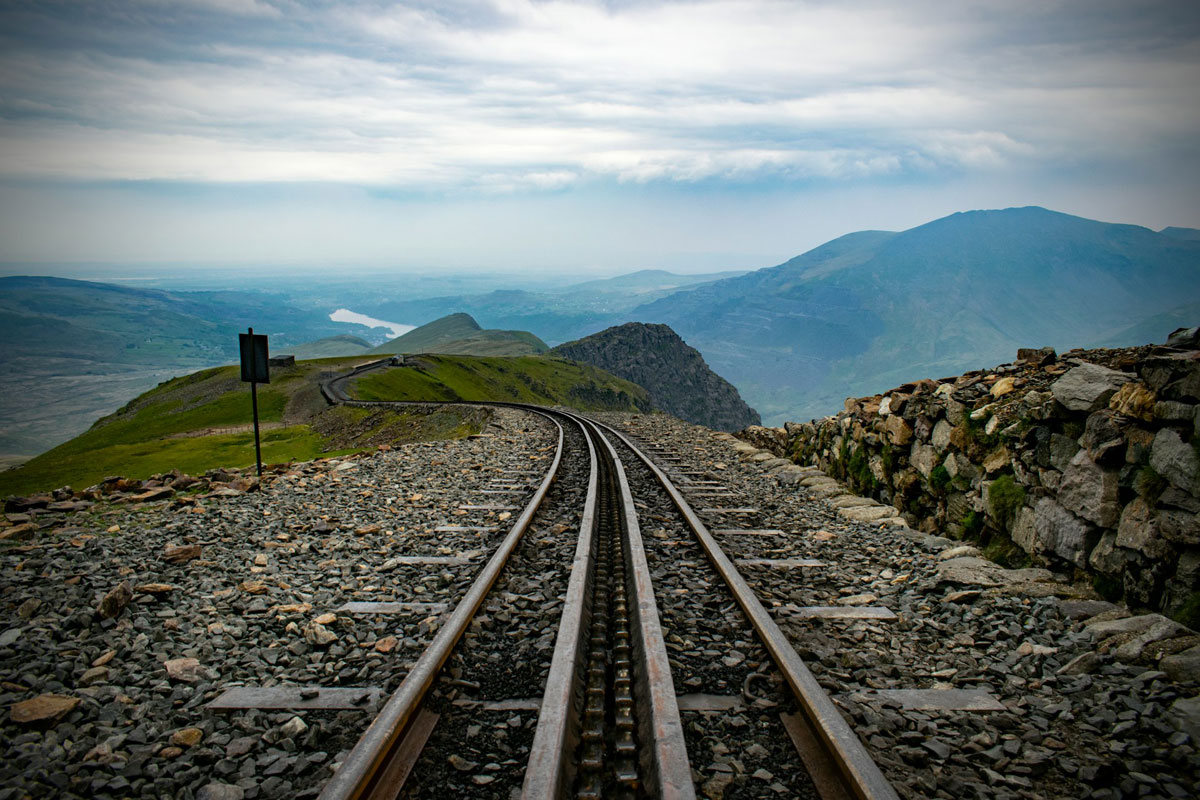
The 4.7-mile track is the only rack-and-pinion railway in the UK, and gets you up close to the arête of Crib Goch, or “red ridge”, and the cliff faces used by Sir Edmund Hillary and his expedition for practice before their 1953 ascent of Everest.
As the Scotsman snored away, open-mouthed but out for the count, we saw Snowdon, and the guard told us that its Watkin Path was used in 1968 to film Carry On Up The Khyber. The young man in charge of the refreshments trolley said a Lara Croft movie was also filmed in Snowdonia National Park.
The seven-mile Talyllyn Railway is another great small railway. Starting from Tywyn on the Mid-Wales coast, halfway between Dolgellau and Machynlleth, it goes to Abergynolwyn and Nant Gwernol, along the Fathew Valley and past the three waterfalls comprising Dolgoch Falls.
On the Welsh Highland Heritage Railway’s one-mile demonstration line, at Pen-y-Mount Junction, you can watch the guard changing the points and signals.
Bala Lake Railway occupies the trackbed of the former Ruabon-Barmouth line of the Great Western Railway between Llanuwchllyn and Pen-y-Bont Halt, on the opposite side of Llyn Tegid (Bala Lake). Opened in 1972, it also employs ex-quarry engines.
“Miniature replicas”
The Llanberis Lake Railway skirts the shores of Padarn Lake, passing the thirteenth-century Dolbadarn Castle, birthplace of the Welsh prince Llywelyn the Great (1173–1240), before terminating at Penllyn. The National Slate Museum is at Llanberis below Elidir mountain and near Dinorwig quarry.
The Fairbourne Railway, formerly a horse-drawn tramway, was converted to a miniature steam railway in 1916. It provides views of the Mawddach Estuary and Cadair Idris mountains before arriving at Barmouth Ferry station. The steam locomotives are miniature replicas of narrow-gauge engines.
The Brecon Mountain Railway travels ten miles from Pant, near Merthyr Tydfil, to Torpantau. The 1903 Welshpool and Llanfair Light Railway offers a scenic 16-mile journey, while the 1902 Vale of Rheidol – once used to transport lead ore – goes from Aberystwyth to the Devil’s Bridge waterfalls in Ceredigion.
Back on the Welsh Highland, the Scotsman woke up just after Waunfawr, “The Big Moor”. While he was asleep, we had waved back at signalwomen, housewives hanging out washing, mothers cradling babies, hikers beginning their hikes, farmers waiting on tractors at level crossings, and many children. The train whistled and the steam plumed as we chugged past miscellaneous “moels”, including Moel Hebog, meaning “bare hill of the hawk or falcon”, Mynydd Mawr, or “big mountain”, and the Elephant (Yr Eliffant), overlooking the Llyn Cwellyn reservoir.
“Eastern shore”
We learnt some Welsh: “glyn” is a glen, “llyn” is a lake, “dinas” is a hill, “aber” is a confluence of rivers, “merthyr” means “martyr”, “blaenau” means “top”, “ffordd” means “road” and “ffrwd” means “stream”.
The Scotsman was full of “f” words, but was conscious as Linda crossed “Traeth Mawr”, or “big sands”, on the 1811 Cob, a seawall or embankment built through the home of gulls, mudflat-wading little egrets and oystercatchers.
Right on time, we pulled into the eastern shore of the Menai Strait, opposite the Isle of Anglesey. In 1955, the royal town of Caernarfon, meaning “fort on the river”, lost to Cardiff in a vote to become the Welsh capital. Its thirteenth-century castle, built as a royal palace for Edward I, staged the investiture of the future Edward VIII as Prince of Wales in 1911 and Prince Charles in 1969. You can stay in its Bath Tower.
The Scots were reunited with their coach driver and the Scotsman returned to his highlands, having slept through most of the Welsh ones.
Everyone said how much they had enjoyed the trip, although for one man the day had been a massif disappointment.
Ffestiniog Travel’s Wales: Culture, Steam & Heritage tour is ideal for rail enthusiasts and scenic travel lovers.
Departing 4 September 2026, the 11-day escorted holiday explores North Wales through journeys on several iconic “Great Little Trains…”
greatlittletrainsofwales.co.uk
Kevin Pilley is a former professional cricketer and the ex-chief staff writer of PUNCH magazine. His humour, travel, lifestyle and food & drink work appears worldwide. He has been published by over 600 titles.