Vietnam Road Trip: The Ultimate Self-Drive Itinerary
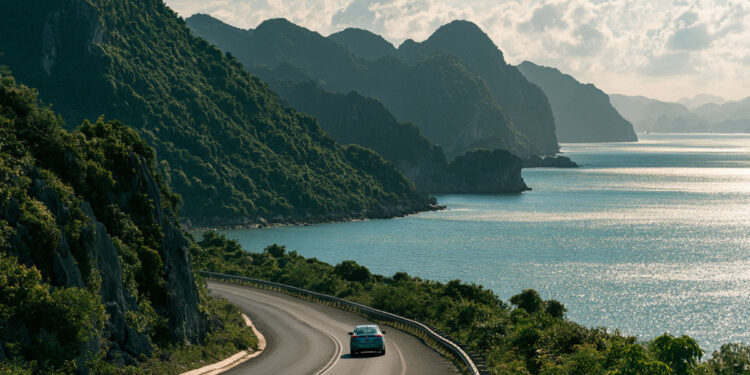
Tour buses show Vietnam through smudged glass, on somebody else’s timetable. Stop wherever, for however long you like? Not an option. Driving yourself changes that completely. The rice terrace nobody else bothered stopping for. That roadside stall with coffee thick enough to stand a spoon in. A bend in the road, and – there it is – Ha Long Bay’s limestone islands pulling themselves out of the haze, like the whole country timed it on purpose. Set your own pace here and Vietnam tends to pay you back for it. And yes, the roads look chaotic from a hotel balcony. They’re not, really. Not once you’re actually in the flow of it.
Charting the Classic North-to-South Route
Most self-drive routes begin in Hanoi, climb into the mountains, then ease south toward the coast. Patience pays off. Distances aren’t huge by European standards – this isn’t a cross-continent slog – but the roads twist, climb, and sometimes vanish straight into cloud cover for a stretch.
Head north from Hanoi and the road to Ha Giang turns into one of the most dramatic drives going in Southeast Asia. Terraced hillsides stacked one on top of the next. Hairpin, then another hairpin. Villages that rarely see a foreign face at all. Keep going and Ha Long Bay sits close enough for an early start – a full day on the water, ideally before the tour boats turn up and ruin the quiet. Then comes the Hai Van Pass, linking Da Nang and Hue, climbing to a lookout where the sea drops away on one side and jungle takes over on the other. Honestly? That view alone justifies the whole self-drive idea over slumping in a coach seat.
Sort the transport out early – availability disappears fast once peak season hits, and nobody wants to be haggling over a car on day one. Booking a reliable car hire Vietnam deal ahead of time takes that headache off the table entirely, and sidesteps the inflated rates that tend to lurk around airport counters.
Further south, Hoi An’s lantern-lit old town makes for a natural overnight stop – worth lingering in, if there’s time to spare. Then the Mekong Delta near Can Tho closes things out with an entirely different mood: floating markets, fruit orchards, roads that finally, mercifully, flatten out after days of climbing.
Behind the Wheel: What Every Driver Needs to Know
Nobody said driving in Vietnam was hard. It just asks for a slightly different mindset than, say, a Sunday drive through the Cotswolds. A handful of essentials separate a stressful first afternoon from a genuinely enjoyable one:
- An International Driving Permit is non-negotiable alongside a valid national licence. No permit, no keys – rental companies won’t budge on this.
- Motorbikes are everywhere, weaving in from angles you wouldn’t expect, so mirrors and the horn stop being optional extras and become part of how you drive.
- Speed limits sit around 40–50 km/h in towns, climb to 60–80 km/h on open roads, and hit 120 km/h on the short stretches of expressway.
- Rush hour – roughly 7–9am and 4–7pm in Hanoi and Ho Chi Minh City – is worth dodging wherever the itinerary allows it.
- Road markings fade fast outside the big cities. Following the flow of traffic often works better than trusting the paint.
Here’s a fun one: honking isn’t aggression here, it’s etiquette. Drivers announce themselves before blind bends and busy junctions, nothing personal about it. Most newcomers find that just watching local traffic for half an hour – before even turning the key – makes the rest of the trip far less nerve-racking.
Fuel Stops, Parking and Practical Details
Petrol stations announce themselves by colour, which helps more than you’d think: green for Petrolimex, red and white for PVOil, yellow for Shell. They pop up regularly along the major routes. Mountain areas are a different story – stations thin out fast, so topping up early beats waiting until the needle’s near empty. Self-service isn’t really a thing here; an attendant fills the tank, and cash in Vietnamese dong remains the safest bet, though cards and QR codes are creeping into the bigger cities.
Parking works on a similar mix of official and, well, semi-official systems:
- Shopping centres and supermarkets often give a free first hour before the meter starts running.
- Official lots – look for the blue “P” signs near stations, airports and attractions – charge by time.
- Informal street parking near beaches and markets usually means an attendant in a vest collecting a flat fee. Worth confirming the rate before wandering off.
- Some hotels throw in parking for guests. Some don’t. Always check.
- Outside towns, free roadside parking near natural attractions is generally fine – just don’t block anyone’s way through.
One last tip: download offline maps before setting off. Mobile signal has a habit of vanishing entirely in the mountains, right when you need it most.
Final Thoughts
A Vietnam road trip was never really about covering the most ground in the least time. It’s the freedom to leave Ha Long Bay before the crowds roll in, to linger an extra hour at a rice terrace for no good reason, to take the long way through the Hai Van Pass simply because the view asks for it. The traffic that looks so overwhelming from a hotel balcony turns out to be entirely learnable once you’re in it. For anyone torn between the tour bus and the driver’s seat – Vietnam is one of those rare places where the harder-looking option turns out to be the better one, by quite some distance.