5 Benefits of Open-Plan Layouts for Early Childhood Development

The design of an early-years environment plays a fundamental role in how children learn, play, and interact. Traditional, partitioned rooms are increasingly being replaced by fluid, open-plan spaces that better support the pedagogical needs of young learners. By using modern building techniques, providers can create atmospheres that are both calming and stimulating.
Today’s early-years settings that prioritise these layouts often see a marked improvement in child engagement. These designs don’t only look contemporary, they also offer practical solutions to the daily challenges faced by childcare professionals.
1. Social Interaction and Collaboration
Open-plan environments naturally encourage children of various ages and stages to interact. Without the physical barriers of walls, children have more opportunities to observe their peers and engage in collaborative play. This setup helps them develop vital communication skills and empathy from a very early age.
Staff can facilitate group activities more easily in a wide-area setting. Because the space is versatile, it’s simple to transition from a quiet reading circle to a more energetic group game. This flexibility ensures that the nursery remains a dynamic place where social bonds are constantly being strengthened.
2. Flexible Learning Zones
One of the greatest strengths of modern construction is the ability to create adaptable interiors. In an open-plan layout, educators can use furniture, rugs, and portable partitions to define specific areas. This means a single hall can house a messy play zone, a sensory corner, and a rest area simultaneously.
That’s exactly why we’ve seen a remarkable rise in the use of high-quality panelised modular nursery buildings. These panelised constructions are often designed with this versatility in mind. Using high-performance SIP systems and engineered timber or steel components ensures the building has a strong fabric-first performance while allowing for large, unobstructed internal spans. This allows the layout to evolve as the specific needs of the cohort change throughout the academic year.
These buildings are assembled on traditional foundations, combining off-site precision with the permanence of conventional construction.
3. Improved Supervision and Safety
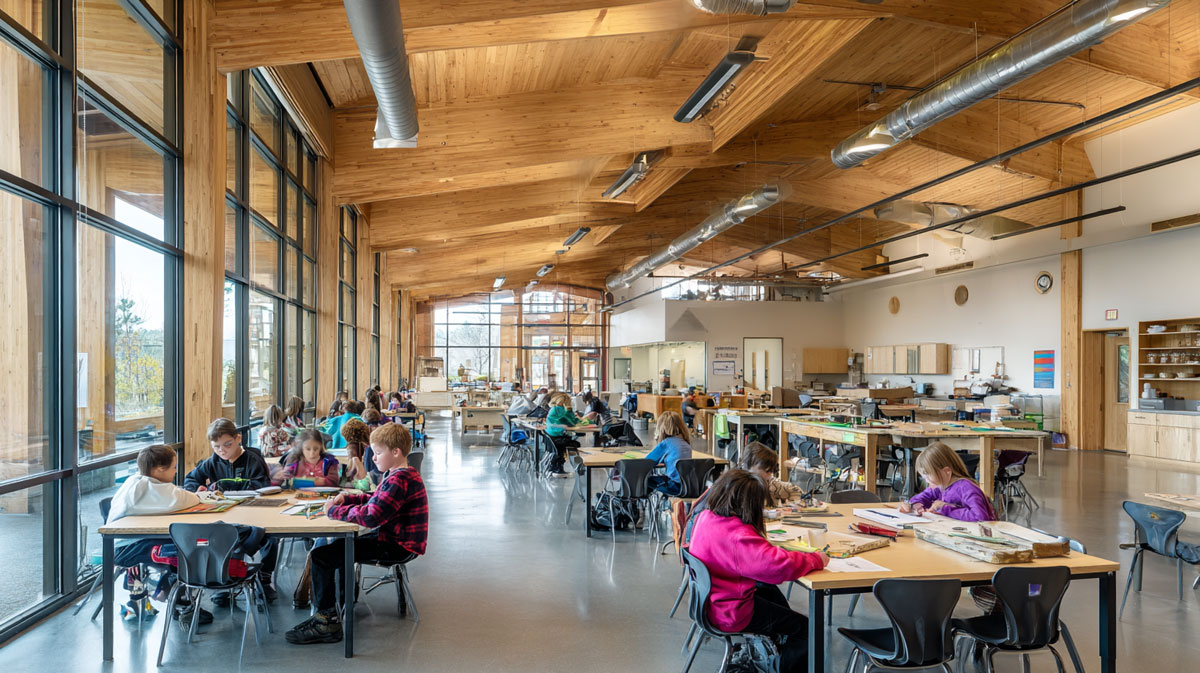
Safety is the top priority for any childcare provider. An open-plan design provides clear sightlines across the entire room, making it much easier for staff to monitor all children at once. This transparency reduces the risk of accidents in hidden corners and ensures that help is always nearby. Open-plan learning environments have a few key benefits:
- Uninterrupted visibility allows practitioners to track multiple groups of children simultaneously.
- Easier transitions between activities occur because staff can see when a group is ready to move on.
- Enhanced flow reduces bottlenecks that often occur in narrow doorways or hallways.
- Natural light usually reaches further into an open space, creating a brighter and safer feeling environment.
4. Promoting Independence and Choice
When children can see the various activities available to them, they’re more likely to take initiative. Open-plan layouts empower toddlers to navigate their environment and choose the resources they want to explore. This autonomy is a cornerstone of many early years’ educational philosophies.
By providing a treasure trove of accessible materials within a large space, you encourage a child’s natural curiosity. They don’t have to ask to go to another room to find a specific toy or book. Instead, they can move freely, which builds confidence and a sense of ownership over their learning journey.
5. Better Air Quality and Natural Light
Modern panelised modular buildings often use high-performance materials that contribute to a healthier indoor climate. Large open spaces allow for better air circulation and more effective use of natural light through strategically placed windows. This is essential for the wellbeing of both children and staff who spend long hours indoors.
Buildings designed with a focus on sustainability often feature low embodied carbon and excellent thermal performance. These technical benefits mean the nursery stays at a comfortable temperature year-round without being stuffy. A bright, airy room with high ceilings can significantly reduce stress and improve the overall mood of the pupils.
Wrapping Up
Investing in a well-designed open-plan space is a strategic move for any forward-thinking nursery. These layouts support the multifaceted needs of early childhood development by fostering social skills, independence, and safety. By moving away from cramped, traditional structures, you provide a platform where children can truly thrive.
In addition, modern construction methods foster a safe environment that meets strict UK building regulations. Whether you’re looking for a permanent classroom or a full nursery suite, the focus remains on quality and speed of delivery. Ultimately, the right environment acts as a silent educator, guiding children through their most formative years.