Before You Commission a Bespoke Kitchen: What Should You Actually Be Paying For?
A bespoke kitchen can represent a significant investment, but the word “bespoke” does not always tell you very much about what you are actually buying.
For one company, bespoke might mean choosing from a wider range of colours, handles and worktops. For another, it can mean designing and manufacturing every cabinet specifically for the room, with control over dimensions, materials, internal layouts and construction.
For homeowners comparing quotations, those differences can be difficult to see. Two kitchens may look similar in a rendered image while being very different in the way they are designed and made.
So before commissioning a bespoke kitchen, it is worth looking beyond the finished appearance and understanding where the additional investment is actually going.
Start by asking what “bespoke” means
The first question is surprisingly simple: what part of the kitchen is actually bespoke?
Many kitchen systems are based on predetermined cabinet sizes. A manufacturer may offer a large choice of doors, finishes and accessories, but the furniture itself still has to work within a standard set of dimensions.
There is nothing inherently wrong with this. Modular manufacturing can be efficient and entirely appropriate for many homes.
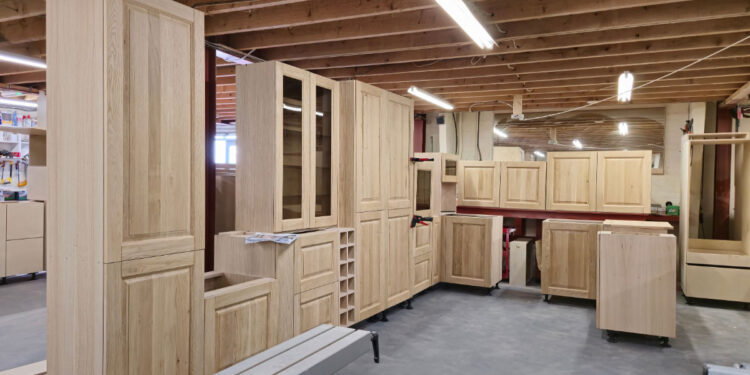
Fully bespoke furniture follows a different process. Cabinet widths, heights, depths and internal arrangements can instead be developed around the dimensions and requirements of the individual room.
This becomes particularly valuable where a property has uneven walls, unusually high ceilings, awkward corners, architectural features or simply a layout that does not correspond neatly with standard cabinet sizes.
Homeowners who want to understand this distinction in more detail can read this guide to how bespoke furniture really works, which explains some of the practical differences between modular and fully bespoke manufacturing.
The important point is not that one approach is universally better. It is knowing which one you are being quoted for.
Look beyond the doors
When choosing a kitchen, most of the initial attention naturally goes to what can be seen: colour, timber, handles, worktops and appliances.
Yet some of the most important differences in quality sit behind the doors.
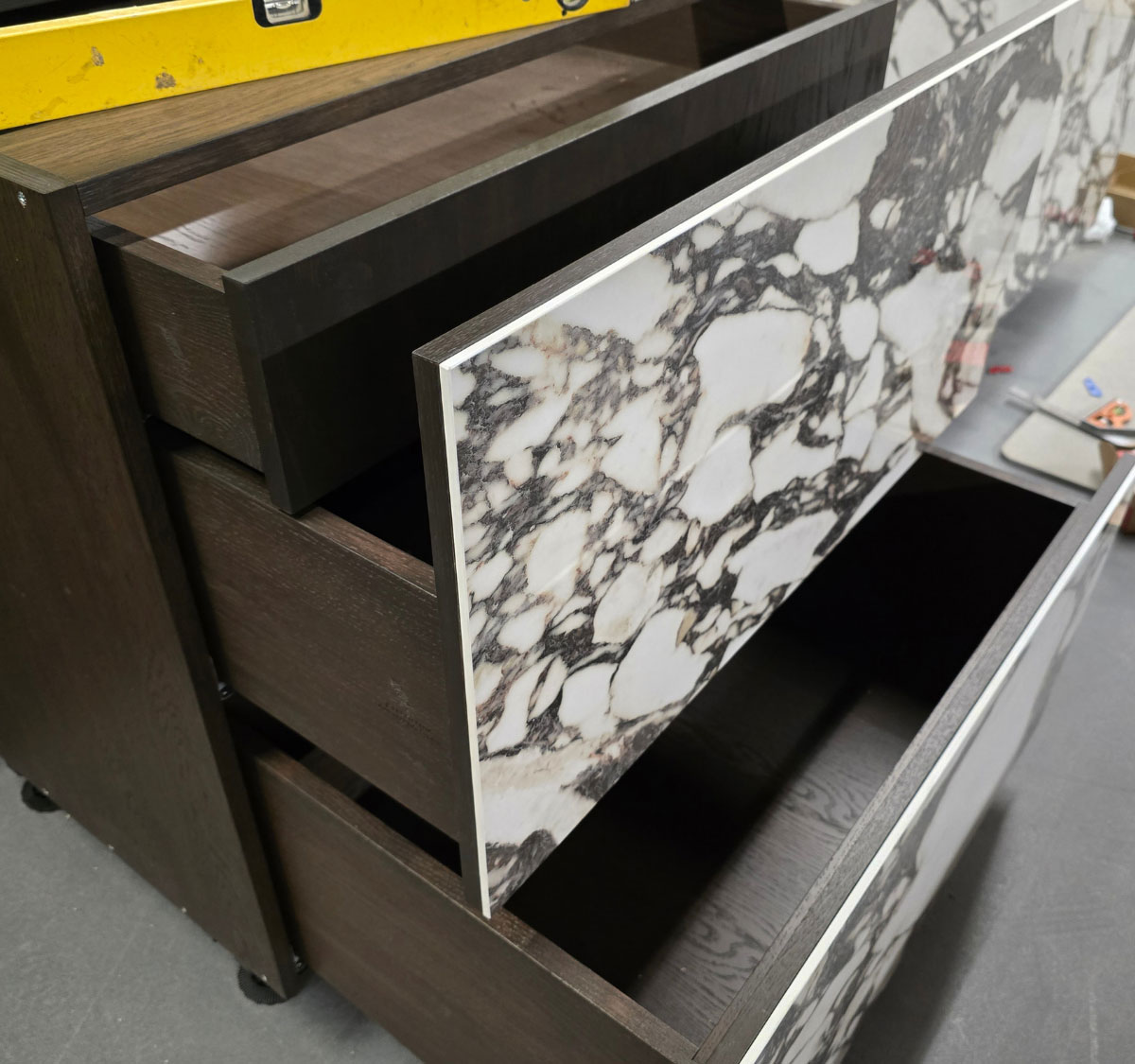
Ask what the cabinet carcasses are made from. Look at the thickness and construction of the backs. Find out whether units arrive flat-packed or fully assembled, how shelves are supported and what drawer and hinge systems are being specified.
These details influence rigidity, durability and how the furniture performs over years of everyday use.
A beautiful natural-oak door does not automatically mean the entire cabinet is constructed to the same standard. Equally, the most expensive material is not necessarily the best choice for every component.
A considered kitchen specification uses materials according to the job they need to do.
Understand why different materials may be combined
The idea that a premium kitchen should be made entirely from solid wood can be misleading.
Solid timber has wonderful natural character and can be particularly effective for details that are touched and experienced. But timber also moves naturally in response to changes in humidity and temperature, which means it needs to be used and constructed appropriately.
Natural wood veneer can provide the appearance and character of real timber while allowing greater stability across large doors and panels. It also gives the designer more control over grain direction and visual continuity.
Plywood can provide strength and structural stability and can either remain visible as part of the design or sit beneath another surface such as natural veneer or laminate.
MDF and other engineered boards also have legitimate applications, particularly where a stable, smooth painted surface is required.
The question should therefore not be, “Which material is the most expensive?”
A better question is: Why has this material been specified here?
A knowledgeable designer or manufacturer should be able to answer that clearly.
Consider how the kitchen relates to the room
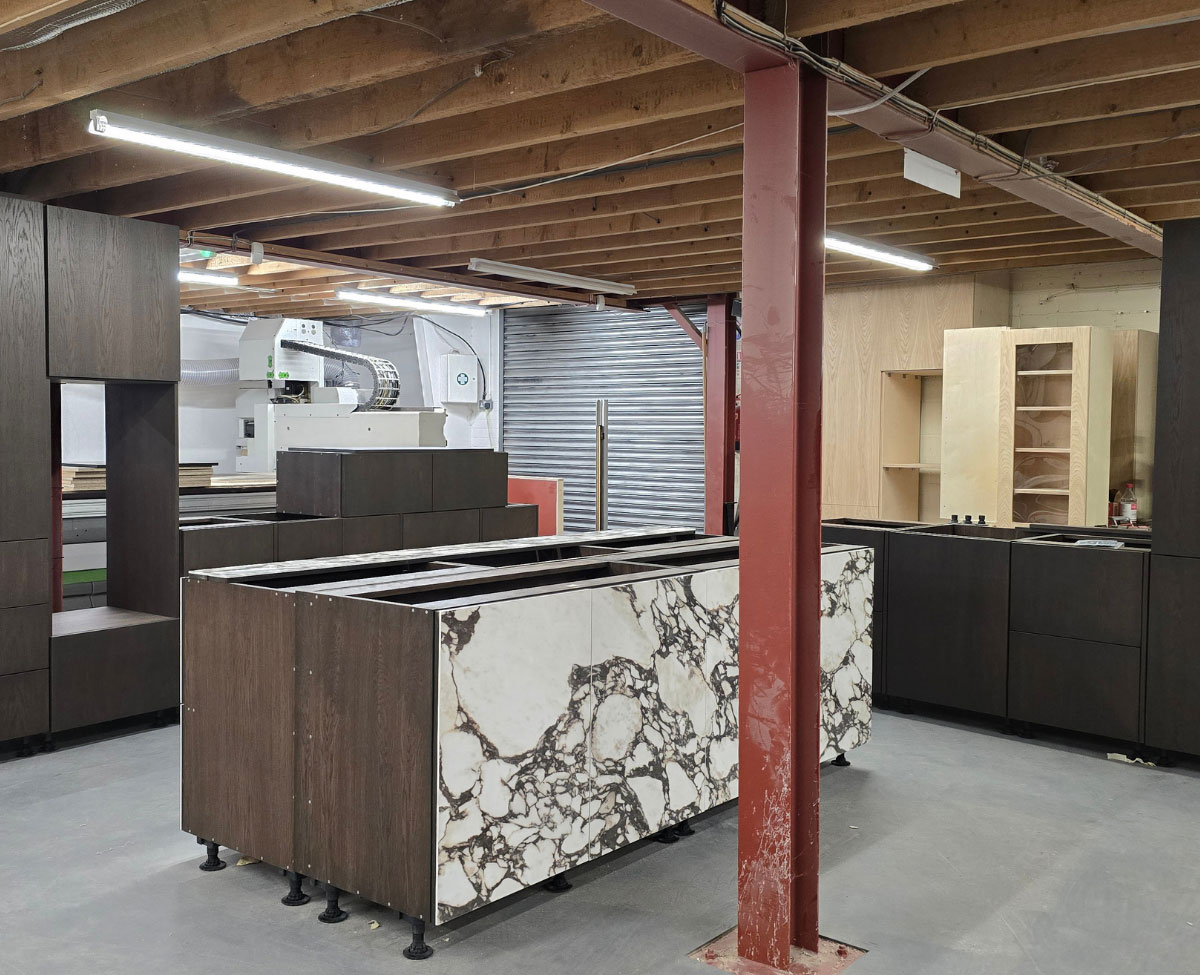
One of the biggest advantages of commissioning furniture specifically for a property is the opportunity to treat it as part of the architecture rather than as a collection of cabinets placed against the walls.
Small dimensional decisions can make a considerable difference.
A tall run of cabinetry might align precisely with a doorway or ceiling detail. An island can be proportioned around the circulation space rather than selected from a standard size. Storage can extend into areas that would otherwise become filler panels or unused gaps.
This is particularly relevant in older Yorkshire properties, where walls, floors and ceilings are rarely perfectly uniform, but it matters in contemporary homes too.
Good bespoke design should respond not only to the measurements of the room, but also to how people move through it, where natural sightlines fall and how the kitchen connects with dining and living areas.
The aim is not simply to fit more furniture into the available space. It is to make the furniture feel as though it belongs there.
Internal design matters just as much
A kitchen can look beautifully resolved from the outside while still being frustrating to use.
That is why internal configuration deserves the same level of consideration as the exterior.
Before approving a design, think about how you actually use your kitchen.
Where will small appliances live? Which items need to be accessible every day? Where will food be stored? Do deep drawers make more sense than cupboards? Is there sufficient space around the sink and cooking areas? Can awkward corners be put to better use?
In a genuinely flexible manufacturing process, internal arrangements do not necessarily have to follow a predetermined catalogue.
This allows storage to be developed around the household rather than asking the household to adapt to the storage.
It is one of the less glamorous parts of kitchen design, but it is also one of the areas that will affect daily life for many years.
Find out what happens between the drawing and manufacture
A polished 3D visual is useful for understanding how a proposed kitchen might look, but it is not the same thing as a manufacturing drawing.
Before furniture goes into production, a bespoke project should move through a technical development stage.
Dimensions need to be verified. Appliances have to be integrated correctly. Door clearances, internal configurations and service requirements need to be checked. Materials and finishes should be confirmed.
This stage is where attractive ideas become buildable furniture.
It is also where experienced manufacturing knowledge becomes important. A detail that looks straightforward on a screen may need to be adapted once material thickness, hinges, tolerances, grain direction or installation conditions are taken into account.
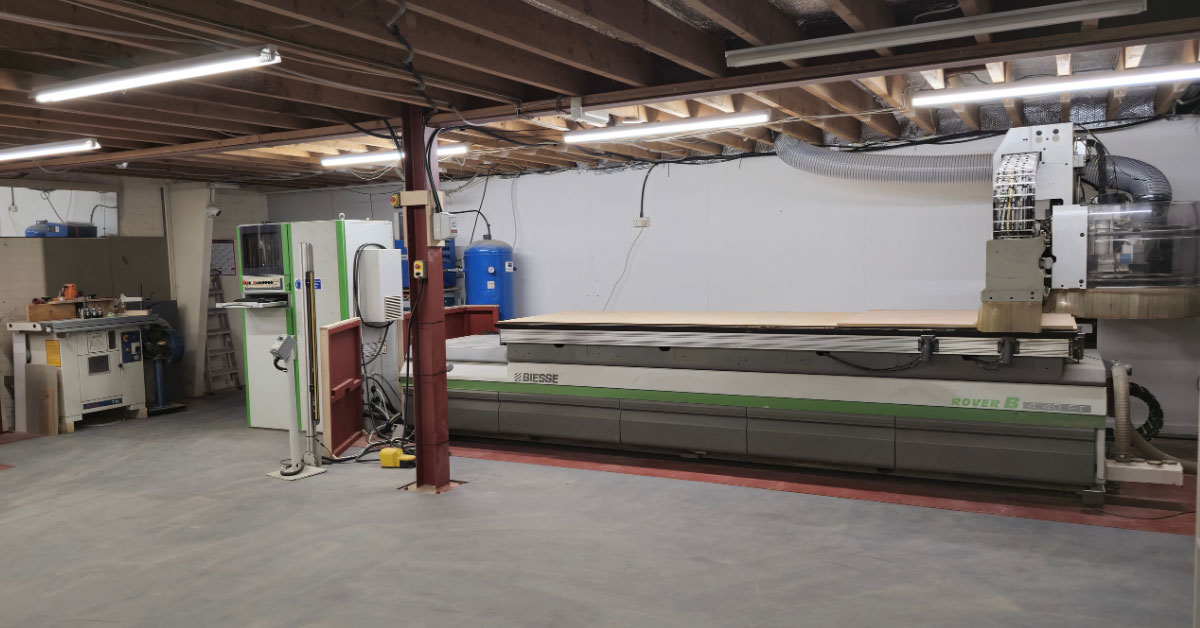
When comparing kitchen companies, ask who carries out this technical development and where the furniture is manufactured.
The answer can tell you a great deal about how much control the company has over the finished result.
So what are you actually paying for?
With a well-executed bespoke kitchen, the additional investment should not simply buy a more expensive door finish or a prestigious label.
It should buy greater control.
- Control over dimensions.
- Control over materials.
- Control over internal storage.
- Control over construction.
- Control over proportions and architectural alignment.
And importantly, the time and expertise required to develop those decisions before manufacturing begins.
That does not mean every home needs a fully bespoke kitchen.
If a room works comfortably with standard units and the homeowner is happy with the available materials and configurations, a high-quality modular system may be the more sensible choice.
Bespoke manufacture becomes most valuable when the space, materials or design ambitions require something that a predetermined system cannot easily provide.
Compare substance, not labels
When reviewing quotations, try not to compare kitchen companies on the word “bespoke” alone.
Ask what is being manufactured specifically for your project. Ask what sits behind the visible finishes. Ask why particular materials have been chosen and how the furniture will be developed technically before production.
Most importantly, make sure you understand what compromises, if any, are built into the system you are buying.
A good kitchen should work beautifully on the day it is installed, but the better test is how naturally it continues to work years later.
When the proportions are right, the storage has been considered properly and the materials have been chosen for both appearance and performance, much of that quality becomes almost invisible.
And that is often what you are really paying for.
About the author
Jacek Sobiś is the founder of JS DECO, an independent furniture design and manufacturing company based in Wakefield, West Yorkshire. With more than three decades of experience in furniture making and manufacturing, he leads the JS DECO team in designing and producing bespoke kitchens and fitted furniture, with particular expertise in plywood, natural wood veneer and solid timber.