Top 7 Grocery Store Management Software for UK Retailers
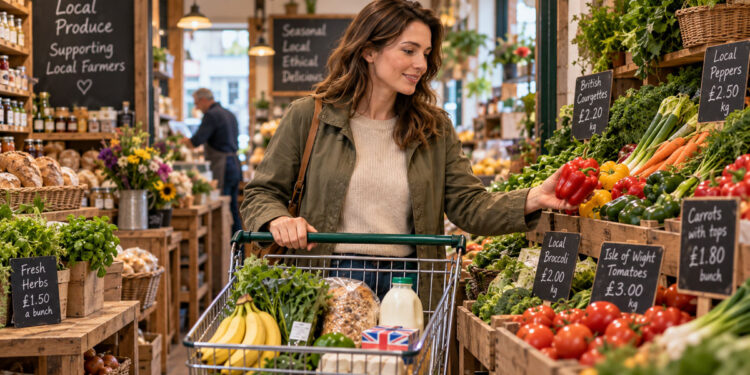
Running a grocery business in the UK has rarely been more demanding. Energy bills, wages and supplier prices have all climbed in recent years, while shoppers have become more price-conscious and quicker to switch stores. At the same time, grocers face growing pressure to cut food waste, with many signed up to voluntary commitments such as WRAP’s Courtauld Commitment 2030.
In this environment, the systems behind the shop floor matter as much as what’s on the shelves. The right software helps grocers order more accurately, reduce waste, run tills smoothly and understand what’s actually happening in each store. The wrong tools, or none at all, leave teams firefighting stockouts and binning unsold fresh produce.
Below are seven grocery store management software options for UK retailers, covering everything from large multi-store chains to independent convenience shops.
What grocery retailers need from their software
Grocery is different from most other retail sectors, and software needs to reflect that.
- Fresh and perishable handling. Short shelf lives mean ordering errors quickly turn into waste.
- High volumes and fast turnover. Thousands of products, many selling every day, require automated rather than manual processes.
- Promotions. Multi-buys, loyalty discounts and price cuts cause sharp demand swings.
- Store-level differences. A city-centre convenience store and a suburban supermarket sell very differently.
- Integration. POS, inventory, suppliers and accounting need to share data reliably.
With those needs in mind, here are the options worth considering.
1. LEAFIO AI
LEAFIO AI is a retail platform that combines AI demand forecasting, automated replenishment, shelf management and store operations tools. It’s built for physical retail chains, with grocery among its core sectors, and it plans stock at both store and distribution centre level.
For UK grocers looking to reduce waste and improve availability, LEAFIO AI offers grocery inventory management software that forecasts demand for each product in each store, including the effect of promotions, seasons and weather. Orders take shelf life into account, so stores aren’t sent more fresh produce, dairy or bakery items than they can sell before expiry. Shelf capacity and planogram data are built into the calculations, keeping deliveries in line with the space available.
Key features:
- AI forecasting at store and product level
- Automated ordering for stores and distribution centres
- Perishable and shelf-life-aware replenishment
- Planogram and shelf space management
- Stock rebalancing between stores
Best for: Grocery chains and multi-store operators that want to cut food waste, reduce excess stock and keep shelves full across their network.
2. RELEX Solutions
RELEX Solutions offers a unified planning platform widely used in grocery retail across Europe. It covers forecasting, replenishment, allocation, promotions, space planning and workforce planning, with particular strength in fresh food.
Its ability to connect store ordering with supplier and warehouse planning makes it a strong option for large grocers managing complex supply chains.
Key features:
- Machine learning demand forecasting
- Fresh and promotion planning
- Space and assortment planning
- Workforce planning for stores
Best for: Large grocery retailers wanting an end-to-end planning platform.
Things to consider: Implementation typically requires significant time and resources.
3. Blue Yonder
Blue Yonder provides supply chain and retail planning software used by many major grocers globally. Its platform covers demand planning, replenishment, warehouse management, transportation and store operations.
For grocers with large distribution networks, the ability to link store replenishment with logistics and warehouse processes is a key advantage.
Key features:
- AI-supported demand forecasting
- Store and warehouse replenishment
- Warehouse and transportation management
- Workforce and store execution tools
Best for: Large grocery chains with complex logistics operations.
Things to consider: As an enterprise platform, it suits larger organisations better than independent grocers.
4. SymphonyAI Retail
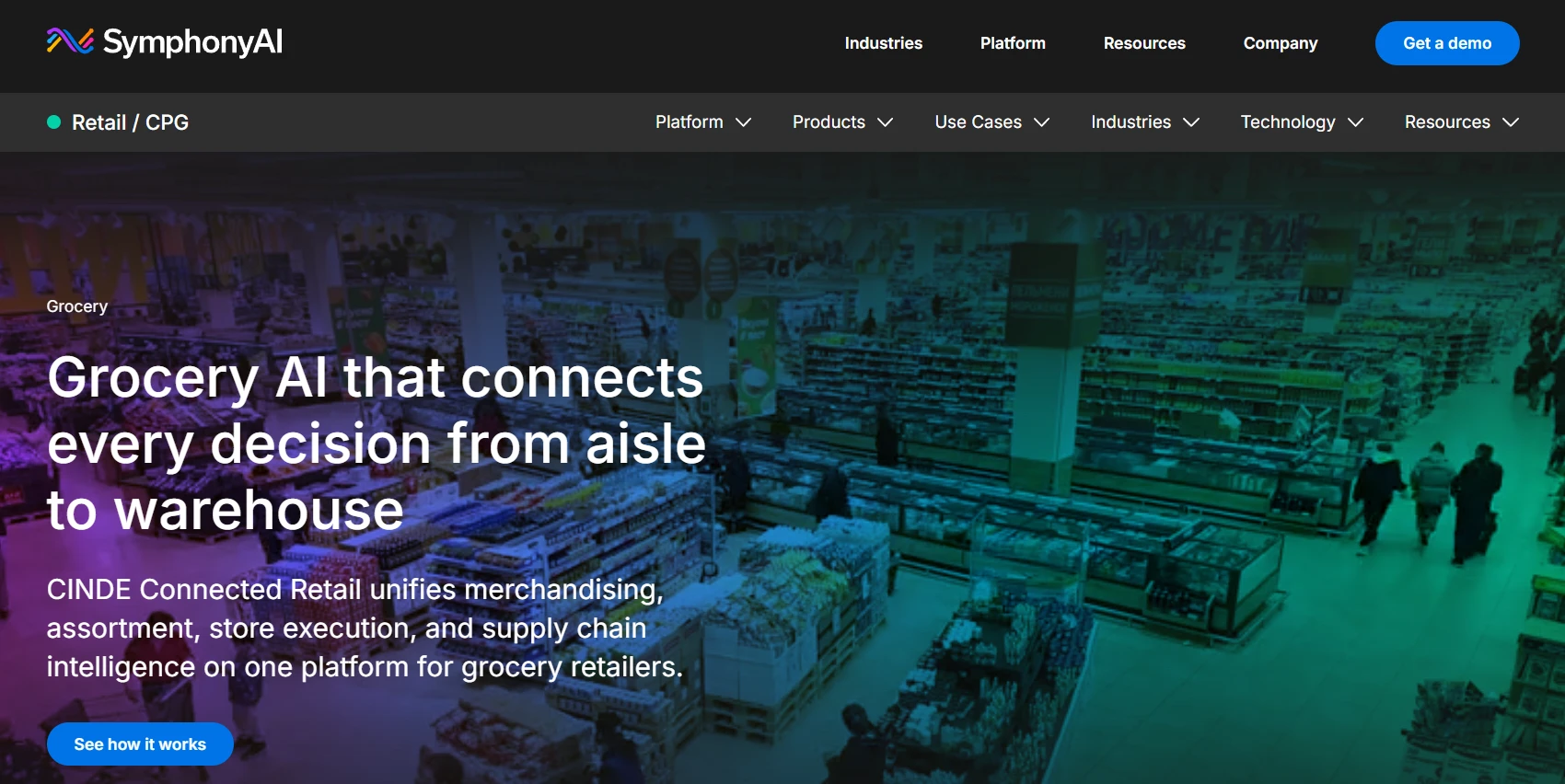
SymphonyAI offers AI-driven software for retail and consumer goods, with a strong focus on grocery. Its solutions span demand forecasting, replenishment, category management, promotions and customer insights.
Its customer analytics and category management tools help grocers understand shopper behaviour and use that insight in pricing, ranging and promotion decisions.
Key features:
- AI demand forecasting and replenishment
- Category and assortment management
- Promotion planning and analysis
- Customer data and loyalty insights
Best for: Mid-sized to large grocers wanting to combine inventory planning with customer and category analytics.
Things to consider: Retailers should check which modules they need, as the full suite covers a wide range of functions.
5. Epos Now
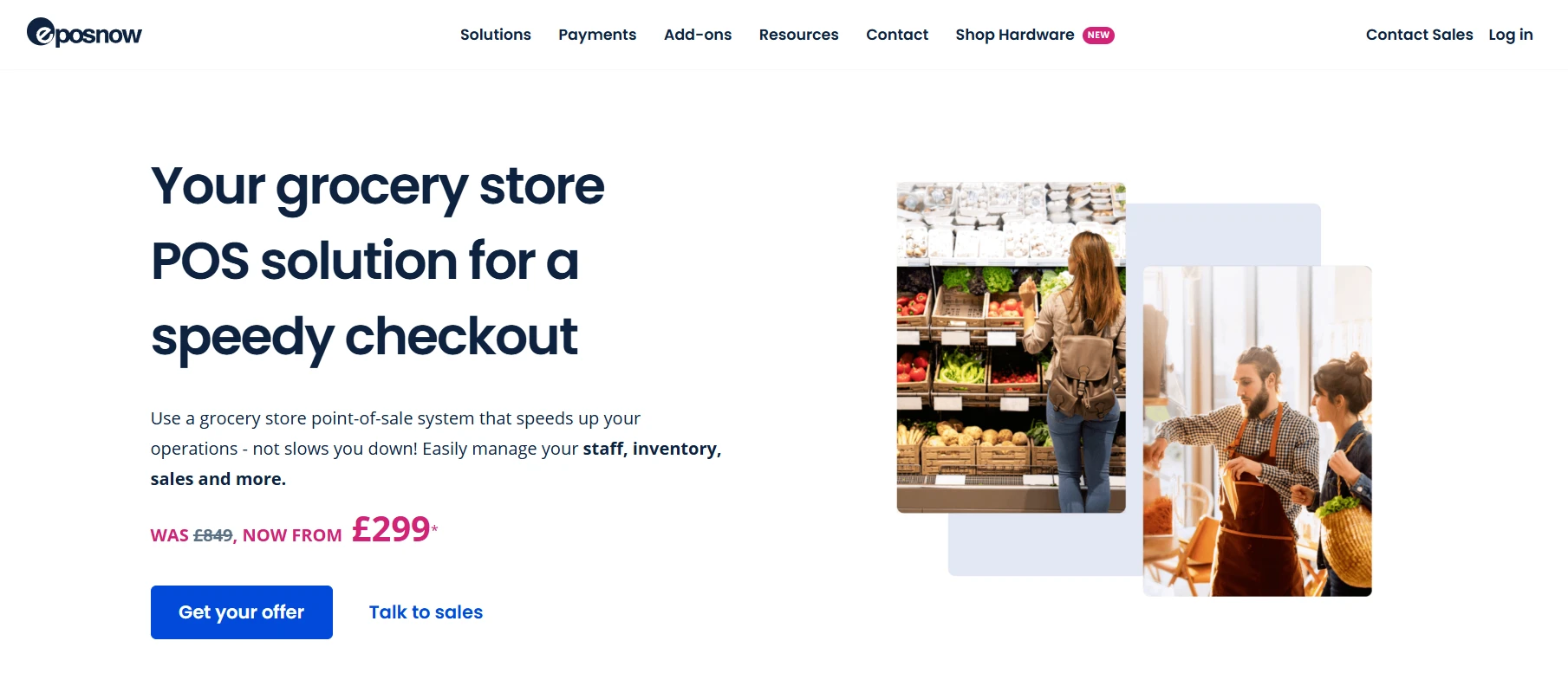
Epos Now is a UK-based point-of-sale provider serving retail and hospitality businesses. Its systems combine tills, card payments and back-office tools, including stock control, reporting and integrations with accounting software.
For independent grocers and convenience stores, it offers an accessible way to manage sales and basic inventory from one system, with support based in the UK.
Key features:
- POS hardware and software
- Stock control and low-stock alerts
- Sales and product reporting
- Integrations with accounting and other apps
Best for: Independent grocers, convenience stores and small multi-site operators.
Things to consider: Its inventory tools focus on tracking and alerts rather than AI forecasting, so larger operators may need a dedicated planning system.
6. Lightspeed Retail
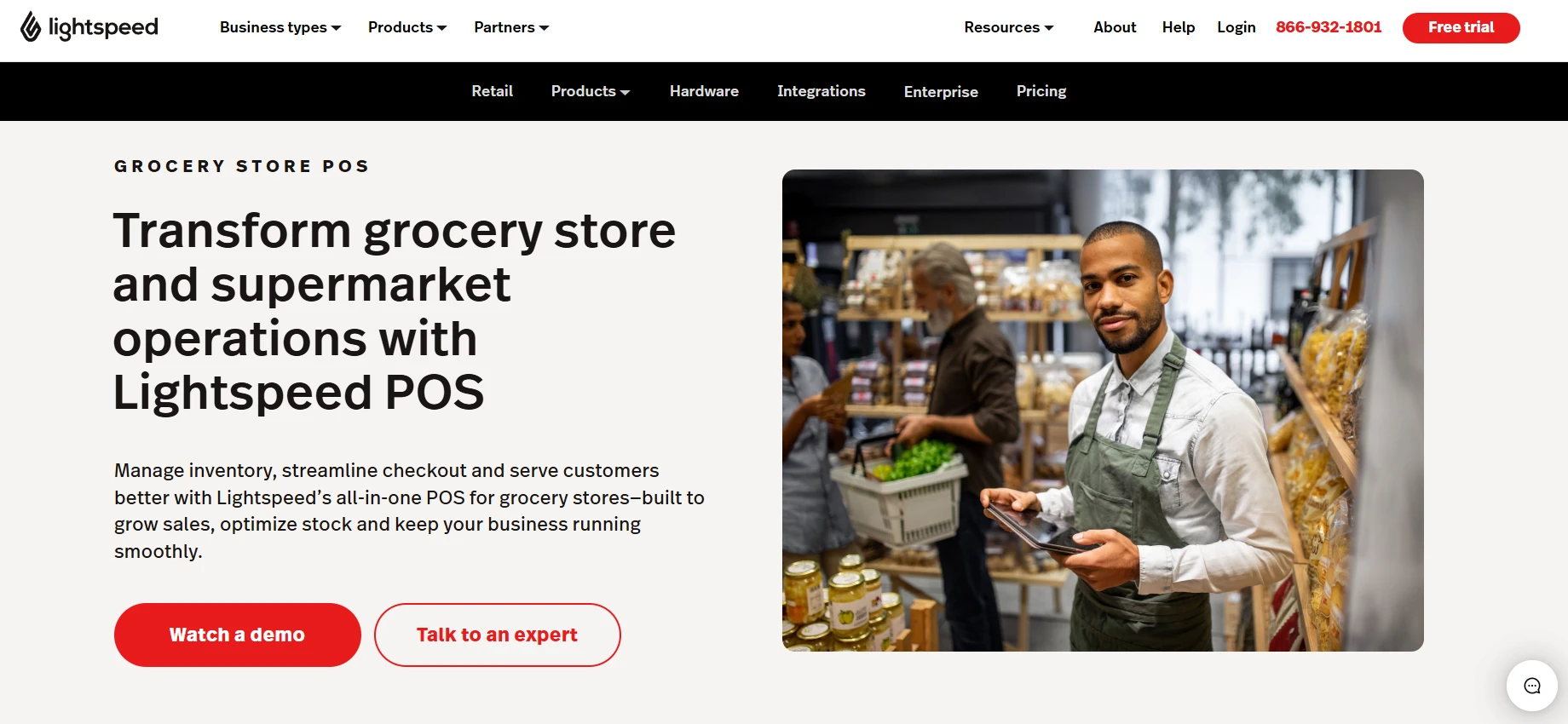
Lightspeed Retail is a cloud-based POS and retail management platform available in the UK. It includes inventory management, purchasing, reporting and multi-location support, alongside e-commerce options.
It suits growing grocers and speciality food shops that want a modern POS with solid inventory and reporting tools, especially if they sell online as well as in store.
Key features:
- Cloud POS with integrated payments
- Inventory tracking and purchase orders
- Multi-store management
- Reporting and analytics
Best for: Speciality food shops, delis and growing independent grocers.
Things to consider: It’s a general retail platform, so grocery-specific functions such as perishable forecasting are limited.
7. Square for Retail
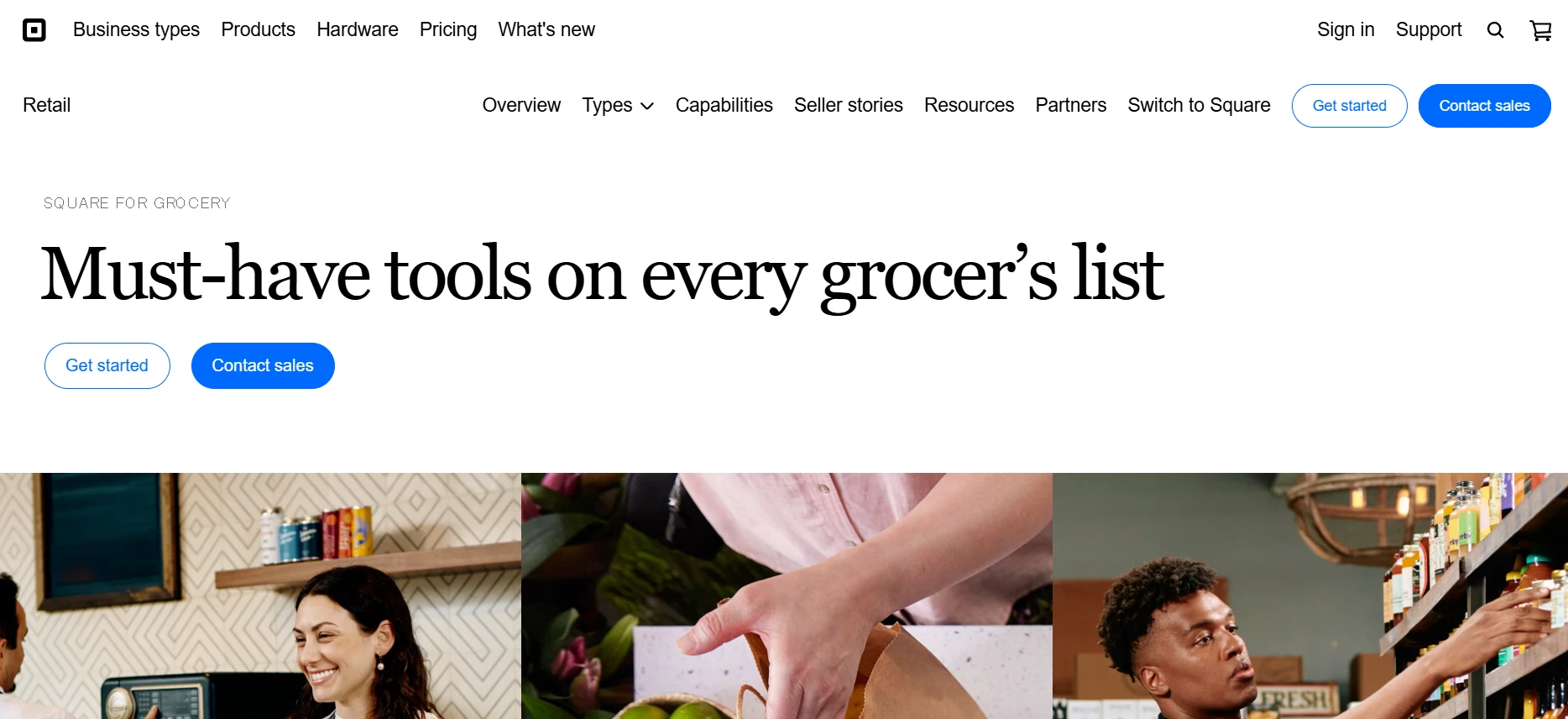
Square for Retail offers POS software and hardware with built-in payments, inventory management and reporting. It’s known for being quick to set up and simple to use, with pricing that suits small businesses.
For small independent grocers, farm shops and market-style food retailers, it provides an easy entry point into digital sales and stock tracking.
Key features:
- Easy-to-use POS and card payments
- Inventory tracking and low-stock alerts
- Basic reporting and customer tools
- Online store options
Best for: Small independent grocers, farm shops and food start-ups.
Things to consider: It’s best suited to smaller operations and doesn’t offer advanced forecasting or replenishment.
Quick comparison
|
Software |
Main focus |
Best suited for |
| LEAFIO AI | AI replenishment and shelf management | Grocery chains cutting waste and excess stock |
| RELEX Solutions | Unified retail planning | Large grocers |
| Blue Yonder | Supply chain and logistics | Large chains with complex distribution |
| SymphonyAI Retail | Planning plus customer analytics | Mid-sized to large grocers |
| Epos Now | UK-based POS and stock control | Independents and convenience stores |
| Lightspeed Retail | Cloud POS and inventory | Speciality food shops |
| Square for Retail | Simple POS and payments | Small independent grocers |
How to choose the right system
The right choice depends mainly on the size and structure of your business.
Independent and convenience stores usually need a reliable POS with straightforward stock control. Epos Now, Lightspeed and Square are practical starting points.
Growing multi-store operators often reach a point where manual ordering can’t keep up. This is when AI-driven forecasting and automated replenishment start to deliver real savings, particularly on fresh categories.
Large grocery chains typically need platforms that connect stores, distribution centres and suppliers, with detailed planning for promotions, fresh food and space.
Whatever your size, it pays to check how well a system integrates with your existing tools, what support is available in the UK, and whether the provider can demonstrate results with grocery businesses similar to yours.
UK grocers face rising costs, demanding customers and growing expectations on food waste. The right management software helps on every front, from quicker checkouts to more accurate ordering and less produce thrown away. Small shops can gain a lot from a modern POS with good stock control, while larger chains stand to benefit most from AI-driven forecasting and replenishment. Choosing a system that fits your current size, with room to grow, is one of the most practical investments a grocery retailer can make.