Manual vs. Electric Pallet Trucks: A Business Guide to Material Handling Procurement

Warehouses, stockrooms, and manufacturing spaces may not immediately sound glamorous, but behind almost every successful business is a carefully organised operation that keeps everything moving efficiently. From retail and hospitality to large-scale manufacturing and logistics, material handling plays a much bigger role in everyday business than many people realise. One piece of equipment that continues to sit at the centre of these operations is the pallet truck.
While it may not be the most exciting purchase a business makes, these products can have a major impact on workflow, employee wellbeing, and productivity. As industries continue to move faster and businesses face increasing pressure to improve efficiency, many companies are now reviewing whether manual or electric pallet trucks are the better fit for their operations.
Although both are designed for industrial sites to move goods safely and efficiently, the way they perform within different environments can vary significantly. From budget and warehouse size to employee comfort and long-term scalability, there are several factors businesses should consider before making a decision.
The appeal of manual pallet trucks
Manual pallet trucks have remained a warehouse staple for decades, thanks to various factors, like their simplicity and affordability. They are easy to operate, require minimal maintenance, and are often significantly cheaper than electric alternatives, making them particularly attractive for smaller businesses or companies with lighter workloads.
For a lot of businesses that only move stock occasionally throughout the day, manual pallet trucks can often provide everything needed without the higher upfront investment. Their compact size also makes them easier to manoeuvre in tighter spaces where larger electric models may struggle. There is also something refreshingly uncomplicated about manual equipment. In a business world increasingly dominated by technology and automation, manual pallet trucks continue to offer a practical solution.
Why more businesses are investing in electric pallet trucks
As warehouses become busier and operational demands increase, many businesses are beginning to outgrow manual handling equipment. Repetitive lifting and pulling can place strain on employees, particularly within fast-paced warehouse environments where heavy pallets are constantly being moved throughout the day.
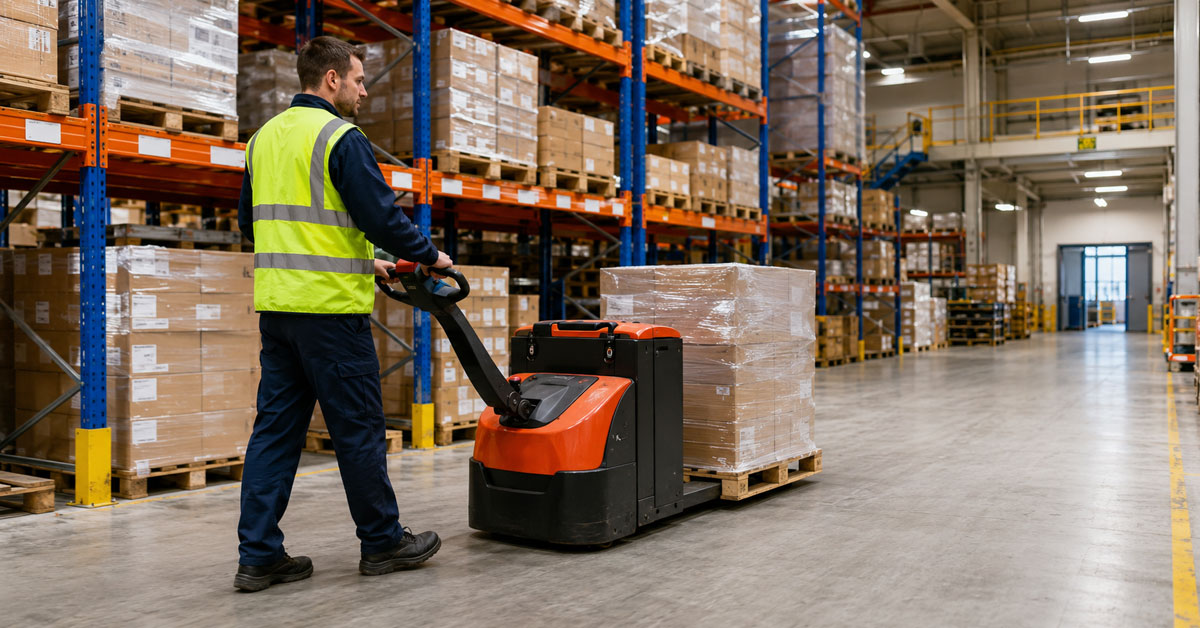
Electric pallet trucks are designed to reduce this physical strain while improving efficiency at the same time. Powered by battery-operated systems, they allow employees to move heavier loads more quickly and with far less effort compared to manual models.
For larger warehouses, especially, electric pallet trucks can significantly improve productivity. Businesses managing high stock volumes or long travel distances often find that electric models help speed up operations while also improving employee comfort during long shifts.
Employee wellbeing is becoming a bigger priority
One of the biggest conversations across modern workplaces is employee wellbeing, and warehouses are no exception. Businesses are becoming increasingly aware that physically demanding environments can impact staff morale.
By reducing repetitive strain and minimising heavy manual handling, electric pallet trucks can help create safer and more comfortable working conditions. While they do require a larger upfront investment, many businesses see the long-term benefits through improved efficiency and reduced employee fatigue. That said, electric pallet trucks are not always necessary for every business.
Smaller operations with lower stock volumes may still find manual pallet trucks to be the most practical and cost-effective option. Ultimately, the decision should come down to the specific needs of the business rather than simply following industry trends.
The future of smarter warehousing
Warehousing and logistics are evolving rapidly, with many businesses investing in smarter systems, automation, and AI-powered technology to improve operations. Electric pallet trucks naturally fit into this more modern approach, helping businesses streamline workflows and keep pace with increasingly demanding supply chains.
Sustainability is also becoming part of the conversation. Many newer electric pallet truck models are designed with energy efficiency in mind, aligning with the growing number of businesses looking to reduce their environmental impact while modernising operations.
Choosing between a manual and electric pallet truck is about far more than simply moving stock from one place to another. The right decision can influence productivity, employee wellbeing and the overall efficiency of day-to-day operations.
For smaller businesses, manual pallet trucks may continue to offer a simple and reliable solution. For larger warehouses or companies managing heavier workloads, electric pallet trucks may provide the speed, comfort, and efficiency needed to support future growth. As industries continue to evolve and operational expectations increase, investing in the right material handling equipment has never been more important.
What do you currently use at your business, manual pallet trucks or electric pallet trucks? Will you be switching over to the other one in the future, and if so, what are your reasons for doing so? Is there something you would like to share with our readers that could help them decide which one to choose? Let us know in the comment box below. We look forward to hearing from you.