I Know U Can Do It by Øyunn – Album Review

By Ellie Victor
Before the spotlight shifted, Øyunn was the kinetic force at the back of Efterklang’s live set – a conservatory-honed drummer who could make polyrhythms feel airborne while locking the band’s art-pop into focus. Offstage she is Siv Øyunn Kjenstad – Norwegian-born, Copenhagen-based – whose CV reaches from Bugge Wesseltoft to Nils Frahm. With (rubbish title alert) I Know U Can Do It, she steps forward as writer, rapper, singer and drummer, reshaping that ensemble discipline into a solo language that is crisp, collage-minded and, occasionally, surprisingly tender.
The roll-call of drummers who became frontpeople is shorter than rock lore suggests but Øyunn is cut from a different robe. Efterklang’s art-pop indie is mostly eschewed here for juddering breakbeats, laid-back spoken-word rap and rhythmically shifting grooves. Glacial synths skate over punctuated drums; stuttering verses transform, mid-phrase, into pop-bright melodies. A cut-up soundscape becomes a smooth soundtrack. At times it is as if Sade shrugged off tasteful but boring synth motifs and went full Autechre within the same track – silk slipping over circuitry.
‘New Life’ lays out the thesis in three acts. A sweet, sky-blue opening hints at Alvvays – soft focus, sun in the frame – before collapsing into a bubbling synth-rap passage, then springing back for a last-third burst of dream-pop euphoria. It is surprising and properly hooky, a promise that this record will rarely sit still. The title cut, ‘I Know U Can Do It’, is mesmerising in the opposite direction – layered vocals, stacked sequencers and a languid, rolling beat that DJs like to slip in before the bangers. The pulse never hurries; the tension comes from how patiently those layers thicken.
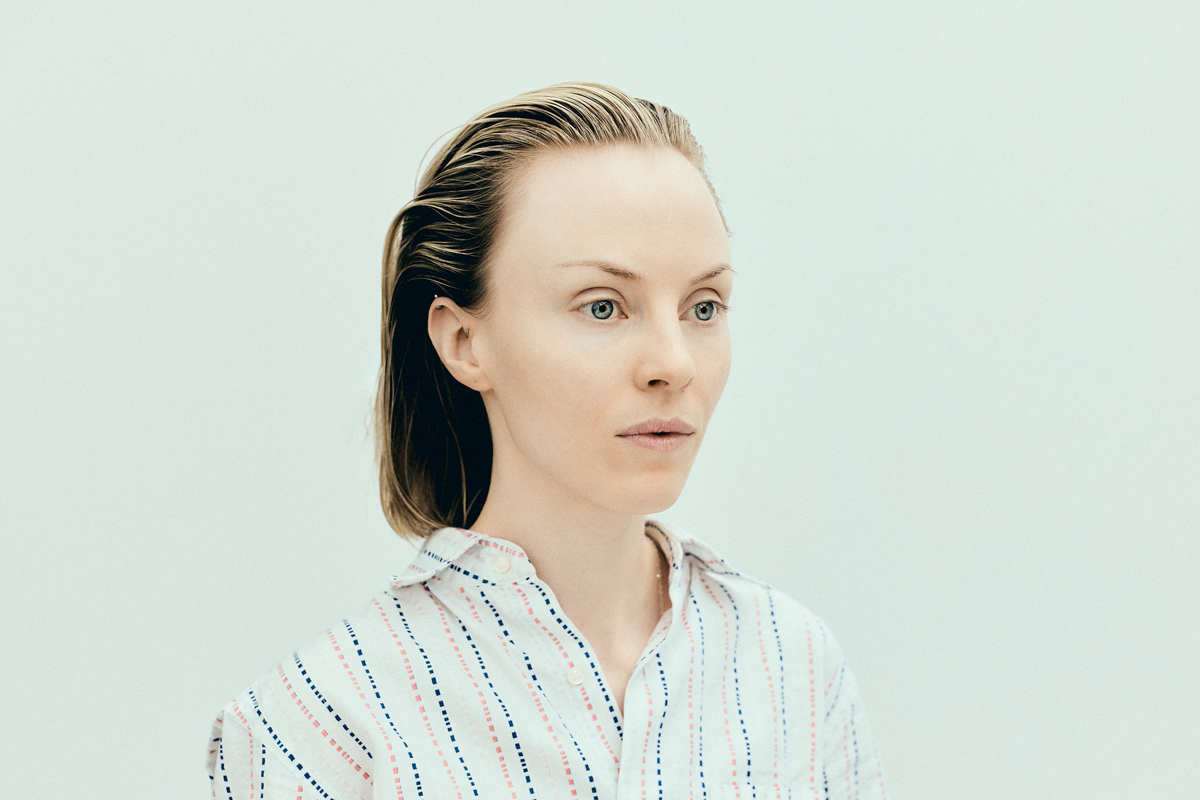
Øyunn, 2025
image: Helge Brekke
“Space for air”
‘Feed the Good’ is the set’s sweetest moment, Øyunn threading neat hooks with a light rap-to-song glide. The vocal line presses into its upper register then falls away with conversational ease – think Tirzah’s plain-spoken candour cooled with Little Dragon shimmer. By contrast, ‘I Wanna Talk To U’ is a lovelorn hush sheltered by white-washed synths and treated voice – Christine and the Queens through a Norwegian blender – its skeletal beat giving the harmonies room to glow.
The record’s restlessness is rarely mere decoration. Edges scrape and then smooth; hard angles give way to warmth. When the drums bite, they do so with a club-side snap – a hint of Kelly Lee Owens in the synth palette, Portishead’s velvet gravity without the retro sepia, even the vector-precise programming of Plaid sketched in pencil rather than ink. When the songs exhale, the glide recalls trip-hop’s late hours, but Øyunn’s writing keeps the centre of gravity close to the diary – direct, self-testing, open-eyed.
Production choices underline the duality. Co-produced with Brian Batz and pieced together across Copenhagen, Malmö and Aarhus, the album has live-band musculature beneath its software sheen – Jens Mikkel Madsen’s bass and Kasper Staub’s synths are present and purposeful – yet everything defers to the drum chair and the voice. The mixes leave space for air and negative space – kicks speak, snares whisper – so that when a chorus finally lifts, it feels earned rather than engineered.
 “Diary tone”
It is never dull – but occasionally confusing. A verse promises one destination and delivers another; a groove hints at after-hours balm then pivots into tensile motion. Listeners who prize linear, chorus-forward routes may wish for fewer switchbacks. But the pivots read like dramaturgy – scene changes rather than indecision – and they suit a record about pausing, resetting and finding a new cadence when the old one no longer fits.
Comparisons abound because the album invites them. File the shimmer beside Beach House when the guitars chime; follow the cool-headed flow towards Kae Tempest when the talk-song tightens; hear Robyn slowed to 4am in the neon melancholy; clock Björk’s percussive curiosity minus the theatre; add a whisper of The xx in the way silence carries weight. None of this lands as pastiche. Øyunn uses these landmarks to triangulate a map that is hers alone.
Closing track ‘Conversations in the Night’ is almost spoken-word rap, building from murmured confidences to a rousing finale – again, two songs in one, braided rather than bolted. The arc makes sense of what came before: the cut-and-paste instinct, the diary tone, the drummer’s feel for how time breathes. It also answers the quiet question that hangs over any breakout from the kit – can a great drummer be a compelling frontperson. Øyunn’s reply is understated and decisive. She drums, spits and sings as if they were a single instrument, and she writes like a producer who knows how songs move through a room.
4.0 out of 5.0 stars

Ellie has spent over three decades dissecting riffs, rhythms, and rockstar egos, all in pursuit of the perfect review. Her music writing journey began at 12 with a glowing 10/10 diary entry for Echo and the Bunnymen, and she’s been chasing that high ever since. Armed with encyclopaedic knowledge and a soft spot for the sonically daring, Ellie will review anything that’s put in front of her – as long as it’s on vinyl.