Pearl Harbor (2001) – Film Review
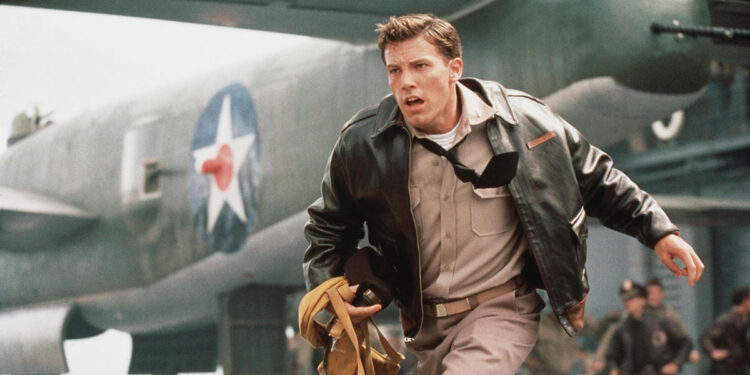
Director: Michael Bay
Cast: Ben Affleck, Kate Beckinsale, Josh Hartnett
Certificate: 12
By Gregory Fishwick
It is perhaps fitting that in the early dawn of the 21st century the populist treatment of real-world events as entertainment reached a peculiar apex with 2001’s Pearl Harbor. The day that was predicted to live in infamy became, in the hands of Michael Bay, Jerry Bruckheimer and scribe Randall Wallace, a war epic both reflexive and reflective that in itself became a target of critical firepower. An infamous film but a possibly misunderstood one.
Bruckheimer had set foot into the past some twenty-odd years before with the smartly self-aware noir homage Farewell, My Lovely (1975) and the post-Great War French Foreign Legion yarn March or Die (1977). Since then he’d been firmly rooted in the present, unless one counts the nostalgic 1970s sports drama Remember the Titans (2000), the production that immediately preceded Pearl Harbor.
He’d also made millions, a certain amount attributable to his three ventures with Michael Bay at the helm. Bad Boys (1995), The Rock (1996) and Armageddon (1998) were modern-day spectacles with enough gloss, sheen and amplification to nudge the action genre into new territories of hyperrealism, with a heady dose of science-fiction blended into the latter. Conversely, Randall Wallace had two theatrically released credits to his name: the much-lauded 14th-century tale of Scottish rebellion Braveheart (1995) and the diabolical bastardisation of Alexandre Dumas’ The Man in the Iron Mask (1998), which also served as his directorial debut. Through the three of them coming together, the past and present were put on a, no doubt intentional, collision course.
Bruckheimer was the cinematic veteran and his tried-and-tested touch is apparent. There is something of the romantic scholar about Wallace; a man of faith and a patriot, his work is always tinted by naivety. Some of the harshest critical arrows were ultimately aimed at his door, perhaps justifiably so. It could be argued that it would not be an overstatement to say Wallace’s work on Pearl Harbor borders on the idiotic; it could also be argued that it is so guileless that disdain for it is impossible.
“Flying sparks”
Bruckheimer’s sure hand and Wallace’s off-kilter judgement are both tempered by Bay, however. A mere 35 when he staged this seminal event in world history, with (only) three feature films behind him, which had collectively grossed more than $1.03 billion worldwide, he was the brash young pup of the trio (Bruckheimer was 57 at the time, Wallace 51), and it is his eye that stands out, his mainstream approach lending itself to a surprisingly idiosyncratic final product.
The music-video and commercial roots that peppered his early years before his explosive blooming on cinema screens are not to be ignored. The forceful coalition of images that generally drive mini narratives is utilised in Pearl Harbor to a pop-art effect. There are quaint depictions of Americana, such as the opening shot of a crop-dusting biplane crossing a burning Tennessee sun, but it is the ad man in Bay who has the most fun.
A black-and-white montage establishing the rise of Hitler and the Nazi Party fades to an establishing shot of Mitchell Airfield that could have effectively served as a recruitment poster of the time: the sky is blue, the sun is shining, two airmen in bright yellow life preservers stroll in from the left of the frame while four fighter planes fly overhead. The movie is a romance and is romantic in every sense, not least in Bay’s visualisation of the period.
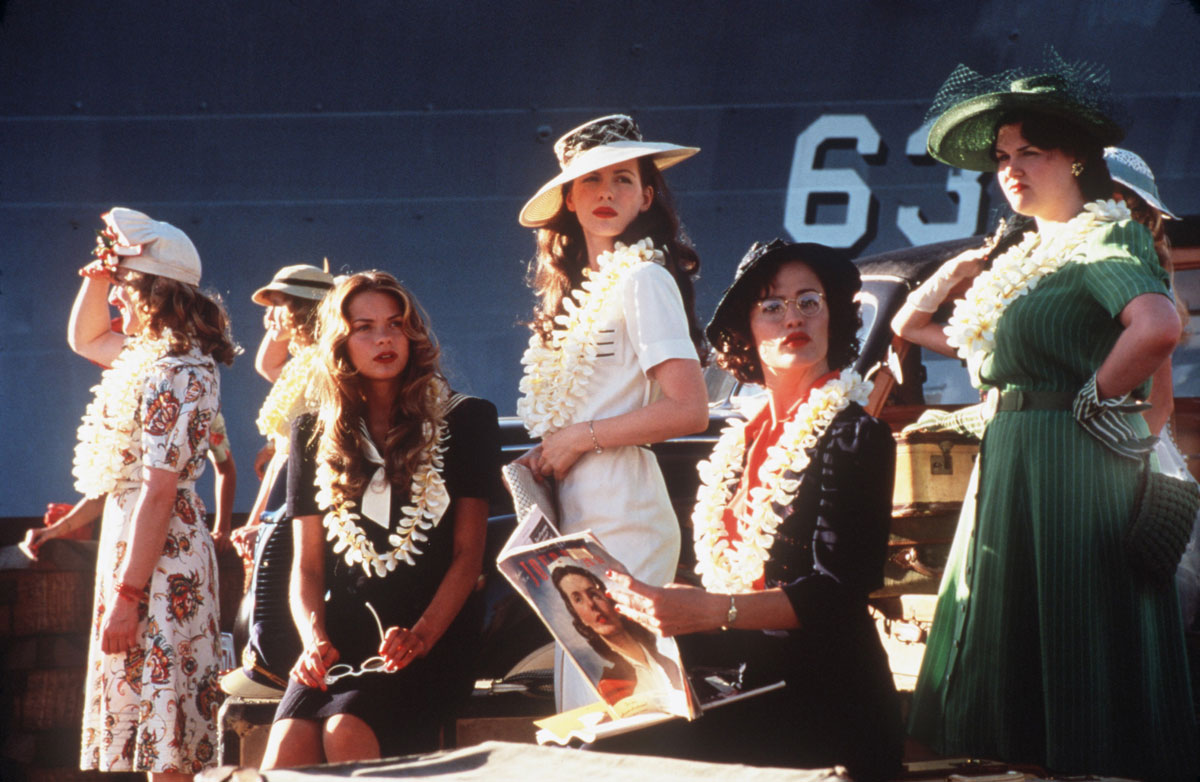
Some war films revel in the reconstruction of the era as seen through the prism of the studio pictures of the era; so does Bay, and then some. The film is a collage; gleaming red lips encircle straws that rise out of Pepsi-Cola bottles in the grip of gleaming red nails (there’s room for a plaque of Bay’s previous client Coca-Cola as well), while yellow LaSalle cabs drop off gorgeously swathed and beautifully coiffured guests at Art Deco hotels. Arrivals and departures take place at night on damp, moon-hued train platforms and by day in orange-warmed station buildings. There is lens flare, revolving glass doors and lighthouse lamps, billowing curtains, flying sparks and crashing waves.
“Angelic creatures”
If pop art is the coming together of high and low art, Bay is its foremost cinematic practitioner with Pearl Harbor. Vintage automobiles, Hawaiian shirts, white-rimmed sunglasses; the picture is an Eduardo Paolozzi piece come to life, but the film is also painterly, with scenes that channel Edward Hopper and Jack Vettriano. The ocular gateau is enriched with dollops of beef and cheesecake. There is a blandness to the casting, which is not to be confused with a lack of talent, but rather reflects an approach that peoples the tale with aesthetic avatars. Every actor in it could be replaced with no discernible or detrimental effect on the film. What is more important is that jaws are rigidly squared, lips are effectively pouted, teeth beam radiantly and eyelashes flutter prettily. Rote characters of the Betty and Red type are nods to the cinema of the era, though more striking is how the gender representation of the kitsch artwork and advertisements of the day is replicated in character form.
Taking into account the much-criticised glorification of the female form in Bay’s oeuvre, it is no surprise that the vintage pin-up gets a showcasing in Pearl Harbor, though with added psychosexual layers. The Madonna-whore ideal is collectively manifested in the film’s female ensemble, nurses whose crisp white uniforms contrast nicely with the cosmetology of the era and would have men routinely throwing themselves down sets of stairs in hope of securing a hospital bed. They are caring, angelic creatures and liberated in their spare time. (A pre-stardom Jennifer Garner suffers the film’s clunkiest indignity in having glasses clumsily balanced on her visage to establish her as the staid member of the group.)
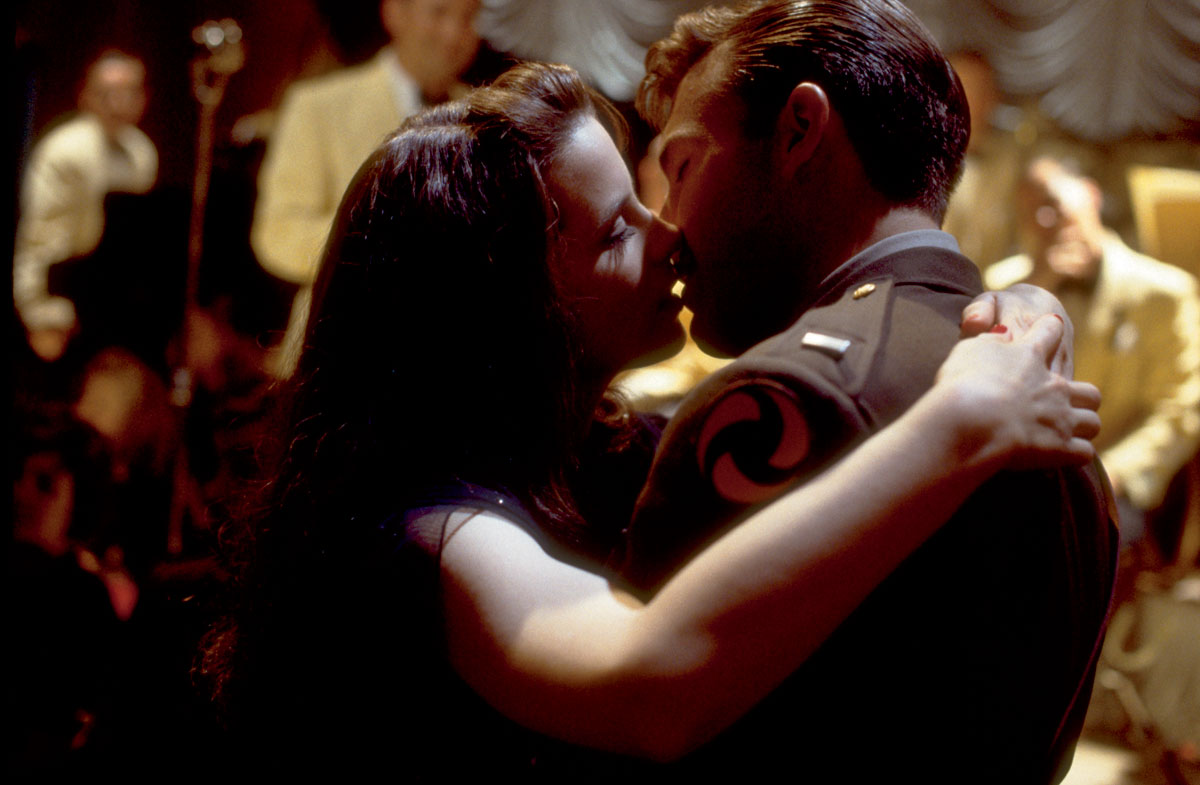
In a mild subversion of classic Hollywood romantic tableaux, Kate Beckinsale as the head nurse maternally cradles her respective lovers’ heads as much as she gazes up longingly into their eyes. Bay is even knowing enough to practically parody his own obsessions when he has her remove a single stocking to craft a makeshift bandage and, in a manner that would suggest Erwin Blumenfeld if he tried his hand at war journalism, raise her lipstick, phallic-like, into view before using it to mark the bodies of casualties. Beauty and blood, glamour and gore, this moment (or perhaps the moment when pop art is smeared by blood seeping into Coca-Cola bottles) could be seen as simultaneously marking the accumulation and deconstruction of Bay’s über-stylised approach: stylisation-cum-fetishisation.
“Unrestrained”
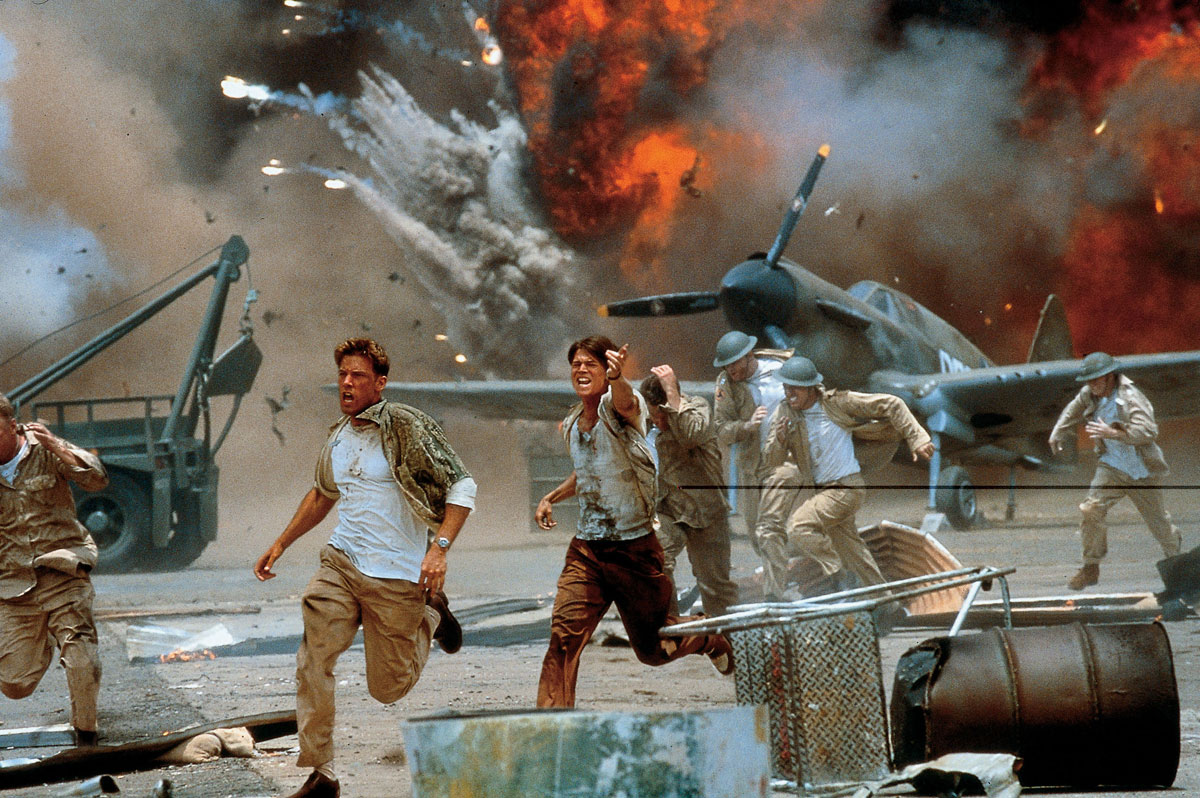
Apparently Bay’s intention was to accurately portray the horrors of war once the bombs started to fall, presumably in the manner of Spielberg’s Saving Private Ryan (1998), but was hampered by Disney’s determination to release a PG-13 film. If so, the studio’s strategy served Bay well. It is his blockbuster popcorn-fodder approach when the chaos and carnage ensue that further cements his individualistic grip on the material. If it indeed be true that no war film can truly or accurately portray war, Bay takes this maxim and proceeds to make the genre his own.
It is not an overstatement to say Pearl Harbor is practically postmodernistic. It is bold (in the way that can lead to both success and failure) and beautiful, possibly the most beautiful war movie ever made, though one can’t help but recall Truffaut’s twice-uttered line to Catherine Deneuve (in La Sirène du Mississippi (1969) and Le Dernier Métro (1980), the latter another romanticised war movie): “You’re so beautiful it’s painful to look at you.”
An unrestrained visual and visceral approach to a script of unrestrained emotion was, in truth, a wise counterbalance, but in the hands of a director and producer who have never been concerned with courting critical appraisal, the mauling it received was to be expected. No doubt it was out of time in a post-Private Ryan and The Thin Red Line (1998) cinematic world as well. But the years have passed. It took time for kitsch, glamour and popular mass culture to be unashamedly embraced. Perhaps Pearl Harbor’s time will come. And maybe that day will live in infamy as well.
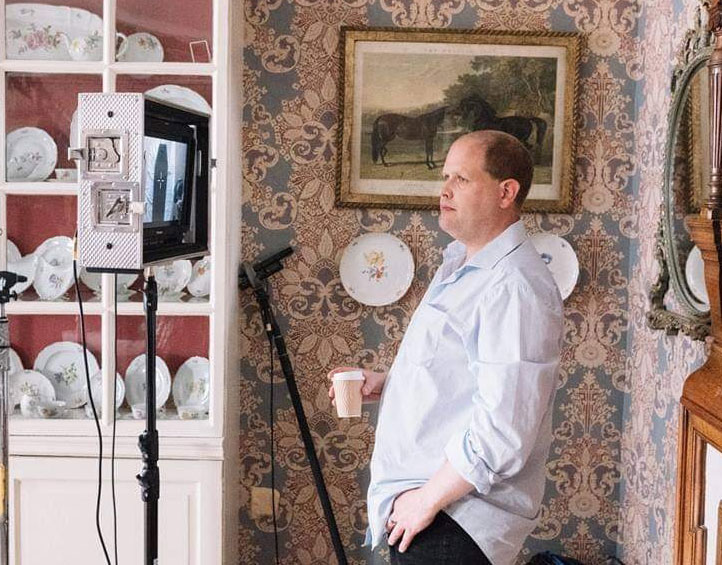
Gregory initially trained as an actor in Los Angeles before stepping behind the camera and training as a filmmaker at the University of West London. Since then, he has written a number of screenplays and directed two short films: Death & The Widow, a short period horror, and Foxes, a revenge-of-nature thriller. A film lover as well as a practitioner, he enjoys sharing his passion and knowledge through critical essays and reviews. He has a particular penchant for American and French cinema, horror, grindhouse and the movies of the studio era.
insta: gregoryfishwick, 301picturesltd.com