Why the Front Entrance Is the Hardest Working Space
The front entrance handles more activity than almost any other part of the home. It absorbs wet shoes, parcel deliveries, school bags, draughts and the rush to find missing keys, often within a space barely wide enough for two people.
Treating this area as a working zone can make everyday routines easier and improve comfort across the ground floor. From small storage changes to a properly planned porch, the best upgrades solve the problems that occur at the door each day.
The Daily Commute Transition Zone
The entrance marks the point where outdoor life meets the calmer setting of home. That shift matters, especially for people who travel to a workplace several days a week. Discussions around the benefits of commuting suggest that the time between home and work can help create useful mental separation. Your entrance supports the same process at either end of the day.
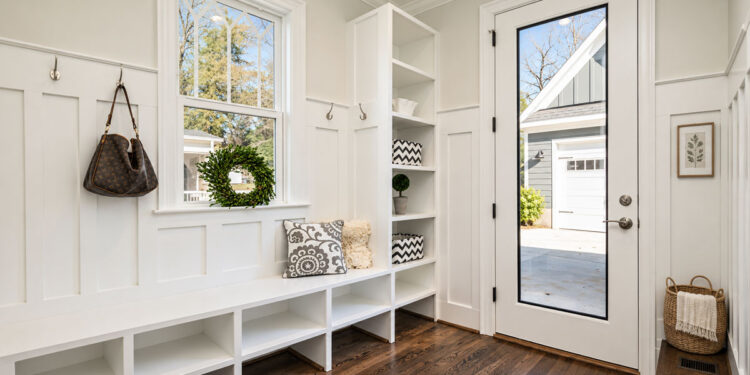
Start by giving everyday belongings a fixed place. A shallow tray for keys, a hook for a work bag and a small shelf for post can prevent clutter from spreading into the kitchen or living room. Place these items close to the door and at a comfortable height, so putting things away becomes part of arriving home.
Households with different routines may need separate zones. Low hooks suit children’s coats and bags, while an upper shelf can hold items used less often. If space allows, a small bench makes changing shoes easier and creates room underneath for two or three pairs. Keep the shoes worn most often by the door and move seasonal pairs elsewhere.
Lighting also affects how well the entrance works. A bright ceiling light helps when you’re searching for something on a dark morning, while a lamp or warm wall light creates a softer welcome in the evening. Motion sensors can be useful when you arrive carrying shopping, although the controls should allow you to turn the light off manually.
A washable runner finishes the zone without demanding much maintenance. Choose one that leaves enough clear floor around the door, lies flat and can cope with grit and rainwater. The entrance then works as a practical pause between outside tasks and home life, instead of becoming a place where everything gets dropped.
Tackling Winter Heat Loss at the Door
An entrance can feel colder than the rest of the house even when the heating is working properly. Every opening allows warm indoor air to escape and lets colder air enter. The effect becomes more noticeable if the door opens straight into a sitting room or hallway with hard floors.
This problem is familiar in commercial buildings too, where repeated opening creates a noticeably cold entrance area. A family home sees less foot traffic, but school runs, deliveries and trips to the car can still add up during a winter day.
Check the easy fixes first. Close the door on a sheet of paper at several points around the frame. If you can pull the paper out without resistance, the seal may need attention. Replace worn weather strips, adjust loose hinges and fit a suitable draught excluder along the bottom. The letter plate, keyhole and glazed panels also deserve inspection.
Keep radiators unobstructed so warm air can circulate. Long curtains across an external door may help after dark, provided they don’t cover a nearby heat source or interfere with opening and closing. A lined blind can be a neater option for a glazed door.
An enclosed porch creates a buffer between outdoor air and the main interior. Guidance on doors and heat loss explains how frequently opened entrances allow heat to move out of a building. Two doors separated by a small enclosed area reduce the direct exchange each time someone arrives or leaves.
Any new door should still open easily and suit the household’s access needs. Warmth matters, but so do safe thresholds, clear handles and enough room to move through without wrestling around furniture.
Creating Dedicated Storage Solutions
Entrance storage works best when it reflects what your household actually brings through the door. A fashionable console table may look attractive, yet it won’t solve a pile of muddy trainers or four bulky winter coats. Spend a week observing which items collect in the hallway before buying anything.
Measure the usable wall width, door swing and walking route. Maintain a clear path from the front door to the next room, paying particular attention to projecting handles and open cupboard doors. In a narrow hall, storage that is 20 to 30 centimetres deep may be more practical than standard furniture.
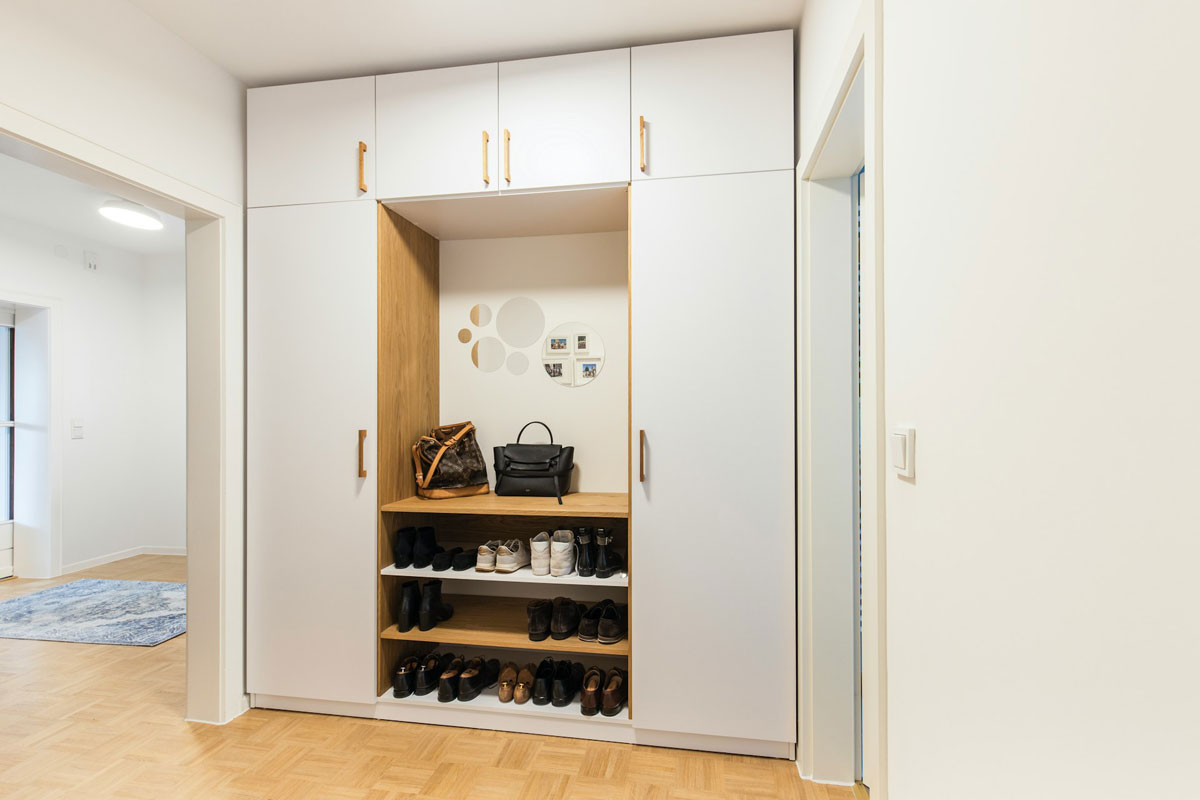
Closed cupboards keep visual clutter under control, while open hooks make frequently used items easy to grab. Combining both usually gives the best result. Use enclosed space for spare footwear, umbrellas and seasonal accessories, then reserve hooks for the coats currently in rotation. Ventilated baskets can hold hats or scarves without trapping dampness.
Think vertically if the floor area is limited. A shelf above coat hooks can store lightweight boxes, and a wall-mounted letter rack prevents paperwork from covering another surface. Labelled baskets help children return their belongings to the right place without needing to open several cupboards.
Wet-weather management deserves its own setup. A boot tray protects the floor and contains mud, while an umbrella stand with a removable base catches drips. Leave enough airflow around damp coats so they can dry properly. Packing a cupboard too tightly may lead to musty fabrics and condensation on the internal surfaces.
Aim for storage that takes seconds to use. If putting away a pair of shoes requires moving a basket, opening two doors and shifting other footwear, those shoes will soon return to the floor. Simple access turns good intentions into an everyday habit.
Expanding Usable Ground Floor Footprints
Some entrance problems come from a shortage of space that storage furniture can’t fix. A porch extension may provide the extra square metres needed for coats, pushchairs, walking boots and parcels, while keeping the main hallway clearer. It can also establish a sheltered point for removing wet outerwear before entering the house.
Begin with the job the new area needs to do. A compact weather buffer requires less room than a porch designed to hold a bench and fitted cupboards. Sketch the door positions, storage depth and standing area to scale. Remember that two doors must operate without colliding or trapping someone between them.
Budgeting should cover more than the visible structure. Foundations, roofing, glazing, doors, flooring, lighting and interior finishes all affect the total. Homeowners comparing the likely cost of porch extension can use a project guide to identify common price factors before requesting quotes from local tradespeople.
The design should feel connected to the existing building. Matching brickwork or roof materials can help, but proportions often matter even more. A porch that overwhelms the original doorway may make the frontage feel cramped. Slim glazing, a simple roofline and carefully placed lighting tend to age better than excessive decorative detail.
Check which permissions and building requirements apply before work starts, as the answer can depend on size, position, glazing and the type of property. Drainage also needs early attention. Rainwater should run away from the doorway and thresholds should resist water ingress without creating a difficult step.
Inside, choose durable finishes suited to outdoor dirt and changing temperatures. Tiled or other wipe-clean flooring makes sense near the external door. Add sockets only where they have a clear purpose and plan lighting controls for both entrances. If you include cupboards, allow ventilation and avoid placing timber panels directly against consistently damp footwear.
The most successful entrance upgrades match the pressure points of the household. That may mean a five-minute reset with hooks and a boot tray, or an enclosed porch that finally gives the front door enough room to work properly. Either way, a clear route, somewhere to put wet belongings and a well-sealed doorway will be felt every time you come home.