Solid Wood vs Engineered Wood Flooring: Which Is Right for Your Home?
Stand in a showroom and the two look almost identical. A finished oak plank is a finished oak plank. The difference sits underneath, and it decides where the floor can go and how long it will last.
1. Know what you’re actually buying
Solid wood is one piece of timber all the way through, usually around 18 to 20mm thick. Engineered boards have a real hardwood top layer bonded to a core of plywood or softwood layers laid crossways.
That cross-layered core is what stops the board swelling and shrinking as much as solid timber does.
2. Check what’s under your floor now
Solid planks are traditionally nailed or secret-fixed to timber joists or battens, which suits a Victorian terrace with suspended floors.
Engineered boards can be glued straight down or floated over an underlay, so they’re the easier fit for flats and new builds with screed floors.
3. Factor in underfloor heating
Here engineered wood pulls ahead. Underfloor heating lets your boiler or heat pump run at a lower flow temperature than radiators need, which the Energy Saving Trust says can bring down your energy bills.
Constant warmth from below is hard on solid timber, which tends to shrink and open gaps between boards. Most engineered products are designed for it, provided you keep the surface temperature within the manufacturer’s stated limit.
4. Think about how often you’ll sand
You can sand a solid board and refinish it many times over its life, which is why century-old floors still turn up under carpets in decent shape. Engineered floors can only be sanded as far as the wear layer allows.
A 2mm top layer might take one light sand; a 6mm layer can take several. Ask for the wear-layer thickness before you compare prices, because it tells you more about lifespan than the total board depth.
5. Watch the moisture
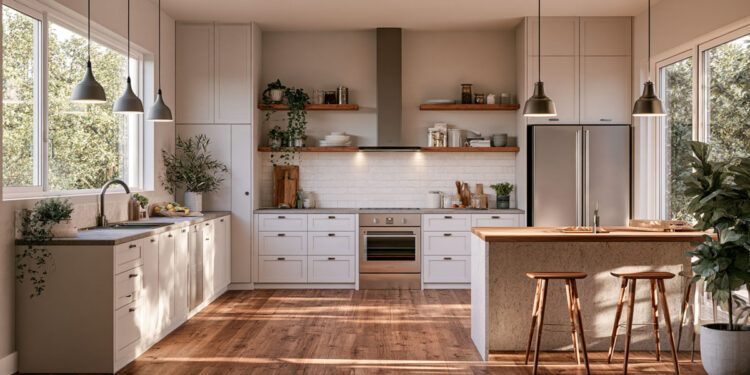
A kitchen with a dishwasher and a back door to the garden sees bigger swings in humidity than a spare bedroom.
Engineered wood copes with those swings better. Keep both out of a bathroom with a shower.
6. Compare the real cost
Engineered is often cheaper per square metre, but a premium engineered oak with a thick wear layer can cost as much as solid. Fitting costs differ too.
Gluing down or floating boards over a level screed is usually quicker than fixing solid planks to joists, though an uneven subfloor adds preparation time whichever you pick.
Seeing boards in your own light helps more than a brochure. If you’re in north-west London, One Flooring supplies and fits both solid and engineered timber and sends out free samples, so you can lay an engineered plank beside a solid one in the room itself before you decide.
7. Ask where the timber comes from
Engineered boards use less slow-grown hardwood per square metre, since only the top layer is oak or walnut.
Check the certification either way. Which? explains that an FSC Mix label can mean a product contains at least 70% FSC-certified wood, with the rest from controlled sources, whereas FSC 100% means all of it comes from certified forests. Ask your supplier which label applies to the boards on your quote.