What Gas Safety Checks Do Restaurants and Hotels Need?
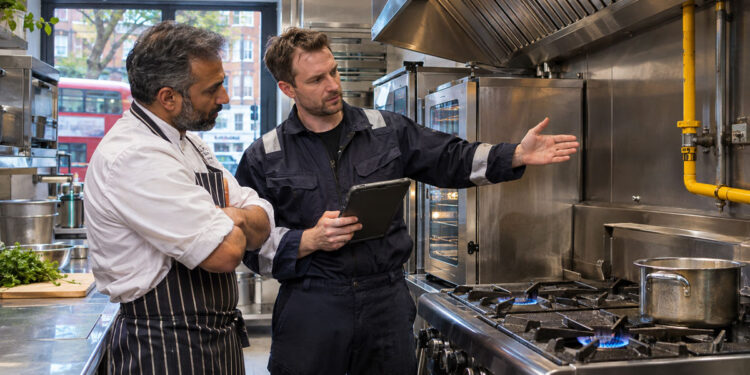
A restaurant can cope with a late food delivery. Losing the gas supply halfway through dinner service is much harder to deal with. In a hotel, a faulty boiler can leave guests without hot water before breakfast.
Many serious gas faults start long before an appliance stops working. Poor ventilation, worn pipework and faulty safety controls often go unnoticed on a busy day. Regular inspections, as part of planned commercial gas services, help owners and managers find these problems early, before they put people at risk or stop the business from trading.
Here is what restaurants and hotels should check, and when.
What Gas Safety Checks Does a Commercial Kitchen Need?
In a restaurant kitchen, gas ovens, fryers, hobs and grills often run for hours every day. Heavy use wears parts down quickly, so regular inspections matter.
A commercial catering gas engineer checks that each appliance works safely and looks for damage or wear. A typical inspection covers:
- burners and ignition systems
- flame supervision devices
- gas connections and isolation valves
- combustion performance, where needed
Flame supervision devices need particular attention. They cut off the gas if the burner flame goes out. If one fails, an appliance could release unburnt gas into the kitchen.
How often catering equipment should be inspected
The Health and Safety Executive (HSE) treats an annual inspection as a reasonable minimum for commercial catering equipment. Appliances that are used heavily may need checking more often, depending on their condition and the manufacturer’s guidance.
Kitchen Ventilation and Gas Interlock Checks
Kitchen extraction does more than remove cooking smells. It also clears heat, fumes and combustion products. Without enough ventilation, gas appliances can cause a build-up of carbon monoxide, a poisonous gas you cannot see or smell.
How a gas interlock protects staff
Many commercial kitchens link the gas supply to the ventilation system through a gas interlock. If the extraction fan fails, the interlock shuts off the gas, so appliances cannot keep running in unsafe conditions.
Engineers test interlock controls, solenoid valves and related safety devices. Kitchen managers should also book regular extraction maintenance and never bypass an interlock to keep service going.
Are Hotel Boilers Covered by Different Rules?
Hotels rely on central boiler plant for heating and hot water in guest rooms, kitchens, laundries and public areas. A breakdown can affect the whole building. During commercial boiler servicing, engineers check burners, heat exchangers, combustion controls and flues, and recommend repairs where needed.
The legal duty for guest accommodation
Under the Gas Safety (Installation and Use) Regulations 1998, hotels must arrange an annual gas safety check on the relevant appliances and flues that serve guest accommodation. This includes a central boiler outside the guest rooms if it supplies their heating or hot water.
Where kitchen appliances fit in
Commercial kitchen appliances still need proper maintenance and inspection, but they do not automatically fall under the same annual check. A hotel with guest rooms and a restaurant therefore needs a maintenance plan that covers both sets of duties.
Inspecting and Testing Commercial Gas Pipework
Gas pipework is easy to forget because much of it sits above ceilings, behind equipment or in plant rooms. Yet every appliance depends on it. A restaurant might have one supply feeding several cookers, while a large hotel may run a wide network serving boilers, kitchens and heating systems.
Engineers inspect pipework, valves and fittings for damage, corrosion and other defects. Gas tightness testing confirms whether the installation is gas-tight. It may be needed after alterations, after repairs or when a leak is suspected. LPG systems and underground MDPE pipework need testing methods that suit their design and materials.
Not every pipe needs the same test each year. The right checks depend on the installation, the relevant standards and any recent work.
Is a Gas Safety Certificate the Same as a Service?
No. A gas safety check assesses set safety points and records what the engineer finds. A service is maintenance work that keeps the appliance running safely and reliably. It can include cleaning parts, making adjustments and replacing worn components. The exact work depends on the appliance and what has been agreed.
Keeping clear records
Hotels must keep the legally required gas safety records for guest accommodation. Restaurants should also keep records of inspections, servicing and repairs. Good records show what was checked, which defects were found and what work is still outstanding.
Choosing a Qualified Commercial Gas Engineer
A domestic heating engineer is not automatically qualified to work on a hotel boiler plant or a commercial kitchen. Engineers must be Gas Safe registered and hold the right qualifications for the specific equipment.
Before booking, check the engineer’s Gas Safe ID card. The back of the card lists the types of work they are qualified to do. This matters most in buildings with several types of gas installation, such as a hotel that needs boiler servicing, kitchen inspections and pipework testing.
UK Commercial Gas provides Gas Safe registered commercial gas engineers across the UK. They carry out installation, maintenance, testing and emergency repairs in restaurants, hotels and other business premises. The aim is simple: match each installation with an engineer who is qualified to work on it safely.
What Happens If an Engineer Finds an Unsafe Appliance?
A fault does not always mean the business has to close. Minor problems can often be fixed during the visit. With more serious faults, the engineer may isolate the appliance or gas supply and take it out of use until it is repaired.
Follow the engineer’s advice and arrange repairs promptly. An unsafe installation must not be used again until the work and checks are complete.
What to do if you smell gas
If you suspect a gas leak, get staff and customers out of the area. Do not use electrical switches or naked flames. Once you are somewhere safe, call the National Gas Emergency Service on 0800 111 999.
Preventing Unexpected Gas Breakdowns
No maintenance plan can stop every failure, but planned checks catch many problems early.
Plan inspections around quiet periods
Hotels can book boiler maintenance when occupancy is lower, and restaurants can arrange kitchen gas checks outside trading hours. This gives engineers time to work without disturbing guests or diners.
Keep an equipment register
A simple register makes different schedules easier to manage. It should list each appliance, when it was last inspected and when the next check is due. Record repeat faults too. If an ignition keeps failing or a boiler keeps shutting down, have it investigated, even if it starts working again.
Safer Kitchens and More Reliable Hotels
Guests expect hot showers and diners expect their meals on time. Few of them think about the gas systems behind the scenes, but owners and managers have to.
Kitchen appliances need regular inspection, boilers need servicing, and pipework and safety controls must stay in safe condition. Hotels also have specific legal duties for guest accommodation.
With a clear schedule and good records, gas safety becomes part of everyday running rather than a problem dealt with after something fails.