How Modular Office Buildings Support Hybrid and Flexible Working Model?
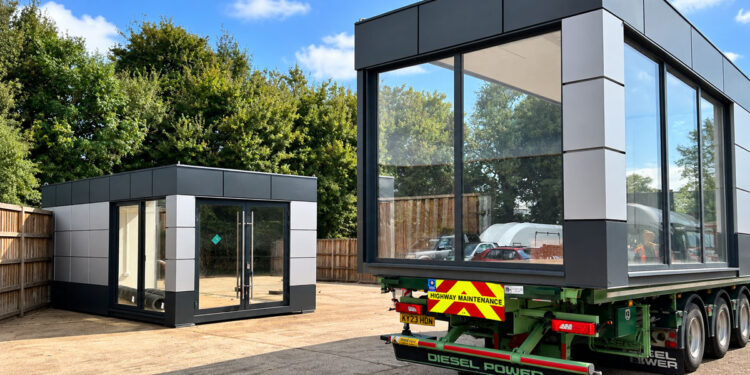
In the post-pandemic era, hybrid working has become an integral part of the operating model for many companies. These changes have led to further developments, with businesses looking for ways to adapt their office spaces to the new realities of work. That’s why modular offices can offer a well-suited solution, bringing together flexibility, functionality, and quality in a single concept.
Hybrid working requires flexible spaces
The traditional office model was designed around a simple assumption: every employee would have a dedicated workstation. Today, this approach is changing. With many employees working remotely, offices have evolved into spaces for collaboration, meetings, and creative exchange.
As a result, modern workplaces need to be flexible and easily adaptable. A single area may function as a quiet workspace one day and transform into a space for workshops or client presentations. Modular office buildings provide the flexibility needed to support this new way of working.
Moreover, businesses can start with a smaller office and gradually expand by adding new modules as their teams grow and operations develop. The same flexibility applies when office requirements decrease. Modular layouts can often be reconfigured to match current business needs, avoiding expensive renovations or disruptive relocations.
By choosing adaptable office solutions, companies can minimise the risk of paying for unused space while gaining greater control over long-term operational costs.
Rapid installation of modular offices
Constructing a traditional office building can take several months. In contrast, modular buildings can be delivered much faster because most components are manufactured in controlled factory environments before being assembled on-site.
Site preparation and module production can take place simultaneously, significantly reducing the overall project timeline. This allows a company to begin operations at a new location sooner or expand its office space with less disruption and a shorter construction programme.
Easy adaptation of office layouts in modular office buildings
Hybrid working has increased demand for meeting rooms, team collaboration areas, and dedicated spaces for online communication. Modular office buildings enable the creation of interiors that align with how a business operates today.
A modular office can be designed to include:
• open-plan office areas,
• private workspaces,
• meeting rooms,
• video conferencing booths,
• coworking zones,
• staff kitchens and welfare areas,
• spaces for relaxation and team interaction.
That flexibility means modular office buildings are an excellent solution for both growing startups and large organisations. They can be used as company headquarters, sales offices, administrative centres, project hubs, or temporary workplaces.
Summary – modular offices and hybrid working
The hybrid working model requires modern, flexible, and functional office environments. Modular buildings can also help businesses manage space more efficiently, support different working styles, and adapt their accommodation as requirements change.
Thanks to their versatility, they provide an attractive alternative to traditional construction methods, enabling companies to respond efficiently to changing market conditions. This solution supports both organisational efficiency and employee wellbeing, while giving businesses greater flexibility when planning future growth.
Need a modular office solution for your business? JCPSA has years of experience providing modular office buildings – from custom-designed new units to carefully selected pre-owned options.
To explore custom-designed and pre-owned modular office options, visit the JCPSA website or speak to its modular building team.