Why Audemars Piguet Owners Are Switching to Rubber Straps
There’s a strange thing that happens to people who finally get hold of a Royal Oak. They spend years wanting one, often a good while longer on a waiting list, and then – once the thing is actually on the wrist – they hardly dare wear it. It stays at home on sunny days. It skips the gym, the garden and the beach. The most famous luxury sports watch ever made ends up living like a piece of fine china.
Which is odd, because that’s the opposite of what it was built for.
The sports watch that forgot it was one
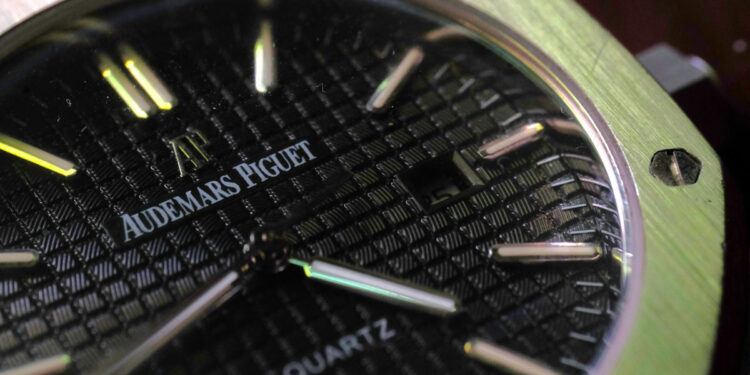
When Gérald Genta sketched the Royal Oak ahead of its 1972 launch – overnight, as the story goes – the idea was close to scandalous: a luxury watch in stainless steel, finished like a dress piece but shaped like a tool. Octagonal bezel, eight exposed screws, a case said to be inspired by a diver’s helmet. It cost more than plenty of gold watches of the day, and it was meant to be worn hard: on deck, on court, in the rain.
Half a century on, values have climbed to the point where many owners treat theirs with the caution of a museum curator. Every desk edge becomes a threat. Every trip abroad turns into a small risk assessment. The integrated steel bracelet, brilliant as it is, doesn’t help. It picks up hairline marks from ordinary life, it tugs at arm hair, and on a hot afternoon it sits on the wrist like a radiator.
What actually changes on rubber
Put the same watch on a properly made rubber strap and it becomes a different animal. The weight drops by a surprising amount – you notice it within the hour and appreciate it by the end of the day. Sweat, sun cream and salt water stop being a worry; rinse the strap under a tap and it looks new again. And the whole watch quietens down visually. A Royal Oak on black rubber reads as sporty rather than showy, which plenty of owners prefer on the train anyway.
There’s a practical bonus too. Every day the watch spends on rubber is a day the original bracelet spends in the box, untouched. Links and clasps wear from use, and on this watch they cost serious money to put right. Let the strap take that punishment instead.
Getting the fit right is everything
Here’s the catch, and it’s a big one. The Royal Oak has no conventional lugs. The bracelet flows straight out of that octagonal case, which is a huge part of the design’s appeal – and exactly why a generic strap from a jeweller’s drawer will never work. Push a flat-ended strap into that gap and you get an ugly shadow line, a wobble, and a watch that looks like it’s borrowed someone else’s clothes.
The answer is a strap moulded for the specific reference, with an end piece shaped to meet the case as cleanly as the bracelet it replaces. A handful of specialists now make exactly that – Vauger’s rubber straps for Audemars Piguet, for instance, are produced per reference across the 37mm, 38mm and 39mm Royal Oak models, the 15300, 15305, 15450, 26120 and 26315 among them, so the curve of the strap follows the case precisely. Material matters as much as shape. Proper vulcanised rubber holds its form and shrugs off UV; cheap silicone attracts dust like a magnet and tears at the pin holes within months.
Keep the bracelet for best
Nobody is suggesting the bracelet goes in the bin. It goes in the box – wrapped, safe and holding its value – ready for the evenings that call for it. Swapping between the two takes a few minutes with the right screwdrivers, and once you’ve done it twice you’ll manage it on the kitchen table without thinking.
That’s the real appeal of the whole arrangement: one watch, two personalities. Steel for dinners and December; rubber for July, the airport and every ordinary Tuesday in between.
Genta drew a watch to be lived in, not locked away. A well-fitted rubber strap is what finally lets many owners do exactly that.