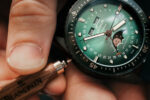
How to Spot a Fake Watch

Starting a watch collection is an exciting endeavour, to say the least. The world of watchmaking, collecting and trading is big, bright and beautiful, as much an opportunity to make lifelong friends as it is to make some serious lifelong investments. But it isn’t without its pitfalls.
Indeed, someone new to the territory of buying and collecting watches will be more susceptible to some of the bigger risks in the marketplace – chief amongst which is the possibility of buying a fake. Fake watches, needless to say, are not the stores of value you are expecting as a buyer or collector; what, then, do you need to look out for as someone starting their watch collection?
Purchase from Trustworthy Dealers
Firstly and most importantly of all, you should try to keep any and all potential watch purchases to a subset of authorised dealers. Watches are high-demand things, and as such a great target for unscrupulous private sellers happy to turn over fake watches in bulk. Buying designer watches from a reputable seller means you can practically guarantee that any vintage or pre-owned items have already been vetted by them, and will be coming with all the documentation (known colloquially as papers) necessary to verify their authenticity.
Research and Brand Knowledge
Speaking of authenticity, it would still be beneficial for you to do some deep research into the brands you intend to buy, in order to gain a proper understanding of brand-specific features and design elements. Through doing this, you can also learn what to look for in documentation and provided boxes, allowing you to pick up on elements that may inspire deeper scrutiny. A little due diligence here can go a long way to spotting the more egregious fakes on the market.

Price Reality
Here, a simple consideration but a nonetheless important one to mention: if something is too good to be true, it probably is. While it is, of course, possible to score a rare Rolex in the pre-owned market for far less than its expected value, this is an extremely rare and situation-specific occurrence. A low-priced vintage number is more likely to not be the real deal than it is to be a steal – a truth not limited to the world of watches.
Quality of Materials and Craftsmanship
If you are not an experienced watchmaker or jeweller, you cannot be expected to notice certain minute differences in the watch’s movement or construction. However, there are some simple and telltale signs of a counterfeit, which can help guide you when evaluating certain private pre-owned purchase opportunities.
For instance, particularly poor counterfeits will often sport spelling mistakes on the face or in the engraving on the back – a function of counterfeit rings in Eastern countries, where the Latin alphabet isn’t used as commonly. For something a little harder to spot: if the watch you’re appraising has a date window, how clearly can you see into it? Counterfeits will cut corners with the date window set into the face – and sometimes with the crystal that covers the watch face entirely.