What York’s Property Market Is Really Showing In 2026
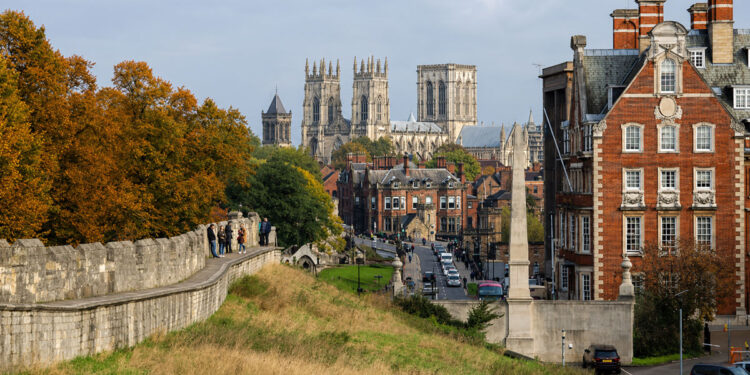
York is not moving with the feverish pace of the post-pandemic years. Its 2026 property story is quieter and more useful to read: heritage demand, rising rents, regeneration and neighbourhood markets moving at different speeds.
York Finds Its New Pace
York has long occupied a distinctive place in the UK housing market, balancing heritage, tourism, universities, professional services and an NHS employment base with limited well-located stock. In 2026, that balance is meeting a calmer national market shaped by rate expectations, moderated transactions and more selective buyer behaviour. The city continues to attract interest from Leeds, Harrogate, London and the wider North, but the easy momentum of 2021 and 2022 has given way to a market that asks to be read more carefully.
Why York Still Commands Attention
Office for National Statistics figures put the average York house price at £309,000 in April 2026, up 2.8 per cent on the same month a year earlier. That sits above the Yorkshire and The Humber average of £208,000 and the UK average of £270,000. Values are supported by period stock within the city walls, conservation areas, Bootham, Clifton, Fulford and Heworth, and demand from professional households, university-linked buyers and relocators.
At this point in the cycle, the useful question is how similar homes perform in different parts of the city. GetAgent is the UK’s leading estate agent comparison platform, helping York homeowners who want to compare York estate agents by local performance, sale prices achieved, time on market and fee structures. According to Peter Thum-Bonanno, Co-Founder and CTO at GetAgent, York’s current data reflects a market where sub-market specificity matters more than it did during the faster 2021 and 2022 period.
Where York’s Value Is Really Sitting
The Neighbourhood Pattern
York rarely behaves as a single market. Central streets around Micklegate, Bootham, the Minster fringe and the Shambles quarter tend to sit above the city average, shaped by scarcity, walkability and architectural character. North York, including Bootham, Clifton, Rawcliffe and Wigginton, remains a strong family-home market.
Bishopthorpe Road, Fulford and Heslington appeal to professional households, university-linked buyers and those wanting ring road access without losing the city connection. Heworth, Osbaldwick, Tang Hall, Holgate, Acomb and Poppleton offer a wider spread of price points, while Haxby, Bishopthorpe and Copmanthorpe form a distinct village layer.
Which Homes Are Carrying Demand
Property type now matters as much as postcode. Semi-detached homes in York rose by 3.9 per cent in the year to April 2026, while flats were broadly level. Detached homes averaged £511,000, semi-detached homes £331,000, terraced homes £286,000 and flats £179,000.
Family houses with gardens, storage and flexible working space are answering current needs more directly than smaller flats and one-bedroom homes. Georgian and Victorian houses continue to draw attention, while new-build performance is more mixed depending on location, specification and buyer profile.
The Relocator Thread
York continues to attract buyers from London, the South East and other parts of the North, although the pace has moderated from the 2020 to 2022 peak. The draw is clear: handsome streets, cultural depth, rail connectivity to London King’s Cross and a more balanced city lifestyle.
Relocators often look towards Bootham, Clifton, Bishopthorpe Road, Holgate and nearby village markets, where character, space and York access meet more naturally. That flow continues to support demand for family homes and well-positioned period properties.
The Rental Market Is Carrying More Heat
The rental market tells a firmer story. ONS private rental data shows York’s average monthly private rent reached £1,182 in May 2026, up 5.3 per cent from £1,123 a year earlier. Across Yorkshire and The Humber, the average was £856. Across the UK, it was £1,383.
York’s rental pressure is structural. Students, hospital staff, council workers, professional relocators and tourism-linked short-term lets all compete for limited stock. That can support selective investor interest where the figures still work, but it also makes the path from renting to buying harder for many households.
Regeneration Is Redrawing The Map
York Central remains the city’s most significant place-making project. The brownfield site behind York Station is planned to deliver homes, office space, public realm, parkland and a new western station entrance. If delivered as intended, it will reshape the northern edge of the city centre.
LNER’s East Coast Main Line services keep York connected to London King’s Cross, supporting relocators and professional commuter demand. Alongside York Station Gateway and the Local Plan, these projects will influence where future homes can emerge. Heritage protection will continue to constrain development within the historic core.
What Sellers And Buyers Should Take From 2026
For sellers, the market now rewards discipline. Pricing, preparation and presentation carry more weight than they did when demand was moving quickly. Marketing periods may be longer than in 2021 and 2022; buyers have more room to negotiate, and the first listing price carries more consequence.
For buyers, the central question is not whether York is rising or falling. It is which part of York, at which price point and for which property type. A townhouse inside the walls, a Fulford family home, an Acomb semi and a village property near Haxby are not interchangeable prospects.
Rate expectations remain central. Bank Rate stood at 3.75 per cent after the March and June 2026 MPC decisions, with the future path still dependent on inflation, confidence and wider economic conditions.
Where York’s Trends May Go Next
Forecasts for 2026 remain modest rather than dramatic. Major UK housing market commentators have pointed to moderate growth expectations, with rates, inflation, employment and confidence still material. York’s own values mean affordability still has limits.
York’s strengths remain intact: heritage, tourism, universities, rail connectivity, public-sector employment and professional relocator demand. Supply constraints within the historic core and conservation areas also remain real. The likely picture is continued modest growth, meaningful sub-market variation and persistent rental pressure. A material shift in Bank Rate expectations would change that picture.
York Rewards The Considered Reader
York’s property market in 2026 is not the fast-moving market of 2021 or 2022, but it is not weak either. The recalibration reflects wider UK conditions rather than York-specific weakness.
The city’s strengths continue to support demand, particularly for well-configured family homes, period property and homes in established sub-markets. Presentation, sub-market specificity, agent choice and pricing strategy all matter more than they did in the faster market.
York’s property market rewards considered reading in 2026. The homes that sell well are those that meet current buyer priorities in their specific sub-market. The agents that perform well are those who understand this. The data is now clearer than at any recent point.
This article is for general information only and does not constitute estate agency, financial, legal or property advice. UK estate agents are regulated through membership of either The Property Ombudsman (TPO) or the Property Redress Scheme (PRS) and operate under the Estate Agents Act 1979, the Consumer Protection from Unfair Trading Regulations 2008, and Material Information disclosure requirements. Property market forecasts are inherently uncertain and are affected by economic, political and local factors. Buyers and sellers should consider their individual circumstances when making property decisions.