How Print and Digital Marketing Work Better Together
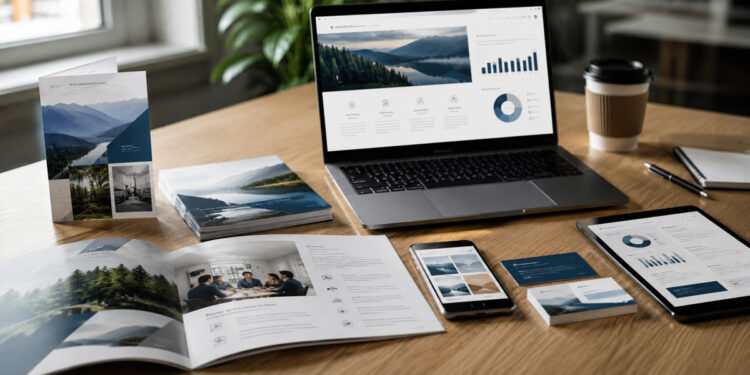
Marketing strategy has spent the better part of two decades being framed as a story of disruption – digital channels arriving to displace older, slower, less measurable forms of marketing. Print, in that narrative, is usually cast as the thing being replaced. The reality playing out in successful brands today looks rather different.
Rather than digital eclipsing print, the most effective marketing strategies are increasingly built on the deliberate integration of the two. Brands that get this right are not choosing between a polished digital presence and quality printed materials. They are designing customer journeys where each channel does what it does best, and where the handoff between them feels seamless rather than disjointed. Even something as simple as custom business card printing services shows this principle in action – a small, tangible item that a polished website or social profile alone could never replace in a face-to-face introduction.
This article examines why that integration matters, what it looks like in practice, and how businesses – from small enterprises to established brands – are using the combination of digital reach and tangible print assets to build stronger, more memorable customer relationships.
The False Choice Between Print and Digital
Much of the discourse around marketing channels over the past decade has framed print and digital as competing for the same limited budget and attention – a zero-sum allocation decision where investing in one necessarily means under-investing in the other. That framing has done a disservice to marketing strategy generally, because it obscures the fact that print and digital are suited to fundamentally different jobs.
Digital marketing excels at reach, targeting precision, measurability, and speed of iteration. A digital campaign can be launched, tested, adjusted, and re-launched within days, reaching precisely defined audience segments at a cost per impression that print simply cannot match at scale.
Print excels at something different: tangibility, persistence, and the kind of trust signal that a physical object carries in a way a digital impression cannot. A printed item exists in physical space. It can be picked up, kept, displayed, and revisited without requiring a screen, a login, or an algorithm’s decision to surface it again.
Brands that understand this distinction stop asking which channel is better and start asking which channel is better suited to each stage and context of the customer journey. That shift in framing is the foundation of effective integrated marketing.
Where Print Still Outperforms Digital – and Why That Matters for Brand Building
There are specific, well-documented areas where print marketing continues to outperform digital channels on the metrics that matter most for brand building, even in markets with very high digital penetration.
- Memory retention – research into multisensory marketing consistently shows that physical interaction with marketing material – holding it, turning pages, feeling paper texture – creates stronger and more durable memory encoding than viewing equivalent content on a screen
- Trust and credibility – studies on consumer perception find that printed materials are frequently rated as more trustworthy and credible than digital advertising, partly because the investment required to produce quality print signals genuine commitment in a way that a digital ad, which can be created and deployed cheaply, does not
- Reduced competition for attention – a printed brochure or business card does not compete with browser tabs, notifications, or an infinite scroll of other content. When someone is engaging with a physical item, that engagement tends to be more focused
- Longevity – a well-designed print piece can remain in a customer’s possession, visible on a desk or in a wallet, for weeks or months. The equivalent digital touchpoint – an email or an ad impression – typically has a lifespan measured in seconds
These advantages do not make print superior to digital in any general sense. They make print better suited to specific jobs within the broader marketing strategy – particularly those involving brand trust, memorability, and presence in physical contexts where digital simply has no reach.
The Business Card as a Brand Touchpoint: Small but Strategically Significant
Among all printed marketing materials, the humble business card is one of the most consistently underestimated. In a world of digital contact sharing and LinkedIn connections, it would be easy to assume the business card has lost its relevance. The professional behaviour of successful brands and individuals suggests otherwise.
A well-designed business card performs several functions simultaneously that a digital contact exchange cannot replicate. It provides an immediate, tangible signal of professionalism and brand quality at the moment of first contact. It gives the recipient something physical to hold onto – and crucially, something that can prompt recall of a conversation long after the specific details have faded from memory. And it carries genuine social weight in face-to-face professional contexts, where the exchange of a physical card remains a recognised gesture of respect and seriousness.
The production quality of a business card communicates as much as its design. A flimsy card on thin stock, printed with visible quality compromises, undermines the very credibility it is meant to establish – regardless of how strong the underlying brand actually is. This is why brands serious about their professional presentation continue to invest in custom business card printing services that produce cards reflecting the quality standard of the business itself, rather than treating the card as an afterthought picked from the cheapest available template.
Brochures: Extending the Digital Story Into a Format Customers Keep
Where the business card handles the brief introduction, the brochure carries the fuller narrative – and it does so in a format that customers are genuinely more likely to retain than a digital equivalent. A brochure left on a desk, a coffee table, or in a folder represents an ongoing opportunity for re-engagement that a digital touchpoint, gone the moment a tab is closed, simply does not offer.
This is particularly valuable for brands communicating information that benefits from being absorbed at the reader’s own pace – product ranges, service comparisons, detailed pricing structures, or company narratives that do not compress well into a social media post or a banner advertisement.
The brands getting the most value from brochures today design them with clear integration to their digital presence in mind:
- Visual consistency with the website and digital brand assets, so the brochure feels like a natural extension of the online brand rather than a disconnected artefact
- Content that complements rather than duplicates digital messaging, offering depth and detail that the website summarises or signposts toward
- Quality paper stock and finish appropriate to the brand positioning – a premium brand investing in premium print, a value-focused brand choosing efficient but still professional production
- Clear pathways back to digital channels, ensuring the brochure does not become a dead end but rather a bridge to further engagement
Producing effective custom brochure printing services requires understanding both the design principles that make printed content genuinely engaging and the production standards that ensure the finished material reflects well on the brand. Done well, a brochure becomes a piece of marketing collateral that continues working long after it has been handed over.

Six Ways Brands Are Building Cohesive Print-Digital Customer Journeys
The most sophisticated approach to integrated marketing treats print and digital not as separate budgets but as connected components of a single customer journey. The following approaches illustrate how that integration is being put into practice:
- QR codes as physical-to-digital bridges. Modern print materials routinely include QR codes linking directly to a landing page, video content, a booking system, or an exclusive digital offer – converting a static physical object into a gateway for measurable digital engagement.
- Consistent visual identity across every touchpoint. When a brochure, a business card, a website, and a social media presence share the same typography, colour palette, and visual tone, the cumulative effect on brand recognition is considerably stronger than any single channel could achieve alone.
- Print as the trigger for a digital action. Direct mail, event handouts, and in-store print materials are increasingly designed with a specific digital call to action – visit this page, scan this code, follow this account – combining the attention-capturing power of a physical object with the trackability of a digital response.
- Data-informed personalisation in print. Variable data printing allows brands to use information gathered through digital channels – purchase history, preferences, engagement patterns – to personalise the print materials a specific customer receives, closing the loop between digital insight and physical execution.
- Events as the natural meeting point. Conferences, trade shows, and networking events remain contexts where print and digital intersect organically – a business card exchanged in person, followed immediately by a digital connection request and ongoing email nurture.
- Retargeting reinforced by physical retention. A customer who receives a brochure and keeps it is significantly more likely to recognise and respond positively to subsequent digital retargeting from the same brand – the physical item has already done work that makes the digital follow-up feel familiar rather than intrusive.
What Separates Effective Integration From Disconnected Channels
Many businesses run print and digital marketing simultaneously without any meaningful integration between them – different visual styles, inconsistent messaging, and no deliberate handoff between the two. The result is a fragmented customer experience that undermines brand recognition rather than building it.
Effective integration requires treating print and digital as part of a single brand system, planned together rather than commissioned separately. That means shared design guidelines, coordinated messaging, and a clear understanding of how each touchpoint is meant to lead the customer toward the next stage of the relationship.
Brands that achieve this consistently report stronger brand recall, more effective customer journeys, and a marketing presence that feels considered rather than assembled from disconnected pieces.
Industries Where the Print-Digital Combination Delivers the Strongest Results
While integrated print-digital marketing has broad application, certain business contexts see particularly strong returns from combining the two channels deliberately.
- Professional services – law firms, consultancies, financial advisers, and similar businesses rely heavily on trust signals, where quality print materials reinforce the credibility built through digital content and thought leadership
- Real estate and property – a sector where physical brochures, signage, and business cards remain central to the customer experience, working alongside digital listings and virtual tours
- Hospitality and retail – in-store materials, menus, and loyalty collateral create physical brand touchpoints that complement digital ordering systems and social media presence
- Events and conferences – environments where print materials are expected and digital reach has no presence, making the integration between the two especially valuable for lead capture and follow-up
- Premium and luxury brands – sectors where the tactile quality of print materials directly communicates the positioning and craftsmanship the brand wants to convey
For brands operating in any of these contexts, working with custom printing services Australia that understand how to align print production with a brand’s broader digital strategy produces materials that genuinely contribute to the customer journey, rather than functioning as a disconnected marketing expense.
Building a Strategy Where Both Channels Reinforce Each Other
The practical lesson for brands navigating an increasingly crowded marketing landscape is that print and digital are not rivals competing for the same budget line. They are complementary tools, each suited to specific roles within a broader customer journey, and the brands that integrate them deliberately consistently outperform those that treat them as entirely separate disciplines.
Digital channels remain essential for reach, targeting, and measurable performance at scale. Print remains essential for the tangible, memorable, trust-building moments that digital cannot replicate – the handed-over business card, the kept brochure, the in-person impression that lingers long after a digital ad has scrolled out of view.
The brands building the strongest, most cohesive customer experiences today are not choosing between these channels. They are designing journeys where digital and print work in concert – each handing the customer to the other at the moments where it adds the most value, and together creating a brand presence that is both broadly reachable and genuinely memorable.
For businesses reassessing their marketing approach, the opportunity is not to abandon one channel in favour of the other, but to ask where each can do its best work – and to invest in the quality of execution, in both print and digital, that allows the combination to deliver more than either could achieve alone.