How Businesses Can Adapt Their Space as They Grow
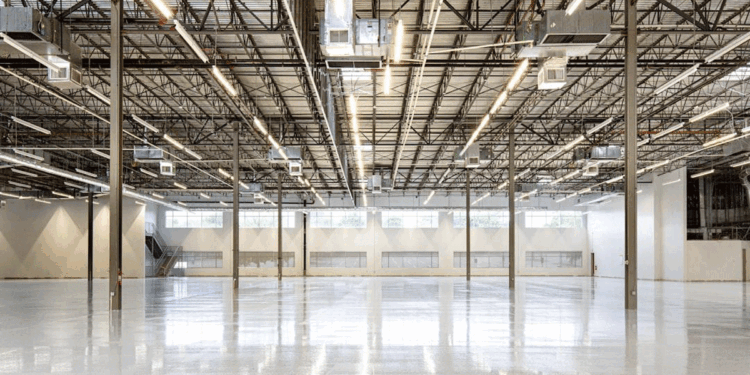
Growth rarely arrives in tidy stages. A new contract, a seasonal rush, or a fresh product line can fill a unit faster than anyone planned. The instinct is to rent more space, but that is the expensive answer.
Workspace flexibility is the ability to reconfigure a space for changing needs without rebuilding it. Many firms now turn to specialists like AKON for movable barriers that divide a unit on demand. This guide shows how to make a building work harder before you pay for a bigger one.
Why Does Workspace Flexibility Matter So Much?
Most businesses overpay for space they barely use. A unit sized for peak demand sits half empty for much of the year, yet the rent never drops.
Flexible layouts fix that imbalance. By carving one large area into zones, you match the space to the task instead of the other way round. The same building can hold storage, packing, and a quiet work area at once.
Compliance matters too. Any workspace must meet basic standards for welfare and safety, which the HSE workplace guidance sets out clearly. A flexible layout makes those standards easier to hit in each zone.
Flexibility also future-proofs a lease. A business that can adapt its current unit avoids the cost and upheaval of moving every time it grows. The premises bend to fit the plan, rather than the plan bending to fit the premises, and that freedom is worth real money.
Which Low-Cost Changes Free Up Space?
Some fixes release capacity within days. Start with the cheapest steps that target wasted floor area.
- Go vertical. Taller racking uses height that most units waste.
- Zone by task. Group similar work so equipment is not scattered.
- Add movable barriers. Divide a hall into rooms without building walls.
- Clear dead stock. Slow-moving items often hog prime floor space.
- Share quiet zones. One flexible area can serve several teams by rota.
Pick two or three and measure the result. A clear before-and-after floor plan shows exactly how much room you have unlocked.
How Do Movable Barriers Help a Business Adapt?
An industrial curtain is a heavy, hanging barrier that splits a large space into smaller, defined areas. Staff and forklifts pass through, yet noise, dust, and temperature stay where they belong.
Why Flexibility Beats a Bigger Lease
The maths is simple. Reconfiguring a unit costs a fraction of moving, and it avoids months of disruption. Business rates and rent scale with floor area, and the introduction to business rates shows how quickly those costs add up.
Movable barriers also protect equipment between zones, much like the care that goes into choosing commercial spaces and the kit inside them. When demand shifts, the layout shifts with it, so the building keeps pace with the business.
Speed is part of the appeal too. A curtain wall can be fitted in days rather than months, so a firm can respond to a new contract almost at once. There is no planning delay and no builder on site for weeks, which keeps the disruption to operations minimal.
What Should You Check Before Reconfiguring?
A few checks keep the project simple and compliant. Treat the layout as a working plan, not a one-off purchase.
| Question to ask | Why it matters |
|---|---|
| Where do people actually work? | Size each zone to the team that uses it. |
| How wide are the traffic routes? | Openings must fit forklifts and pallet trucks. |
| Do fire exits stay clear? | Any barrier must respect escape routes and signage. |
| What does each zone need? | Match temperature, noise, and cleanliness to the task. |
| Can the layout move again? | Demand shifts, so a reconfigurable plan pays off later. |
Map the unit once and the rest follows. A simple sketch of zones, doors, and traffic lines avoids costly mistakes.
Can Flexible Space Support Sustainability Goals?
Yes, and the savings often surprise owners. Heating or cooling only the zones in use cuts energy waste sharply.
Smaller, sealed zones reach the right conditions faster and hold them longer. That trims the bill and the carbon footprint at the same time, which matters as more firms pursue greener operations. Around 70% of Yorkshire SMEs have already taken steps toward sustainability.
Flexible space also reduces the need to expand. A few practical wins stand out:
- Heat only the zones that are staffed
- Avoid the carbon cost of a larger building
- Reuse one space for several functions across the week
These gains compound over time. A leaner footprint means less to light, heat, and maintain, and those savings repeat every single month. Sustainability and cost control, so often in tension, end up pulling in the same direction here.
What to Remember
- Growth often needs a smarter layout, not a bigger and costlier building.
- A unit sized for peak demand wastes space and money most of the year.
- Zoning, taller racking, and movable barriers free up capacity fast.
- Reconfiguring costs far less than relocating or extending a lease.
- Heating only the zones in use saves both energy and money.
- Map the unit and respect fire safety before moving anything.
A Smarter Way to Grow
You do not always need more square footage, just a building that flexes with you. Zone the space, divide it where it helps, and heat only what you use. These steps cost little, suit any unit, and let the premises grow alongside the business.
Frequently Asked Questions
What Is Workspace Flexibility?
Workspace flexibility means being able to reconfigure a building for changing needs without major construction. It usually involves zoning, movable barriers, and smarter storage, so one space can serve several functions as demand shifts.
Are Industrial Curtains Cheaper Than Building Walls?
Generally, yes. A movable barrier divides a space at a fraction of the cost of permanent construction, and it can be repositioned later. That makes it well suited to businesses whose needs change with the seasons.
Do Movable Barriers Affect Fire Safety?
They must always keep escape routes, signage, and sprinklers clear. Plan the layout around fire safety first, then position barriers to suit the workflow, and check local regulations before installing anything.
How Does Flexible Space Save Money?
It cuts wasted floor area, lowers the energy needed to heat or cool unused zones, and delays the cost of moving or extending a lease. Together those savings can be significant for a growing business.