A Yorkshire Christmas, Indoors: Bringing Greenery and Flowers Into the Home
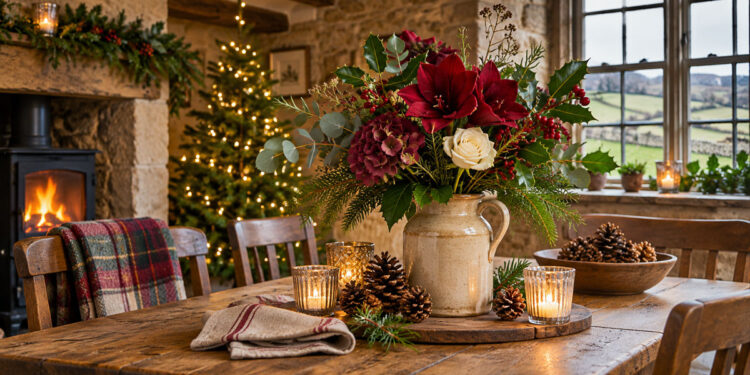
There’s a point every December when the garden goes quiet, the walks get muddier and the house starts to feel a bit bare once the clocks have gone back for good. The tree and the lights do a lot of the work, but anyone who’s spent time in a Yorkshire farmhouse, a Leeds terrace or a Harrogate flat at Christmas knows that the best rooms always have something living in them.
That doesn’t need to mean anything grand. Some of the most appealing festive displays are made from very little: a few branches in a stoneware jug, a bowl of pine cones on the hall table, a sprig of something green tucked behind a picture frame. It’s the contrast with the damp, grey weather outside that makes them work.
The simplest approach is to mix what you can gather with what you can buy. A good armful of greenery gives you the structure and the scent, while a handful of christmas flowers adds the colour and softness that foliage can’t manage alone. Together they look more considered than either would on its own, and the whole thing takes less than an hour on a Sunday afternoon.
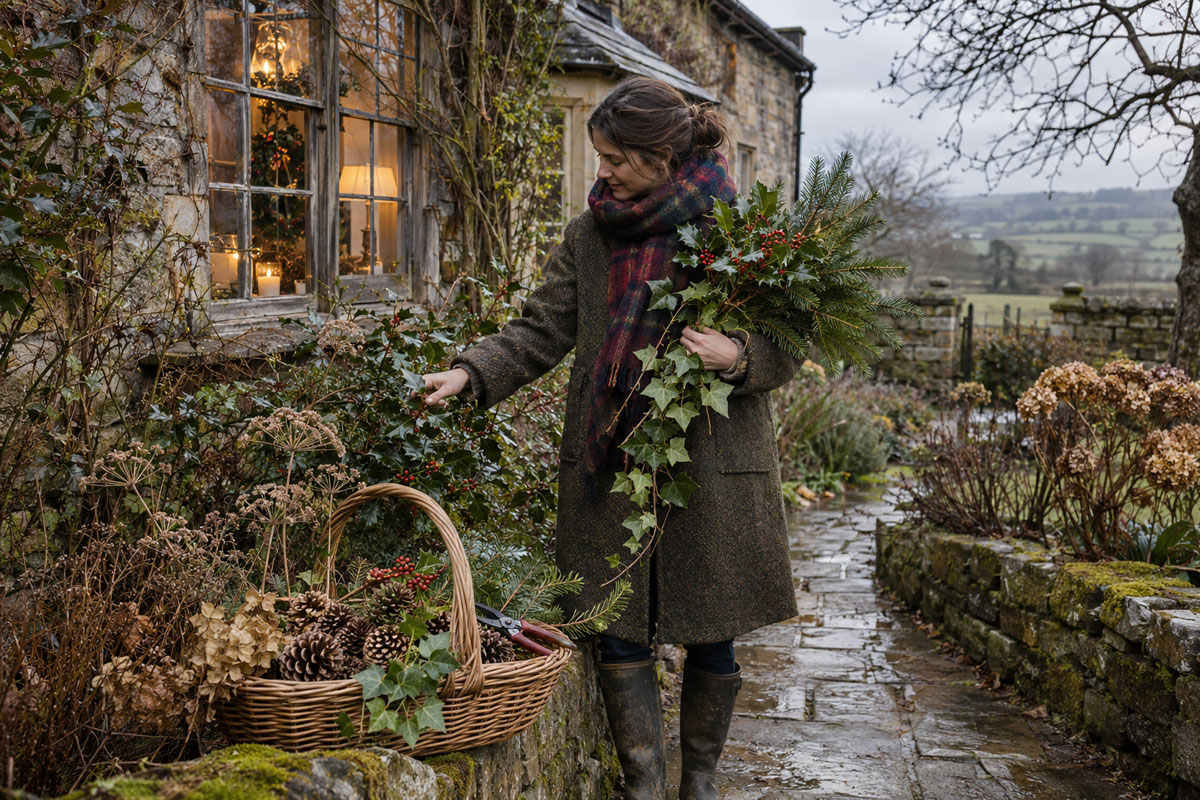
Start with the greenery, and think about where it comes from. If you’ve got a garden, December pruning is a good source. Ivy, holly, rosemary, bay and the tidy-up trimmings from a conifer all cut well and last for weeks indoors. If you don’t, a woodland or moorland walk can yield fallen twigs, cones, lichen-covered branches and dried seed heads, which are free to pick up from the ground. Take only what’s already down, stay off private land unless you have permission, and leave living plants in woodland and nature reserves alone.
Once it’s home, give greenery a bit of care. Cut woody stems at an angle, stand them in water for a few hours or overnight, and remove any leaves that would sit below the waterline. Holly is notoriously sharp and drops leaves in a warm room, so it’s worth keeping it somewhere cool and handling it with gloves. Berries can irritate pets and small children, so put them out of reach.
Colour is the next decision. The traditional palette of deep green, red and cream endures for a reason, and it suits the stone and brick of a typical Yorkshire home. But there’s plenty of scope to be a little braver. Dusty pinks and burgundies look lovely against dark painted walls, and white flowers with silver foliage can lift a small, dim room. Anywhere with a lot of natural wood, such as a beamed cottage kitchen, tends to look best with warm, earthy tones.
Scale matters more than people expect. A large, loose arrangement suits a wide mantelpiece or a big farmhouse table, but it can overwhelm a narrow shelf. For smaller spaces, a trio of small vessels grouped together feels more natural than one oversized vase. Odd numbers generally look better than even ones, and varying the heights gives a display a bit of movement.
Think about the vessels too. Jugs, enamel pots, old tins and jam jars all work well, and they’re usually already in the cupboard. A cluster of glass bottles with a single stem in each looks surprisingly elegant on a windowsill. If you’ve got a tray, a wooden board or a few tea lights nearby, you can pull everything together as a single feature rather than a scattering of separate bits.
Placement is where fresh flowers either last or don’t. A radiator, a log burner or a sunny sill will dry them out quickly, and a draughty hallway can leave them looking limp by the second week. The best spot is a cool one, out of direct heat, and the middle of a dining table is usually ideal. If you’re hosting, put the arrangement down before the guests arrive and keep candles at a sensible distance from dry foliage.
Water is the daily job. Top it up every day or two, because a vase of flowers drinks more than most people realise, and change it entirely if it starts to cloud. Trim a centimetre or so off the stems when you do, which helps them keep drinking. Take out any stems that have faded rather than waiting for the lot to go, and a smaller, tidier display will often look better than a large, tired one.
It’s also worth thinking about how long you want everything to last. Foliage and cones will see out the season with very little effort, but delicate flowers have a shorter life. If Christmas Day is the target, a good rule is to buy the softer blooms in the last week before and let the hardier greenery do the early work. Keep a few spare stems in a cool place if you want to refresh things before the big day.
Once the festive season is over, there’s no need to feel guilty about letting everything go. Greenery and spent flowers can usually go in the garden waste bin, and woody twigs and cones can be kept for kindling or for next year’s table. Some people like to dry a few of the better stems and keep them on a shelf through January, which helps a bare room feel less empty when the decorations come down.
Christmas indoors in Yorkshire has always been about warmth against the weather. A few well-chosen branches, a bowl of cones and a fresh bunch on the table are enough to make a room feel properly lived in, and they ask for a lot less than the tree does. They’re also one of the few decorations that smell lovely, which is more than can be said for most of what comes out of the loft.