The Derbyless City by Damiano Benzoni – Review

By Karl Hornsey
My chief reason for being interested in this book, focusing on the footballing scene in one of Europe’s most historic cities, was a purely personal one. A group of us were set to stay in Berlin for a long weekend a couple of years ago and wanted to take in a match, ultimately plumping for Viktoria Berlin, who ply their trade well down the German football pyramid, based on the outskirts on the city. So much on the outskirts that we pitched up at the wrong ground initially, though that’s a story for another day. The city is fascinating, and it follows in this case that its football history is also fascinating.
Perhaps not surprisingly, given the split of the city into East and West in the aftermath of the Second World War, the ‘emotional map’, as author Damiano Benzoni alludes to, is a complicated one, and it’s a city that has yet to exert any great influence on the European scene, despite its size and it being the capital of a Germany that has, on many occasions, dominated global football. Benzoni is ideally placed to get under the skin of football in his home city of Berlin, examining the history of some of its most prominent clubs and finding out what makes them tick.
 “Uniqueness”
While Hertha and Union Berlin are probably the most well known of the clubs in the city, this is a book about so much more than those, looking at the grass roots of the sport, and delving into what has held Berlin back from being a more prolific home of football.
Our experience at Viktoria Berlin was very different to that in this country, be it those of us who followed top-flight or non-league clubs, notably in terms of cost, but also in how the structure of German football is so different, with the 50+1 rule being so important in preventing clubs falling solely into the hands of external investors. This creates an entirely different situation to that in England, and the country’s smaller clubs are all the better for it.
Benzoni clearly explains this structure and also helps to untangle the impact of the Berlin Wall on the city’s football, which may be inconsequential in the grander scheme of things during the Cold War, but certainly adds a uniqueness to being a football supporter in Berlin. There’s a certain solidarity among German fans widely in their country, and very much in Berlin itself, and it seems as though many are quite happy with where their clubs are at, and happy with the status quo. For anyone wanting to understand that mentality, this is an excellent starting point.
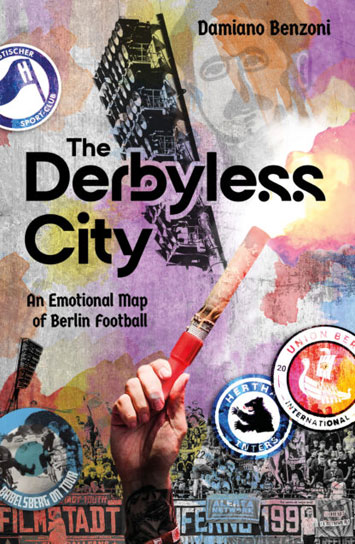
The Derbyless City: An Emotional Map of Berlin Football by Damiano Benzoni is published by Pitch Publishing

Karl’s love of writing was piqued at the age of eight, when he won a Blue Peter badge in an essay-writing competition. The location of said badge might be a mystery now, but the memory never fades. Hours spent writing about sport as a teenager, in pre-internet years when you had to make your entertainment, honed his skills, and Karl has worked in TV and radio listings at PA Media for 28 years, and the age of hybrid working means 50% of that can be at home listening to Classic FM and thinking about his next visit to his beloved Yorkshire Dales.
hornskar