Nine Racecourses and the Oldest Classic in the World: Yorkshire’s Racing Inheritance
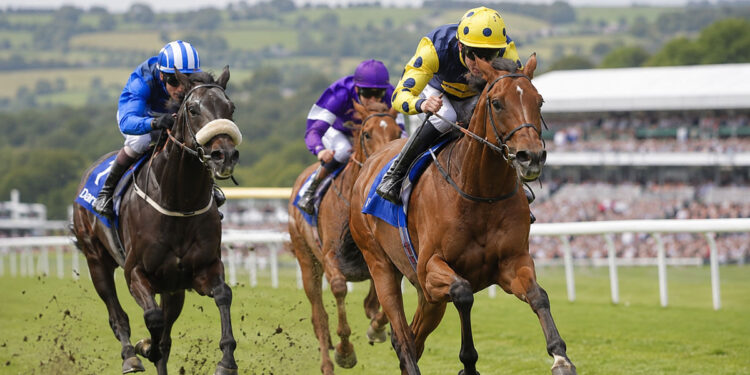
Here is a fact worth carrying into any conversation about Yorkshire. The county has nine racecourses, more than any other region in Britain, and between them they stage more than 180 days of racing each year.
Not the most in the north.
The most anywhere in the country.
For a county that already claims a fairly comprehensive list of things it did first, this one is unusually well documented. Yorkshire’s racing history also stretches considerably further back than most people assume.
The nine
Six are dedicated Flat courses: York, Beverley, Pontefract, Redcar, Ripon and Thirsk.
The other three stage both Flat and jumps racing: Catterick in the north, Wetherby in the west and Doncaster in the south.
Each has its own character.
Beverley is East Yorkshire’s only racecourse and sits on the Westwood, with a stiff uphill finish and views back over the town. Pontefract has Britain’s longest continuous racing circuit, with another demanding finish waiting at the end of it.
Ripon markets itself as Yorkshire’s Garden Racecourse and traces its racing history back to 1664.
Redcar’s story began before its current course existed, with racing held on the beach before a permanent track opened in the 1870s.
Older than almost anywhere
Documented horse racing in Yorkshire reaches back into the sixteenth century.
A map from 1595 shows a racecourse at Doncaster’s Town Moor, making it one of the earliest recorded racing venues in Britain.
Further east, the Kiplingcotes Derby has an even more unusual place in racing history. Surviving rules for the race date from 1619, long before British racing had anything resembling its modern governing structure.
That is worth pausing on.
Before the sport had a national authority, somebody in the East Riding was already writing down how a horse race should be conducted.
Beverley has staged racing on the Westwood since the seventeenth century.
The race that outlasted almost everything
In 1776, Doncaster staged a two-mile sweepstake at Cantley Common.
The race would subsequently be named after Colonel Anthony St Leger, and what began as a local contest became one of the defining events of British racing.
Today, the St Leger Stakes is the oldest of the five British Classics and is widely recognised as the oldest Classic horse race in the world.
It is also the longest of Britain’s Classics, run over one mile, six furlongs and 115 yards.
Unlike the original article of racing mythology sometimes repeated around it, the eligibility is quite specific: the St Leger is for three-year-old colts and fillies. Geldings cannot enter, and neither can older horses.
Every September, the St Leger Festival brings the British Classic season to a close at Town Moor.
The race has survived enormous changes to the sport around it. It was cancelled in 1939 following the outbreak of the Second World War and has occasionally been moved to other courses during wartime, but its place in the calendar has endured for almost two and a half centuries.
Yorkshire built the grandstand
There is a quieter contribution that racing historians also recognise.
As the sport became more organised during the eighteenth century, York’s Knavesmire developed into one of the focal points of northern racing.
In 1754, architect John Carr designed and built a permanent grandstand overlooking the course.
It was one of the earliest purpose-built grandstands in thoroughbred racing and reflected a wider change in what race meetings were becoming.
Racing was no longer simply a contest watched from the edge of a field. Major fixtures were becoming structured social occasions, complete with permanent spectator facilities, dinners, balls and an increasingly organised calendar.
Carr’s building became an important early model for the permanent racecourse grandstand.
Still at the top table
None of this belongs only to history.
Six of Britain’s Group 1 races are now staged in Yorkshire.
Four are at York: the Juddmonte International, Yorkshire Oaks, Nunthorpe Stakes and City of York Stakes, the last of which was promoted to Group 1 status in 2025.
Doncaster stages another two: the St Leger and Futurity Trophy.
York’s Ebor Festival each August remains one of the major fixtures of the European Flat season, while the Dante Festival in May is one of Britain’s most important early-season meetings.
The county also remains a major training centre. Middleham and Malton continue to house yards capable of producing runners for racing’s biggest prizes.
What has changed most dramatically is where the money moves.
What has changed most dramatically is where the money moves. Betting that once happened almost exclusively through bookmakers at the course now takes place largely through digital accounts and smartphones. Modern online racebooks let punters follow the markets and place a bet from their phone, wherever the meeting is being run.
The rhythm of a race meeting would still be recognisable to somebody from another century.
The betting infrastructure around it would not.
Worth the day out
The practical point for anyone in Yorkshire is that having nine racecourses spread across one county is a genuine local luxury.
They are also very different experiences.
A midweek evening meeting at Pontefract or Thirsk is a completely different proposition, in cost, scale and atmosphere, from Ebor week at York.
Both are Yorkshire racing.
The county has been offering versions of that choice for centuries, from the first tracks marked on old maps to six Group 1 races on the modern calendar.
Few places have a stronger claim to racing as part of their inheritance.