Could Smarter Delivery Routes Cut the Environmental Cost of Online Shopping?

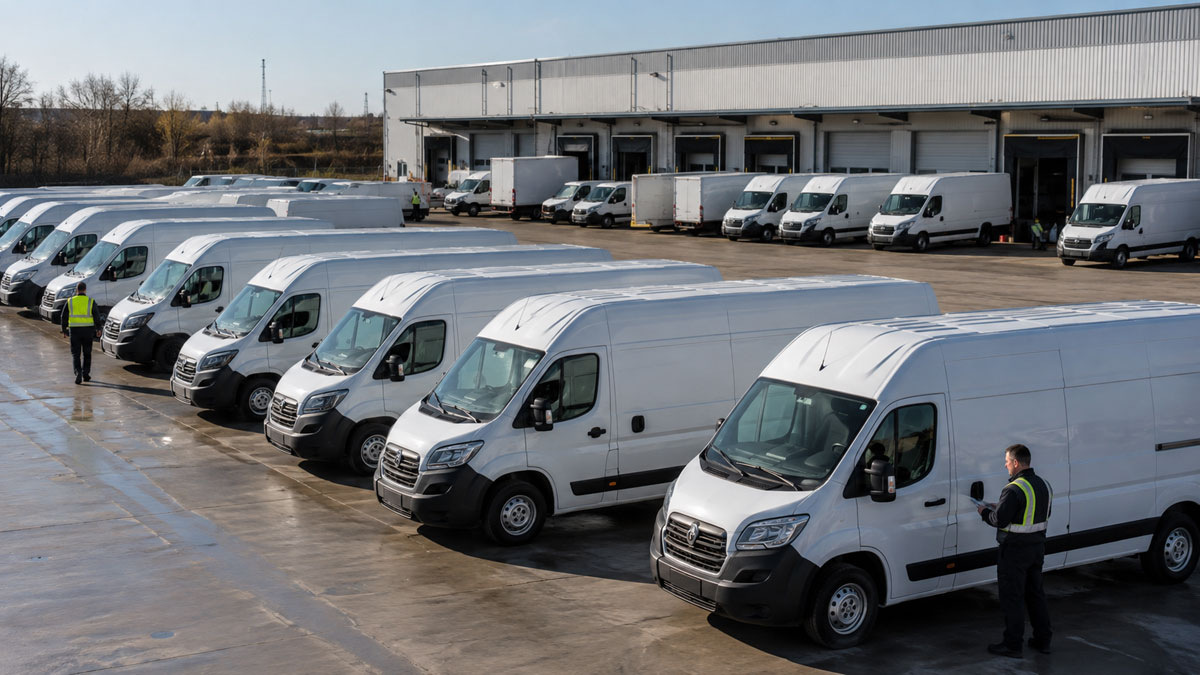
Online shopping has made buying almost anything remarkably easy. A few taps can put a new pair of trainers, a coffee machine or a week’s worth of groceries on somebody’s doorstep, sometimes within hours. Behind that convenience, however, sits an increasingly complicated network of warehouses, vans, drivers and delivery routes.
The environmental question is usually framed around the vehicles themselves. Diesel van bad, electric van good. Yet there is another part of the equation that receives less attention: how efficiently those vehicles are being used.
Specialists in delivery route optimisation, www.fleetika.com are increasingly using software to calculate how orders should be divided between vehicles and in which sequence they should be delivered. Fleetika, for example, says automated optimisation can build denser routes, reduce unnecessary mileage and cut fuel use compared with routes planned manually. That basic principle matters whether the vehicle involved runs on diesel, electricity or something else.
The problem with the last mile
The final journey between a distribution centre and the customer is known as the “last mile”. It sounds modest. In practice, it can be the awkward bit.
A lorry transporting thousands of items between two warehouses has a relatively straightforward job. A delivery van carrying dozens of parcels to dozens of different addresses does not. Traffic, parking, roadworks, delivery windows and absent customers can turn a tidy-looking route into a day of doubling back and sitting in queues.
Online shopping adds another complication. Customers have become accustomed to receiving goods rapidly, while retailers compete by offering next-day, same-day and increasingly precise delivery slots.
Research highlighted by the World Economic Forum has previously warned that growing demand for urban last-mile deliveries could put substantially more delivery vehicles onto city streets without changes to the way goods are distributed.
That means reducing the environmental cost of home delivery cannot depend entirely on replacing one type of van with another.
A shorter route can make a sizeable difference
Route planning used to depend heavily on local knowledge, printed schedules and a dispatcher who knew that the obvious road across town became hopeless after half past four.
That knowledge still matters, but software can now process far more variables simultaneously. Orders can be grouped geographically, vehicles assigned according to capacity and routes altered when traffic conditions or delivery priorities change.
The potential gains are fairly mundane, which is precisely why they matter:
- fewer unnecessary miles between drops;
- less doubling back across the same neighbourhood;
- better use of the available space inside each vehicle;
- fewer vehicles required to complete the same workload;
- reduced idling and time spent in congestion;
- more accurate arrival estimates, helping to prevent failed deliveries.
None sounds particularly revolutionary on its own. Multiply the savings across thousands of vans operating every day, however, and small improvements begin to acquire considerably more weight.
Faster isn’t always greener
There is also an uncomfortable conflict between convenience and efficiency.
The quickest possible delivery is rarely the most efficient possible delivery. If several customers in the same neighbourhood are prepared to receive orders during the same broad period, those parcels can potentially travel together. Promise each customer an ultra-specific or immediate delivery and that opportunity becomes harder to exploit.
Recent research into e-commerce delivery has reinforced the point. Allowing slightly greater flexibility around delivery times can give operators more opportunity to consolidate orders and design shorter routes.
For consumers, this could eventually mean seeing delivery options based on environmental efficiency as well as speed. Someone ordering a book on Tuesday may be perfectly happy to receive it on Thursday alongside other deliveries in the area rather than requiring a van to reach the address as quickly as physically possible.
Retailers already persuade shoppers to choose lockers, collection points and consolidated deliveries. Greener delivery slots are a logical extension.
Electric vans still matter
Smarter routing does not remove the need for cleaner vehicles.
The UK government’s transport decarbonisation plans explicitly combine the move towards zero-emission vehicles with new delivery models, better data and digital technology designed to improve efficiency.
Electric vans can remove tailpipe emissions from a delivery journey, while cargo bikes can make particular sense for dense urban areas. Collection lockers and local micro-hubs can reduce the number of individual doorstep visits required.
Route optimisation sits alongside those developments rather than competing with them. An inefficiently routed electric van still consumes electricity, takes up road space and contributes to congestion. Efficiency remains useful regardless of what powers the wheels.
The customer has a role too
The environmental footprint of online shopping is ultimately influenced by what customers demand from it.
Choosing a consolidated delivery, accepting a slightly wider time window and avoiding several separate orders from the same retailer can all make efficient distribution easier. Retailers, meanwhile, can make those choices more attractive rather than treating maximum speed as the default definition of good service.
The future of greener online shopping may therefore be less dramatic than fleets of autonomous delivery robots buzzing around British streets.
Some of the biggest improvements could come from something much simpler: filling vehicles intelligently, grouping deliveries sensibly and making sure a van does not travel five miles when good planning could have made it travel three.