How to Choose the Right Pneumatic Stapler for Different Applications
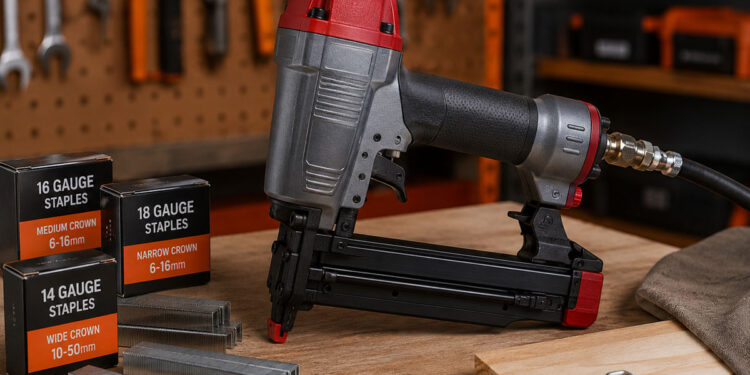
Choosing the right pneumatic stapler or air powered stapler is just as important as selecting the correct staples. Different fastening tasks require different tool designs, staple types and driving performance. A stapler that works perfectly for upholstery may not be suitable for timber framing, while a heavy-duty framing stapler could easily damage delicate materials. Selecting the appropriate tool helps achieve secure fastening, improves efficiency and reduces the risk of damaging the workpiece.
Before purchasing a pneumatic stapler, it is worth considering several key factors, including the intended application, compatible staple type, crown width, wire gauge and supported staple length. Features such as magazine capacity, tool weight, firing mode and compressor compatibility can also influence productivity and user comfort, particularly during extended use. Whether you are comparing different stapler types or looking for compatible fastening equipment, ProNailers offers a wide selection of pneumatic staplers, staples and accessories for a broad range of woodworking, upholstery, construction and industrial applications. Understanding these differences makes it much easier to choose a pneumatic stapler that delivers reliable performance for the specific materials and applications involved.
What Is a Pneumatic Stapler?
A pneumatic stapler is a fastening tool powered by compressed air, designed to drive collated staples quickly and consistently into a wide range of materials. Instead of relying on manual force or an electric motor, it uses air supplied by a compressor to drive the staple with controlled force. This allows for faster operation, more consistent fastening depth and reduced user fatigue, especially during repetitive work.
Compared with manual staplers, pneumatic models require far less physical effort and are better suited to continuous use. They also generally deliver greater driving power and higher fastening speed than most electric staplers, making them a popular choice for workshops, construction sites and manufacturing environments. With the correct staple type and air pressure, they provide reliable fastening while helping to minimise material damage.
Pneumatic staplers are available for many different applications, each designed to work with specific staple types, wire gauges and crown widths. Common industries and tasks include:
- Upholstery and furniture manufacturing
- Cabinet making and joinery
- Timber framing and construction
- Packaging and pallet assembly
- Flooring installation
- Roofing and sheathing
- Interior finishing and fit-out work
- Industrial manufacturing and production lines
Because different applications require different fastening characteristics, pneumatic staplers are produced in a wide variety of configurations. Choosing a model that matches both the material being fastened and the compatible staple specification is essential for achieving efficient, accurate and durable fastening results.
Identify Your Application Before Choosing a Stapler
The first step in choosing a pneumatic stapler is identifying the type of work it will be used for. Different applications place different demands on the tool, from the amount of driving force required to the type of staples it uses. Selecting a stapler designed for the intended application helps improve fastening quality, reduce material damage and increase productivity.
Upholstery and Furniture Manufacturing
Upholstery work typically requires fine wire staplers that leave small, discreet fixing points while still providing sufficient holding power. These tools are commonly used for attaching fine fabrics, leather and upholstery foam to timber frames. They are also widely used during furniture assembly, where clean and accurate fastening is essential for achieving a professional finish.
Joinery and Cabinet Making
Joinery applications often involve fastening relatively thin materials where appearance is important. Pneumatic staplers are frequently used to secure cabinet back panels, drawer bottoms and various interior fittings. Medium wire or fine wire staplers are commonly selected because they provide reliable holding strength without causing unnecessary damage to finished timber components.
Timber Framing and Construction
Construction work requires staplers capable of driving larger, stronger staples into structural timber. Heavy-duty framing staplers are commonly used for fixing sheathing panels, assembling timber crates and manufacturing pallets. These applications demand higher holding power and greater penetration than finishing or upholstery work, making heavy wire staplers the preferred choice.
Packaging and Industrial Production
Packaging and manufacturing environments often require high-speed fastening over long production runs. Pneumatic staplers are widely used for assembling cardboard packaging, securing wooden shipping containers and supporting automated or semi-automated manufacturing lines. Choosing the correct staple size and tool configuration helps maintain consistent fastening quality while maximising production efficiency.
Choose the Correct Staple Type
One of the most important factors when selecting a pneumatic stapler is ensuring it is compatible with the correct staple type. Staple systems are not interchangeable, even when their dimensions appear similar. Differences in crown width, wire gauge, leg dimensions and collation mean that each stapler is engineered to operate with a specific staple specification. Using incompatible staples can lead to feeding problems, jams, poor fastening quality and unnecessary wear on the tool.
Some of the most commonly used staple systems include Type 71, Type 80, Type 90 and Type 97, although many other staple types are available for specialised applications. Type 71 and Type 80 staples are widely used for upholstery, furniture manufacturing and other light fastening tasks that require fine wire staples. Type 90 staples are commonly chosen for joinery, cabinetry and interior woodwork, where medium wire staples provide greater holding strength. Type 97 staples are often used for precise fastening applications that require a narrow crown and a discreet finish. Heavy-duty construction work typically relies on larger staple systems designed for framing, pallet assembly and structural timber applications.
Each pneumatic stapler is manufactured around a specific staple system because the magazine, driver blade and nose assembly are precisely matched to that staple’s dimensions. Even small differences between staple types can prevent reliable feeding or result in inconsistent driving performance. Before purchasing a stapler, always confirm that it supports the staple type required for your application rather than selecting a tool based solely on staple length or appearance.
Understanding Crown Width
Crown width refers to the distance across the top of the staple that remains visible after installation. It plays an important role in how the fastening load is distributed across the material and influences both holding strength and the appearance of the finished work. Selecting the appropriate crown width helps achieve a secure fixing while reducing the risk of damaging the material.
The three most common crown categories are:
- Narrow crown staplers are typically used where a discreet finish is important. They are well suited to cabinetry, interior trim, furniture assembly and other applications where the staple should remain as unobtrusive as possible.
- Medium crown staplers offer a balance between holding power and appearance. They are widely used for upholstery, furniture production, light woodworking and many general-purpose fastening tasks.
- Wide crown staplers provide a larger contact area, helping to spread the holding force over a wider surface. They are commonly chosen for framing, sheathing, crating, pallet manufacturing and other heavy-duty construction applications.
When selecting a crown width, consider both the material being fastened and the level of holding strength required. Narrow crown staples are generally better for thinner or decorative materials where minimising visible marks is important. Medium crown staples are suitable for many everyday woodworking and upholstery applications, while wide crown staples are often preferred for structural materials and heavy-duty assemblies that require maximum holding performance.
Choosing the Right Wire Gauge
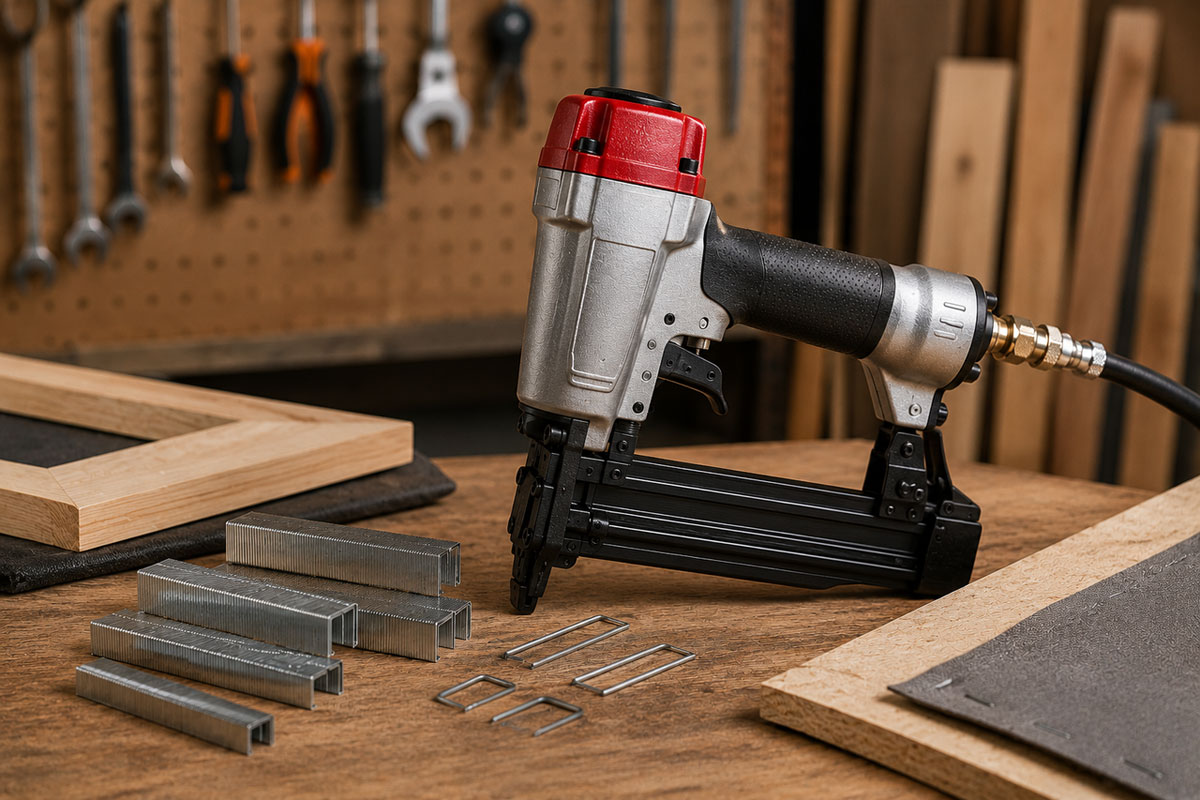
Wire gauge is another key factor when selecting a pneumatic stapler. It affects both the strength of the fastening and the size of the staple left in the material. Choosing the appropriate wire thickness helps achieve the right balance between holding power, material protection and the appearance of the finished work.
Fine wire staplers are designed for delicate materials where visible staple marks should be kept to a minimum. They are commonly used for upholstery fabrics, leather, decorative trim and lightweight furniture components. Their thinner staples reduce the risk of splitting timber or damaging soft materials while still providing sufficient holding power for light-duty applications.
Medium wire staplers offer greater holding strength and are suitable for a wide range of woodworking and joinery tasks. They are frequently used for cabinet assembly, drawer construction, interior fittings and general workshop applications where stronger fastening is required without moving to heavy-duty staples.
Staplers designed for heavy-duty applications use thicker wire staples that provide maximum holding power for demanding applications. They are commonly chosen for structural timber, sheathing, pallet manufacturing, crating and other construction work where the fastener must withstand higher loads and repeated stress.
The correct wire gauge depends on both the material and the application. Fine wire staples help preserve the appearance of finished surfaces, while medium wire staples provide a good balance between strength and a clean finish. Heavy-duty staples prioritise maximum holding performance and are generally reserved for structural or industrial applications where appearance is less important than fastening strength.
Selecting the Correct Staple Length
Choosing the correct staple length is just as important as selecting the appropriate staple type or wire gauge. A staple that is too short may not provide enough holding strength, while one that is too long can penetrate through the material, damage the opposite surface or create an untidy finish. The ideal staple length depends on the thickness of the materials being joined and the level of holding power required.
As a general rule, the staple should pass completely through the top material and penetrate deeply enough into the base material to create a secure fixing. Thin fabrics, leather and lightweight panels usually require shorter staples, whereas thicker timber products and structural assemblies require longer fasteners. Matching staple length to the application helps improve fastening reliability while reducing the likelihood of splitting timber or damaging delicate materials.
Selecting the correct staple length also helps avoid two common fastening problems. Under-penetration occurs when the staple does not enter the base material deeply enough, resulting in a weak connection that may loosen over time. Over-penetration occurs when an excessively long staple passes too far into or through the material, potentially affecting appearance, safety and overall fastening quality.
Typical staple length ranges vary depending on the application:
- 3 mm to 16 mm for lightweight upholstery, fabrics and decorative trim.
- 10 mm to 38 mm for furniture manufacturing, cabinetry and general joinery.
- 19 mm to 50 mm for timber framing, sheathing, pallets and heavy-duty construction.
- Longer staples may be required for specialised industrial or structural fastening applications, depending on the tool and compatible staple system.
Always check the stapler manufacturer’s specified staple length range before purchasing fasteners. Every pneumatic stapler is designed to operate within a defined range, and using staples outside those limits can reduce performance and increase the risk of jamming.
Additional Features Worth Considering
While staple type, crown width and wire gauge are the primary selection criteria, several additional features can significantly influence usability and productivity. Depending on the application, these design elements may improve access, reduce operator fatigue or increase efficiency during repetitive fastening tasks.
Long nose staplers are designed for applications where access is limited. Their extended nose allows staples to be driven into narrow recesses, corners and other confined spaces that would be difficult to reach with a standard tool. They are commonly used in furniture manufacturing, cabinetry and specialised assembly work.
Many pneumatic staplers also offer different firing modes. Sequential firing requires the nose to be positioned against the workpiece before each trigger pull, providing greater control and accuracy. Contact firing, sometimes called bump firing, allows rapid fastening by holding the trigger while repeatedly contacting the work surface. This mode is often preferred for high-volume production and framing applications where speed is a priority.
Another feature worth considering is magazine capacity. A larger magazine holds more staples, reducing the frequency of reloading during long working sessions. This can improve productivity in manufacturing environments or on construction sites where continuous fastening is required.
Weight and ergonomics also play an important role, particularly for users who operate the tool throughout the day. Lightweight designs, comfortable grips and well-balanced construction help reduce hand and wrist fatigue while improving control during precise fastening tasks.
Finally, check the tool’s air consumption and compressor compatibility. Pneumatic staplers vary in the amount of compressed air they require, and the compressor should be capable of supplying sufficient pressure and airflow for uninterrupted operation. Matching the stapler with an appropriately sized compressor helps maintain consistent driving performance and prevents pressure drops during extended use.
Common Mistakes When Choosing a Pneumatic Stapler
Many fastening problems are caused not by the quality of the tool, but by selecting the wrong type of stapler for the job. Understanding the most common mistakes can help avoid poor fastening performance, unnecessary tool wear and damage to the materials being worked on.
Some of the most frequent mistakes include:
- Choosing the wrong staple type. Pneumatic staplers are designed for specific staple systems, such as Type 71, Type 80 or Type 90. Using the wrong staple type can cause feeding problems, jamming and unreliable fastening.
- Ignoring crown width. Selecting an unsuitable crown width may result in insufficient holding power or visible damage to the material. The crown should always match the requirements of the application.
- Using the wrong wire gauge. Fine wire staples are ideal for delicate materials, while heavy-duty staples are intended for structural applications. Choosing the wrong wire thickness can either weaken the joint or leave unnecessary marks on the workpiece.
- Selecting an unsuitable staple length. Staples that are too short may not provide adequate penetration, while staples that are too long can pass through the material or damage the opposite surface. Always match staple length to the thickness of the materials being fastened.
- Overlooking compressor requirements. Even the correct stapler cannot perform properly if the air supply is inadequate. A compressor that cannot maintain the required pressure and airflow may lead to inconsistent driving depth, reduced productivity and increased wear on the tool.
Taking a few minutes to check staple compatibility, fastening requirements and compressor specifications before purchasing a pneumatic stapler can prevent many of these problems. Selecting the right combination of tool and fasteners helps achieve more reliable results, improves efficiency and extends the service life of the equipment.
Pneumatic Stapler Selection Guide
Selecting a pneumatic stapler becomes much easier once the intended application has been identified. The table below provides a general guide showing the types of staplers and staple characteristics commonly used for different fastening tasks. Actual requirements may vary depending on the material, tool model and manufacturer’s specifications.
| Application | Recommended Stapler | Crown | Wire Gauge | Typical Staple Length |
|---|---|---|---|---|
| Upholstery | Type 71 / Type 80 | Medium | Fine Wire | 4 mm to 16 mm |
| Furniture assembly | Type 80 / Type 97 | Medium or Narrow | Fine Wire | 6 mm to 16 mm |
| Cabinetry | Type 90 | Narrow | Medium Wire | 12 mm to 38 mm |
| Timber framing | Type 14 / Type 17 | Medium or Wide | Heavy Duty | 19 mm to 50 mm |
| Packaging | Depends on the material and application | Various | Medium Wire or Heavy Duty | 15 mm to 50 mm |
This guide is intended as a starting point when comparing different pneumatic staplers. Always verify that the selected tool is compatible with the required staple type, wire gauge and staple length before purchasing, as specifications can vary between manufacturers and individual models.
Conclusion
Choosing a pneumatic stapler according to the intended application will almost always deliver better results than selecting a tool based solely on price or brand. Matching the stapler to the correct staple type, crown width, wire gauge and staple length helps improve fastening quality, increase efficiency, reduce material damage and extend the service life of both the tool and the fasteners.
Whether you are working on upholstery, cabinetry, timber framing or industrial production, understanding these key selection factors makes it much easier to identify the most suitable tool for the job. If you are comparing different pneumatic staplers, staple systems and fastening equipment, ProNailers offers a comprehensive range of pneumatic staplers, compatible staples and fastening accessories from leading manufacturers, covering everything from fine wire upholstery staplers to heavy-duty framing staplers, along with compatible staples, pneumatic components and accessories for a wide variety of professional fastening applications.