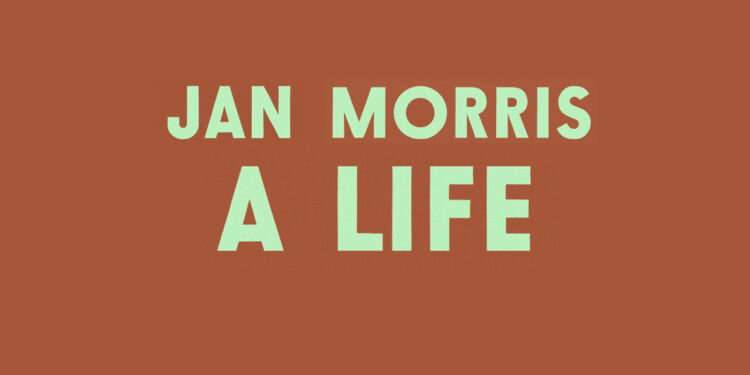
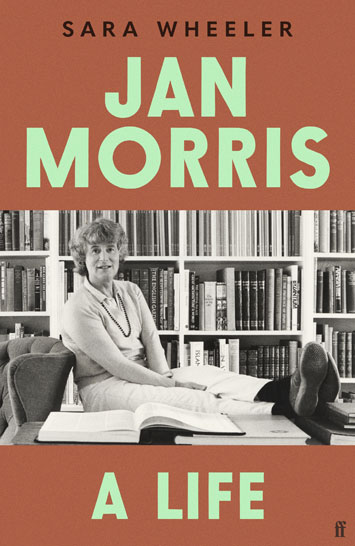
Jan Morris: A Life by Sara Wheeler – Review
By Barney Bardsley
What an impossible task it is, to write a biography of a famous person. Hard enough to get a grip on one’s own life, let alone to dive under someone else’s skin and offer an accurate summation of their life and works. Sara Wheeler has done a valiant job here, with 355 pages of painstaking details and biographical revelations. But she has set herself a particularly daunting task, by choosing the eccentric, contradictory, and immensely puzzling figure of renowned travel writer, Jan Morris, as her subject. And if one is left feeling strangely unsatisfied at the end – with the charismatic, secretive Morris as elusive as ever – then I cannot imagine that any other biographer could have done it better.
Jan Morris was a prodigious writer of travel books for many decades throughout the 20th century, choosing as her subject matter vast themes, such as the rise and fall of the British Empire in Pax; the melancholic allure of the eponymous Venice; and the collision of past and present, with ever-changing geo-political boundaries, in Trieste. Through all her great works runs a seam of longing and evanescence: the glory of times past, the uncertainty and blurred horizons of present and future. This attitude very much mirrors Morris’s own shifting sense of self, and of her place in the world, which is what makes her such a fascinating writer – and, at the same time, an utter enigma. Morris, both in her extravagant life and her equally exuberant writing style, simply refuses to be pinned down. The biographer does her best here – but the butterfly inevitably escapes the wheel.
Jan Morris started life as James Morris, a dashing young man, with a love of the military, and of sporting adventure. It was James who first reported the conquest of Everest in 1953, having been part of the expedition himself. He then seemed to be present at many of the major flashpoints in 20th century, from the Suez Crisis to the rise – and fall – of the Berlin Wall. He travelled extensively and compulsively, all over the world, with a particular love for Cairo and the Middle East, and he forged, early on, a successful and loving marriage with the long suffering Elizabeth. He fathered four children with her, and worked tirelessly to support them all by producing phenomenal amounts of newsprint and published works, throughout his long and restless career.
But James was deeply uncomfortable living as a man. From early on in life he knew that “he” would much rather live as a “she”. This was a difficult and lonely road to travel, since transitioning from male to female was still largely taboo at that time, and almost impossible to navigate without scorn and opprobrium. Morris faced plenty of both, throughout a long, complicated life, but – with enormous courage and determination – still undertook the perilous route of “sex change” surgery at 46 years old. Despite the bucketloads of pills, the sickness caused by the drugs, and the pain and discomfort of the surgery itself, Morris never once regretted her decision.
“Extraordinary and complicated life”
 In a moving letter to Elizabeth from Casablanca, where she had travelled for the operation, she wrote: “My chief sensation now is one of liberation – free to live happily again without that blessed obsession and to make up I hope, all the torments I’ve plagued you with over the years… For what it’s worth, or what it is! – I really am me!”
In fact, the real hero figure in this story, to which Morris often attests, is Elizabeth, who kept the home fires burning whilst Jan gallivanted around the world, and never once faltered in her love for her erstwhile husband. But if she were a willing partner in all this, it was the children who really suffered. For all her gifts and strengths, Morris seems to have been a neglectful – sometimes even cruel – parent. Sara Wheeler treads very cautiously when revealing this part of the story. She slips in direct quotes from eldest son Mark and only daughter Suki, but refrains from direct condemnation, preferring instead to offer enough oblique references to give the reader a good idea of the dark shadows that lay at the heart of Jan Morris’s life.
In her final years, Morris became a fervent Welsh nationalist (her father was Welsh) and she settled in Wales for many happy years. Even when her globetrotting days began to dwindle, she continued to mix with the glamorous, the great and the good. She regarded Pax – the trilogy on the British Empire – as her highest achievement, but it is perhaps Conundrum, her short, groundbreaking account of her transition from male to female, which is the most honest and striking of all her great and glittering books.
Sara Wheeler, herself a prolific travel writer, has given us a welcome glimpse into the extraordinary and complicated life of Jan Morris, but in the end, to understand and appreciate her fully, one must go directly to the source, and read her in her own words. If new to the woman and the work, start with Conundrum and go from there, for in many ways, this strange and powerful little book is the key to it all.
‘Jan Morris: A Life’ by Sara Wheeler is published by Faber
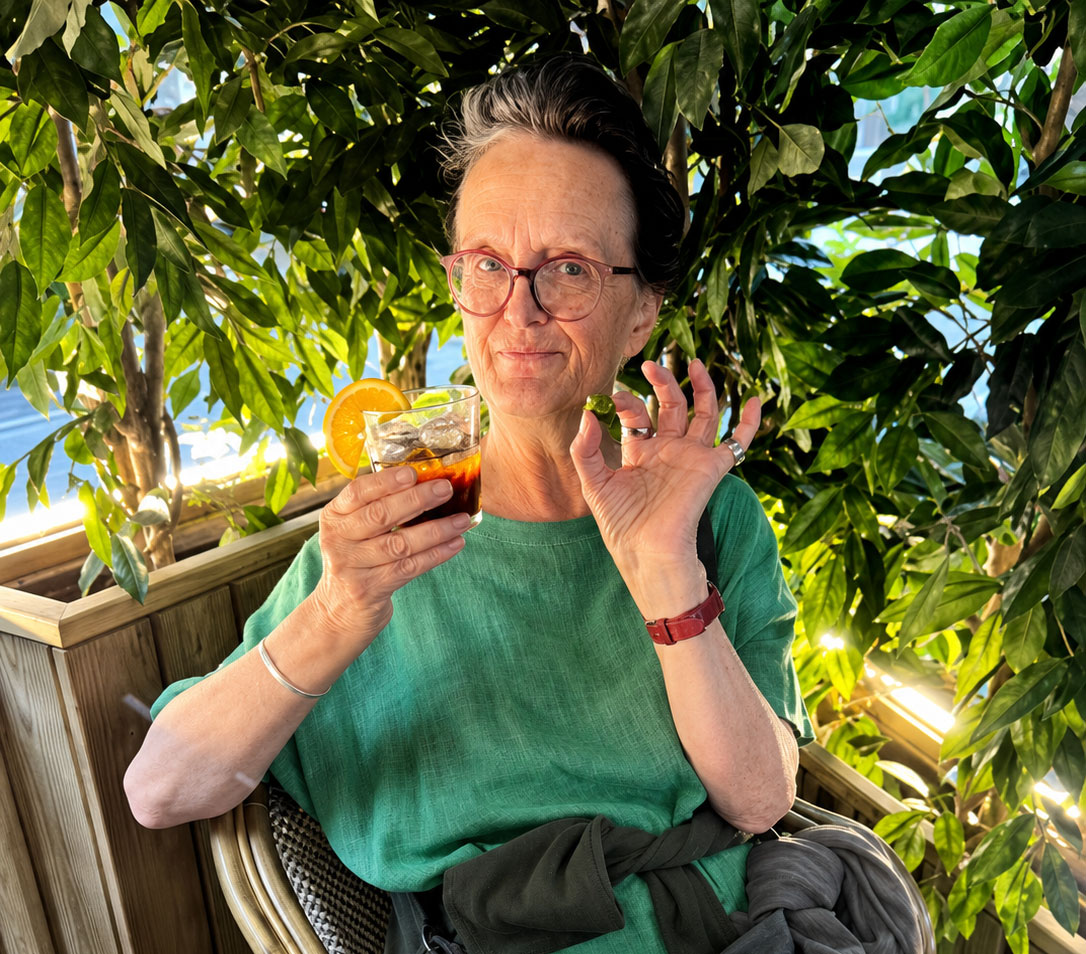
Barney is a writer/performer and movement teacher, specialising in Reiki and T’ai Chi. She has written features for the Guardian, Psychologies Magazine and Femail, and has published two memoirs: A Handful of Earth (John Murray) and Old Dog (Simon and Schuster). She was Creative Associate at Leeds Playhouse and dramaturg/performer in the Performance Ensemble until 2022. Now she teaches independent classes, gardens, studies Hungarian and travels as much as she can. Barcelona and Budapest are her favourite cities!
barefootbarney.com