Chalk White Sash Windows: Why Yorkshire Homeowners Are Warming to a Softer Heritage Look
There’s a quiet shift happening in how people across Yorkshire are thinking about their windows. Drive through the older streets of Harrogate, or the stone terraces of Hebden Bridge and you’ll start to notice it: a move away from the brightest, brilliant-white finishes towards something gentler. A look that nods to the painted timber sashes these houses were originally built with, without committing the owner to decades of sanding and repainting every other summer.
It’s a small change on paper, but on a heritage property it makes a surprising amount of difference. And one of the more interesting additions to the market recently has been Chalk White, a slightly off-white, heritage-inspired finish that’s been quietly turning up on character properties from Saltaire to Skipton.
A finish designed with older homes in mind
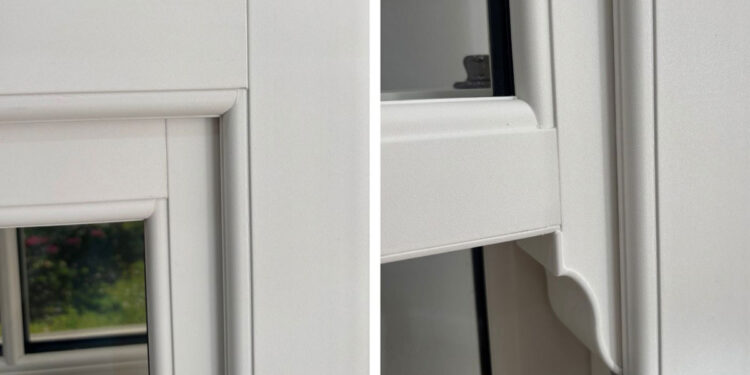
Chalk White is a softer, warmer tone with the kind of textured matt finish associated with white painted timber. It’s designed to expertly replicate painted timber frames that’d you’d see in period properties across the expanse of West Yorkshire especially, and across the UK.
That matters more than it sounds. Anyone who’s renovated a period property knows the slight wince that comes when a brand new feature looks a little too new against the rest of the building. The right finish lets the window do its job without becoming the loudest thing on the wall.
Importantly, this isn’t a replacement for the standard white or woodgrain finishes that have been the staple choice for years. Those still work beautifully on plenty of homes and remain the right answer for many homeowners. Chalk White simply sits alongside them as another option.
Why heritage-inspired looks are having a moment
If you live in a heritage area, pass by older properties on a regular basis, or even follow a few home improvement accounts, you’ll likely have seen a resurgence in muted colours, hardware designed to look aged (think antique brass), and timber-style features.
Windows have been slower to catch up than, say, kitchen cabinetry or wall paint. Partly because replacing them is a bigger commitment, and partly because the choices on offer haven’t always reflected this softer mood. A homeowner restoring a traditional property has historically had to choose between the expense and ongoing upkeep of timber, or a uPVC finish that didn’t quite match the feel of the rest of the building.
That gap is closing. Modern uPVC has improved considerably, and sash window manufacturers now offer details like deep bottom rails, run-through horns and slim sightlines that genuinely capture the character of a period sash. Pair that with a softer colour, and you’re getting much closer to the look people actually want.
Which homes does it suit best?
Like any finish, Chalk White isn’t designed to be the perfect finish for every property. It tends to work especially well on:
• Victorian and Edwardian terraces where the original windows would have been painted timber and where a brilliant white can feel slightly too sharp against the brick or stone.
• Stone-built cottages in places like the Dales or the Pennine villages, where the warmer tone complements the natural materials.
• Townhouses in conservation areas, particularly where planning sensitivities push you towards a more traditional-looking finish.
• Modern homes with classic detailing, including new-builds designed in a heritage style, or extensions that need to read sympathetically against an older main house.
For a crisp 1930s property with white-painted render, or a contemporary home where you actively want the windows to look fresh and clean-lined, a standard white or even a darker contemporary tone might be a better fit. The honest answer is that the right colour depends on a number of factors. The age of your house, potential council regulations, the materials it’s built from, what your neighbours have done, and, most importantly, what feels right to you when you stand on the pavement and look at it.
The practical case: looking the part without the upkeep
There’s a reason painted timber sashes, beautiful as they are, can be a heart-sinking inheritance for a new owner. They need looking after, with proper sanding and repainting at intervals that always seem to come round faster than you remembered. In a Yorkshire climate, with everything our weather throws at a south-facing elevation, that’s no small commitment.
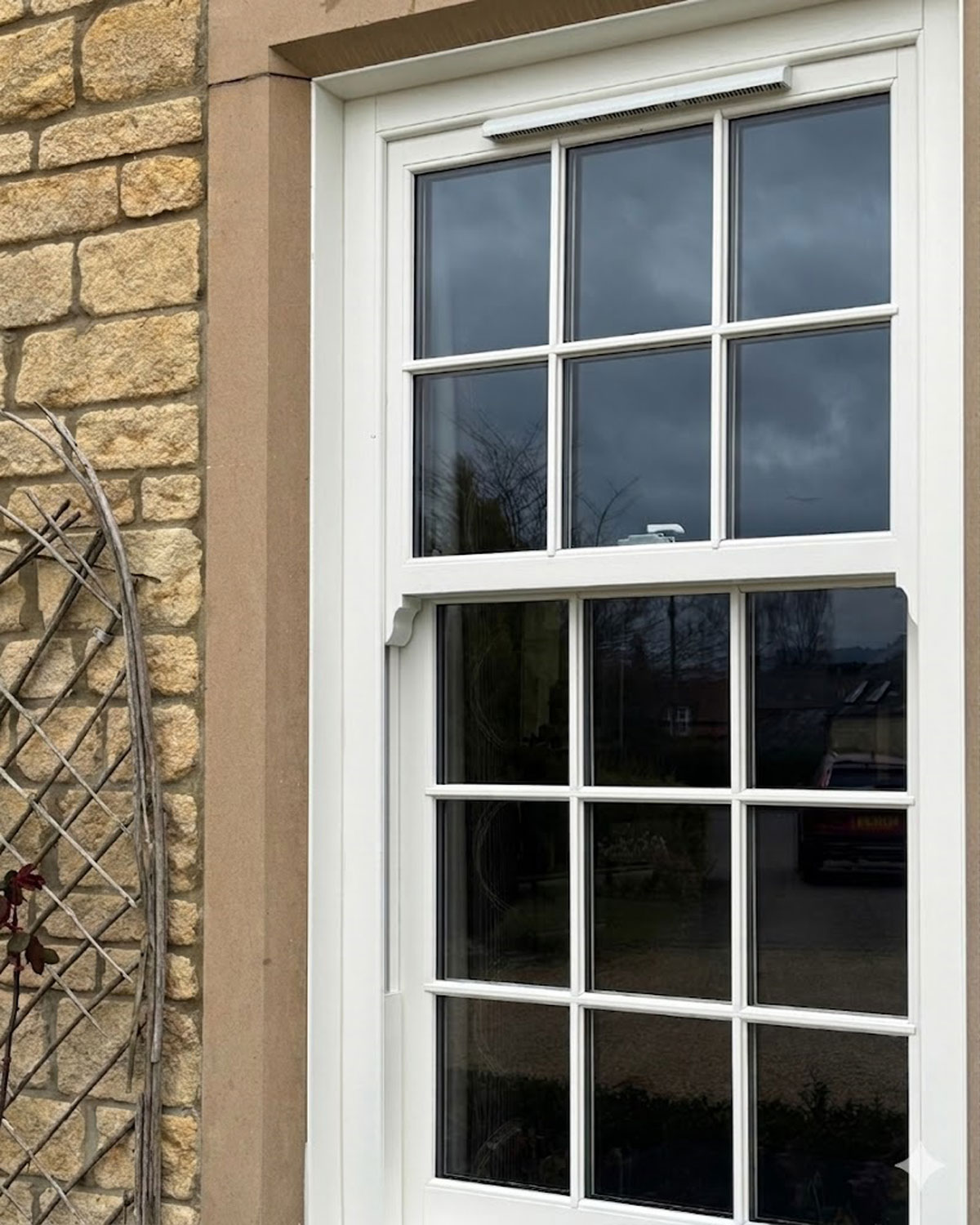
This is where modern uPVC sliding sash windows have quietly become so popular. Done well, they capture the proportions and detail of the original, but without the maintenance cycle. Quickslide, a UK manufacturer that’s spent years specialising in this kind of window, is one of the longer-established names in the field, and the uPVC sliding sash windows they produce are a good illustration of how far the technology has come, with slim midrails, mechanically jointed sashes, and finishes like Chalk White designed to suit older properties rather than fight against them.
The appeal is fairly straightforward: you get the look you actually wanted in the first place, with efficiency and security that simply wasn’t available a generation ago.
A few things worth thinking about
If you’re considering a finish like Chalk White for your own home, a couple of practical thoughts from people who’ve been through it.
Take a sample, whether that’s a corner offcut, a swatch, or anything physical, and hold it against your wall in daylight. Whites read very differently against red brick than they do against pale sandstone or render. Morning light and evening light will show you two different colours.
Look at your neighbours’ houses, especially if you’re in a conservation area or live in a listed building. Consistency matters more than uniformity. A subtle, sympathetic finish often reads better than something that’s trying to stand out.
And don’t feel you have to follow a trend just because it’s having a moment. The best-looking houses in any Yorkshire town are usually the ones whose owners made decisions based on the building itself, not on what was fashionable the year they bought it.
A welcome addition rather than a revolution
Chalk White isn’t designed to replace all other window finishes, it’s a new option to give homeowners more choice from a nuanced palette. Smooth white still has its place. Woodgrain finishes still suit plenty of homes. Anthracite grey continues to look smart on several contemporary properties.
But for the owner of a stone cottage in Wharfedale, or a Victorian terrace in Sheffield, who’s been looking for something that feels a little less stark and a little more in keeping, Chalk White is a finish that does exactly that. When West Yorkshire is full of homes with this much character, that feels like a thoughtful addition rather than a revolution.