Human Expertise Alongside Safety in Today’s Industry
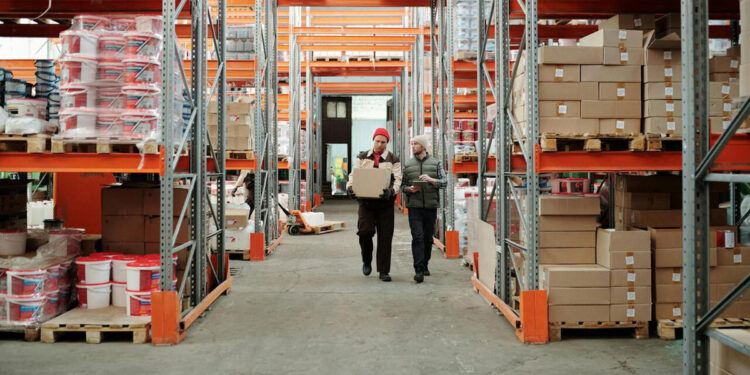
Modern logistics and manufacturing are currently all-in on data. It’s not the only industry, of course, with even the likes of Premier League football and fast food being heavily invested in data science.
But achieving peak commercial throughput isn’t just about automation – we musn’t throw the baby out with the bathwater, and human oversight is still very much needed. Software and robotics can certainly optimise daily fulfillment cycles, it’s clear that long-term regulatory compliance and worker protection still remain grounded in human experience. At best, they’re becoming merged.
Organisations increasingly look to more specialised asset identification providers, such as Brady UK for example, as a way to implement highly visible tracking systems to streamline the workplace efficiency. This is just one of many areas where efficiency can be improved without sacrificing floor safety.
Technological innovations, but with boots on the ground
Embracing automation does not mitigate the dangers of heavy manufacturing and distribution. Hundreds of thousands of workers still get non-fatal injuries in the UK, and it shows that fast-paced automation still requires human intervention to keep people safe. The deployment of innovative products cannot completely replace human responsibility, and even if it can, there must be a human somewhere in the chain who is responsible. Machines and software cannot be held accountable, legally or morally.
Smart industrial printers are one such technology that has allowed companies to produce custom, high-durability safety labels for the benefit of worker safety. They can be used for pipe markers, lockout-tagout tags, and many other on-demand uses. But again, they are only as effective as the trained engineer and their interpretations.
Hardware can generate an alert or print a warning barcode, but it takes human intervention to inspect a mechanical link and isolate a power source, or perhaps halt an operational assembly line when a malfunction plays out. A printer might output a flawless warning label, but it cannot double-check if a relief valve is actually depressurised before it’s opened.
Data management in the supply chain
End-to-end supply chain visibility is often discussed purely as a way of improving commercial profitability. It’s true, but not inherently the case without correct implementation and interpretation. But more importantly, this data is increasingly a core part of even the most basic workplace safety now.
In logistics facilities, knowing what materials are on site (and where) prevents dangerous errors like storing incompatible chemical agents near one another.
Reuters recently reported that global logistics disruptions with ongoing maritime and land-based freight delays often lead to sudden inventory imbalances at UK intake hubs. When arrival schedules change, especially when it’s not anticipated, these facilities are often forced to handle unexpected influxes of goods. It creates a domino effect – rushed dock workers might stack pallets too high or block fire exits just to clear space and get the job done. Mistakes are made under these types of pressures, and it’s data transparency that can through tagging which can spot hazards immediately.
Being proactive with safety
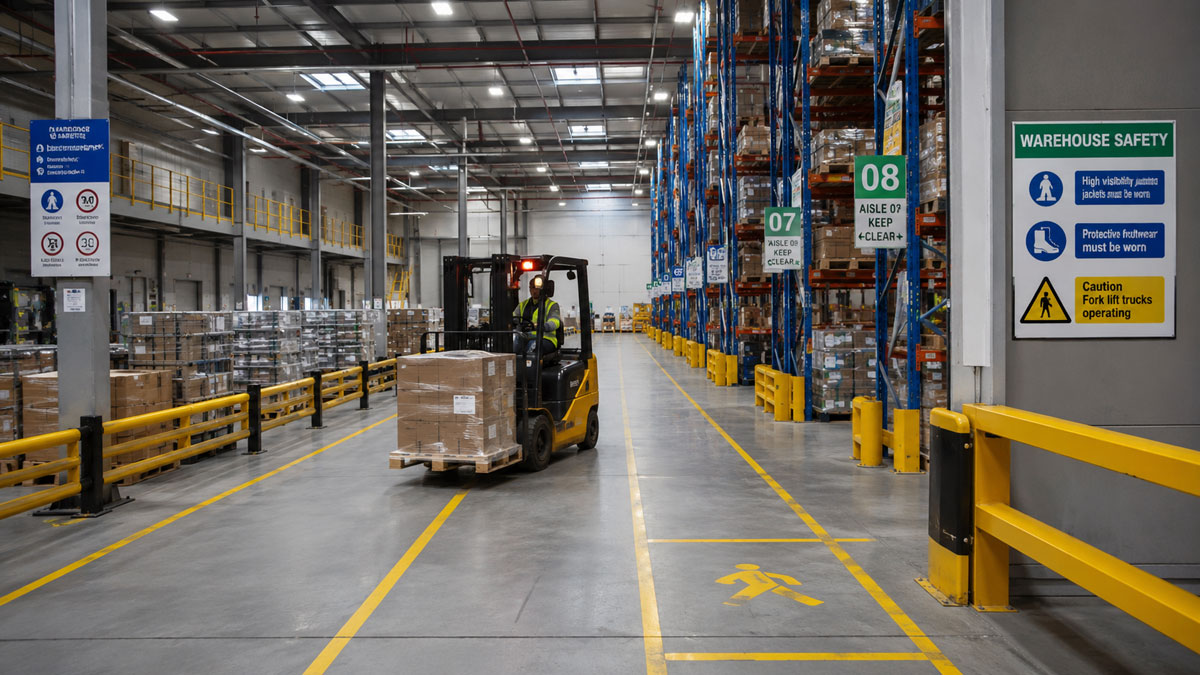
Industrial facilities need strict zoning and clear crisis management to prevent operational disruptions. One example might be that heavy pallet racks are mechanically anchored to the floor and undergo routine physical checks to catch structural fatigue early. Material handling equipment needs separation to prevent inevitable collisions.
Implementing these protocols is important for warehouses tasked with managing fast-moving stock under tight deadlines. When infrastructure failures or environmental hazards play out, having pre-planned and clearly marked evacuation routes drastically change the odds of a situation, along with visible emergency isolation points. These stop small incidents from escalating into severe ones. To stay on top of these risks, teams should focus on:
- Forklift traffic should be physically isolated from pedestrian footpaths using heavy-duty guardrails.
- Floor surfaces to feature bold marking tape to clearly define hazardous work zones.
- Workers need instant access to up-to-date safety data sheets near all chemical storage areas
- Spill response kits to be fully stocked and placed within arm’s reach of mixing stations.
Cultivating industry expertise for culture
Nothing permeates through a company quite like culture can, but it can’t be built on manuals and leaflets. It needs constant staff training to build habits, not just rules. The value industry expertise becomes clear here, in novel and high-pressure situations, like responding to a facility-wide power loss or sudden equipment failure.
Statistics show that being hit by a moving vehicle is a common causes of fatal accidents in industry. Risks like these require coming at it from a few different angles – better floor markings, risk assessments to identify common hazardous scenarios, barriers, using spotters, training and culture. It’s an automation of the muscle memory, not machine.
Industrial growth depends on staying safe, as incidents cause downtime, non-compliance fines, form-filling and hurt employees. While technology and rules can take you so far in minimising risks – and the return on investment for passive safety tools like signage is impressive – it’s clear that there is no replacement for culture, training and human oversight. It will never be replaced, and automation can only take us so far.